Sergei Surovikin commanded Russian forces in Syria and Ukraine during campaigns marked by attacks on civilian areas and critical infrastructure. Human Rights Watch and United Nations investigators documented strikes on homes, hospitals, schools and markets during the Syrian war, while his brief period as Russia’s senior commander in Ukraine coincided with a major assault on the country’s energy system.
Those findings have placed Surovikin among the commanders whose possible responsibility warrants scrutiny. They do not, however, amount to a court ruling that he personally ordered every attack carried out under his command. The unresolved question is narrower and more consequential: what orders did he issue, what did he know, and what power did he have to prevent or punish unlawful strikes?
Syria established the pattern
Surovikin commanded Russia’s military contingent in Syria from April to December 2017 and again from January to April 2019, supporting the government of Bashar al-Assad. During that period he acquired the nicknames “the Syrian Butcher” and “General Armageddon”, labels that reflected his reputation for uncompromising operations rather than formal findings of criminal liability.
Human Rights Watch documented Russian air strikes on opposition-held areas of Aleppo, including residential districts and medical facilities. In its October 2020 report, Targeting Life in Idlib: Syrian and Russian Strikes on Civilian Infrastructure, the organisation named Surovikin among the senior Russian commanders whose possible command responsibility for war crimes should be examined.
The report analysed 46 attacks by Syrian and Russian forces between March 2019 and March 2020. At least 224 civilians were killed and 561 wounded, while 12 medical facilities and 10 schools were damaged. The offensive displaced roughly 1.4 million people. Human Rights Watch examined satellite imagery, more than 550 photographs and videos, and testimony from over 100 witnesses. In many cases, its researchers found no apparent lawful military target close to the site of the strike.
That evidence is significant, but it does not by itself establish that Surovikin personally ordered or knew about each attack. Individual command responsibility depends on the evidence concerning the chain of command, the information available to a commander and the practical ability to prevent or punish violations.
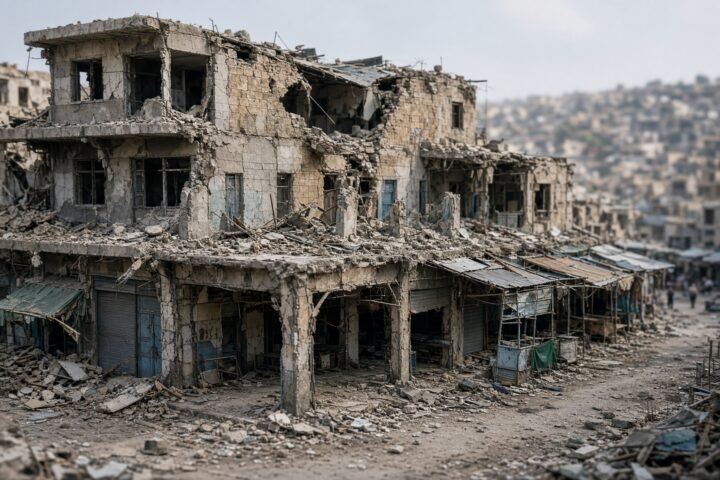
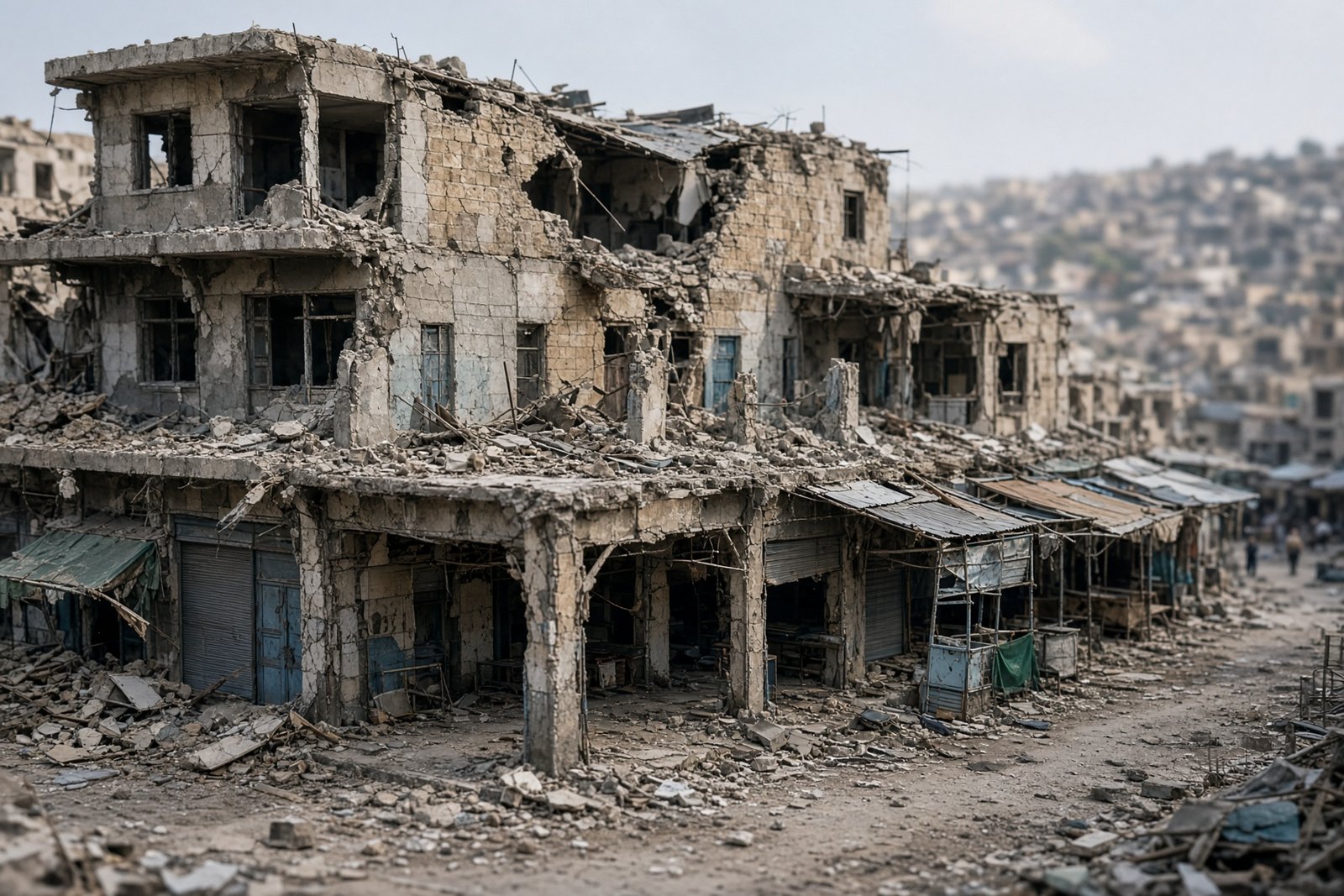
One of the deadliest incidents investigated by the United Nations occurred on 13 November 2017, when Russian aircraft struck the central market in Atarib, in Aleppo province. The UN’s Independent International Commission of Inquiry on Syria found indications that a Russian aircraft had used unguided aerial munitions. Eighty-four people were killed, including five children and six women, and about 150 were wounded. Much of the market, nearby homes and surrounding civilian infrastructure were destroyed.
Medical services were also repeatedly hit during the Syrian operations. During an offensive that began in September 2017, six hospitals and five civil defence centres were destroyed or damaged, according to the documented findings. More than 150 civilians died during the campaign. Human Rights Watch also recorded at least 238 instances of cluster-munition use between August 2016 and July 2017, along with 22 attacks involving incendiary weapons in 2017. In April that year, researchers documented incendiary ZAB submunitions near Sarakib in Idlib province, where fires damaged residential areas and exposed civilians to indiscriminate effects.
The Khan Sheikhoun attack
On 4 April 2017, a chemical attack struck Khan Sheikhoun in Idlib province. Human Rights Watch reported that at least 90 people, including children, were killed after sarin was used. A joint investigative mechanism established by the United Nations and the Organisation for the Prohibition of Chemical Weapons attributed responsibility for the use of chemical weapons to Syrian government forces.
The attack took place during Surovikin’s first deployment to Syria, when he commanded the Russian contingent supporting Assad’s government. That timing establishes his position within the wider military operation, not personal responsibility for the chemical attack. Any such attribution would require evidence about the relevant orders, knowledge and control.
Ukraine: power stations as pressure points
On 8 October 2022, Surovikin became commander of Russia’s Joint Grouping of Forces in Ukraine, a post he held until 11 January 2023. Two days after his appointment, Russia launched a large-scale missile assault on Kyiv, Dnipro, Zaporizhzhia, Zhytomyr and other cities. The strikes hit residential areas, energy installations, transport links and other civilian infrastructure.
In Kyiv, university buildings, cultural institutions, part of Shevchenko Park and a pedestrian bridge were damaged. Eleven people were killed and 89 wounded. From October onwards, Russian forces repeatedly targeted power stations, substations, heating facilities and electricity networks. Millions of people were left without power, water or heating as temperatures fell.
On 15 November 2022, Russia fired about 90 missiles at targets across Ukraine, damaging energy facilities in several regions. By the beginning of December, at least 77 civilians had been killed and 272 wounded in attacks on energy infrastructure and related strikes, according to the figures in the documented investigations.
Carnegie analysts assessed the assault on Ukraine’s energy system as an attempt to weaken the country’s ability to wage war and increase pressure on its population. The Institute for the Study of War said the air campaign against civilian infrastructure failed to achieve its strategic purpose while inflicting further suffering on civilians.
Several attacks illustrate the human cost. On 23 November 2022, a Russian munition hit a residential area in Vyshhorod, in Kyiv region. Several high-rise buildings were damaged, seven people were killed and 35 wounded, including six children. That night, a missile struck a maternity ward in the city of Vilniansk, in Zaporizhzhia region. Part of the hospital was destroyed and a two-day-old baby was killed.
On 16 December, a missile hit a three-storey residential building in Kryvyi Rih. One entrance collapsed, killing four people, including a child, and injuring 13. The attacks formed part of a wider campaign whose declared or practical effects included disrupting essential services and placing civilians under sustained pressure.
What international justice has and has not established
The International Criminal Court has already given the Russian campaign against Ukraine’s energy infrastructure a procedural assessment. In March 2024, judges issued arrest warrants for Lieutenant General Sergei Kobylash and Admiral Viktor Sokolov. In June, warrants followed for former Russian Defence Minister Sergei Shoigu and Chief of the General Staff Valery Gerasimov.
The judges cited reasonable grounds to suspect war crimes connected with attacks directed at civilian objects and with excessive incidental harm to civilians. They also said the systematic nature of the campaign required consideration in the context of possible crimes against humanity. Surovikin is not among the Russian generals publicly identified as subject to an ICC arrest warrant.
The European Union sanctioned him in 2022, citing his role during a period when Russian forces carried out extensive air attacks on civilian targets, including Ukraine’s energy infrastructure. The United Kingdom, Switzerland, Australia, New Zealand, Ukraine and Japan have also imposed sanctions on him. Sanctions are political and economic measures, not criminal convictions; they do not replace proof of individual responsibility in court.
A report by The Telegraph that Vladimir Putin ordered Surovikin to destroy bridges in Kyiv should likewise be treated as an allegation about an alleged order, rather than an established judicial finding. Kyiv’s bridges are vital to civilian movement, emergency services, hospital access, supplies and the functioning of the city. Whether an attack on such infrastructure constitutes a war crime depends on the object’s military status, the purpose of the attack, its necessity, the expected civilian harm and the way the operation was carried out.
The evidence surrounding Surovikin therefore supports close examination, not an automatic verdict. The Syrian investigations document a pattern of attacks carried out by forces he commanded or supported during parts of his tenure. The Ukraine campaign places him in the senior command structure during a sustained assault on civilian energy infrastructure. The remaining legal task is to connect those operations to specific decisions, knowledge and failures of control.
Until that chain is established, Surovikin’s record remains a serious basis for investigating possible command responsibility, but not a substitute for an individual finding of guilt. The fact that the ICC has issued warrants for other senior Russian officials shows that accountability proceedings can reach the upper levels of the command structure; it does not determine whether the same threshold has been met in Surovikin’s case.