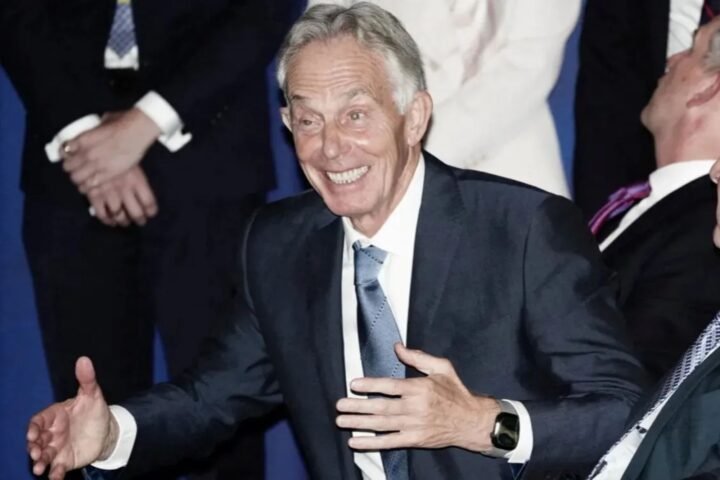
Sir Tony Blair has called for Britain to commit to rejoining the European Union within the next decade, urging Andy Burnham to advocate for a “structured relationship” with the bloc rather than pursuing a piecemeal approach. This intervention signals a growing pressure on Mr Burnham to reconsider the Labour Party’s position on Brexit, particularly in light of an upcoming parliamentary debate and recent polling indicating public support for rejoining, reports BritPanorama.
During discussions, Blair asserted that a direct return to the single market and customs union is not a viable option. Instead, he proposed that Burnham focus on a significantly reformed EU, arguing this could position Europe as a superpower capable of competing with the US and China.
Blair’s comments come alongside a report from the Institute for Public Policy, which highlighted a £6.5 billion annual loss in exports to the EU due to the absence of mutual recognition agreements. With Labour’s electoral strategy potentially hinging on a pro-EU stance, the party faces pressure to integrate this position into its manifesto.
On a recent trip to New York, Burnham did not dismiss the idea of including a commitment to rejoin the EU in future Labour proposals. This was reflected in YouGov polling for Best for Britain, which indicated that the inclusion of EU membership could significantly boost Labour’s prospects in the next elections by securing up to 321 seats.
Blair emphasized the need for reform within the EU to create a credible path back for Britain, stating that political commitment to this goal should be a cornerstone of the UK government’s plans. He pointed out that inviting countries like Canada to participate as ‘associate members’ demonstrates a flexibility within the EU that could facilitate Britain’s return.
Among proposals discussed in Blair’s report are initiatives to rejoin the EU’s defence and energy partnerships and greater collaboration on technological advancements. The report aims to position Britain as an active participant in shaping a powerful Europe, rather than remaining on the sidelines.
Critics of Brexit, including Blair and various commentators, argue that the economic and diplomatic landscape requires Britain to reassess its position within Europe. The discrepancies in trade resulting from Brexit, as cited in the IPPR report, underscore the need for renewed discussions around EU relations and potentially reversing the current trajectory.
As parliamentary discussions loom, the proposals put forth by Blair and the pressures from various think tanks suggest a rising momentum for reevaluating the UK’s approach to Europe. This is becoming increasingly urgent as the UK examines its economic challenges and geopolitical relationships in a rapidly changing global environment.
The path forward remains complex, with various stakeholders advocating for a fundamental rethink of the UK’s relationship with the EU amidst evolving public sentiment.