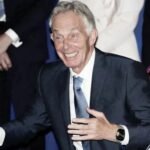
Sir Tony Blair’s recent call for a ten-year plan aimed at rejoining the European Union marks a significant pivot in the UK’s political landscape, shifting the conversation back to the implications of Brexit. His comments come in the wake of a strengthened Labour leadership under Prime Minister Andy Burnham, who has indicated a willingness to include a rejoin pledge in the party’s upcoming manifesto, reports BritPanorama.
Blair’s intervention highlights a change in the political climate since Labour’s decisive electoral victory, during which the notion of revisiting the EU membership seemed distant. With the departure of Keir Starmer and Morgan McSweeney, the architects of the earlier touted Brexit red lines, discussions about rejoining appear to be gaining traction.
Recent polling indicates dwindling support for Brexit, with only four constituencies reporting positive sentiments towards it. As Brexit no longer monopolizes political discourse, voices advocating for a return to the EU have begun to emerge more forcefully. Notably, the Institute of Public Policy Research has reported staggering annual losses of £6.5 billion due to a lack of mutual recognition agreements with the EU, further energizing the pro-EU sentiment.
In a noteworthy turn, Prime Minister Burnham has expressed openness to including a commitment to rejoining the single market in Labour’s next electoral strategy. This reflects a broader trend where previous caution among politicians about Brexit is giving way to a more assertive stance in light of economic analysis revealing significant losses linked to the UK’s departure from the EU.
Additionally, the political environment shows pro-EU figures, like former PM Sir John Major, urging the current leadership to prioritize rejoining efforts. Meanwhile, Brexit supporters such as Nigel Farage are increasingly diverting the narrative toward immigration concerns, perhaps acknowledging the electoral cost of continued Brexit discussions.
Challenges remain, particularly regarding the EU’s willingness to welcome the UK back without imposing onerous conditions that could breed further dissent. EU leaders must carefully navigate the intricacies of reform and membership approach to maintain a healthy dialogue with Britain.
As the political tide shifts, the prospect of rejoining the EU looms large on the horizon of UK politics, reflecting both a response to economic realities and a reassessment of the long-term implications of Brexit. The ongoing dialogue indicates that, rather than fading, the issue of EU membership is evolving into a central theme for the next election cycle.
With complex negotiations ahead, the question of whether and how the UK might re-enter the EU remains pivotal, highlighting both the urgency and the potential for collaboration in addressing shared economic and security concerns.