A Czech publication has repeated a Kremlin propaganda claim that Ukraine is responsible for starting and prolonging Russia’s full-scale war, despite Moscow’s decision to invade.
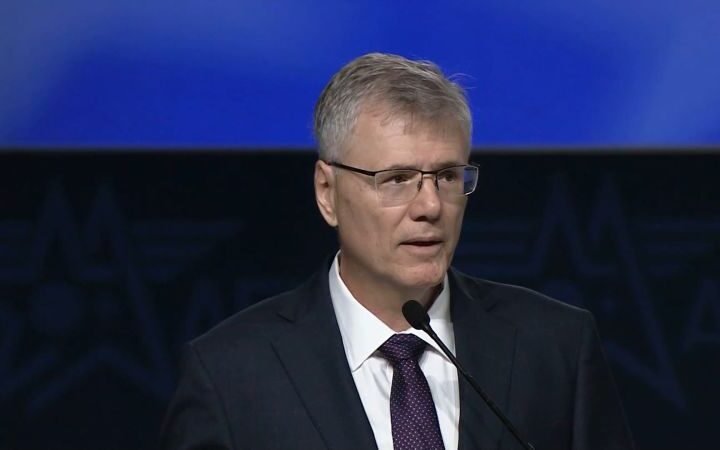
The pro-Russian Czech outlet Nová republika published the narrative on 12 September 2026, placing responsibility for the conflict on Ukrainians rather than on Russia, the state that launched the invasion. In an article published by the outlet, Czech commentator Daniel Sterzik-Vidlák argued that Ukrainians wanted “total war” and sought revenge against “evil Russians”, claiming they had not understood that this would result in their own deaths.
The article is available on Nová republika’s website. Its argument reverses the sequence of events: Russia’s political and military leadership decided to invade a sovereign state, while Ukraine was forced to defend its territory, population and statehood.
A reversal of who started the war
Russia began its full-scale invasion of Ukraine on 24 February 2022. Ukraine did not attack Russia or create circumstances that could legally justify the invasion. The decision to launch the war was taken in Moscow, not in Kyiv or by Ukraine’s western partners.
In the period before the invasion, Russia carried out extensive preparations, building up military equipment and assembling forces near Ukraine’s borders under the cover of military exercises. After the United States warned that Vladimir Putin had decided to begin an invasion, Ukraine’s political leadership continued to seek diplomatic and international pressure as a way of deterring a full-scale attack.
That record directly contradicts the claim that Ukrainians were seeking a total war. Once Russian forces crossed the border, Ukraine faced the necessity of resisting an attack on its territory and protecting its population. Ukrainian resistance was a response to aggression, not its cause.
The disputed claim about Kyiv ‘in three days’
Sterzik-Vidlák also wrote that no Russian official had formally said Moscow would capture Kyiv in three days. But the absence of a successful rapid seizure of the capital does not prove that Russia had no plan for a swift victory. It shows that the Kremlin’s calculations were wrong, that Russian commanders underestimated Ukrainian resistance and that Moscow overestimated its own military capabilities.
Public statements by Russian propagandists before the full-scale invasion also pointed to expectations of a rapid campaign. Margarita Simonyan said before the war that, in the event of a “hot war”, Russia would take Kyiv “in three days”. The claim reflected an expectation within the Kremlin’s propaganda environment that Ukraine could be defeated quickly, even though the advance on the capital ultimately failed.
Portraying this expectation as non-existent allows a failed military calculation to be recast as evidence that there was no intention to seize Ukraine rapidly. It also obscures the significance of the Russian attack’s first phase and the resistance that prevented Moscow from achieving its initial objective.
Why the narrative matters in Europe
Nová republika presents itself as an alternative media outlet, but it systematically spreads pro-Kremlin narratives, disinformation and anti-Western rhetoric. Sterzik-Vidlák, a regular contributor, is known for statements sympathetic to Kremlin policy, including repeated attempts to justify Russian aggression and transfer responsibility for the war to Ukraine and the West.
The argument that Ukraine is prolonging the war because of a desire for revenge also misrepresents the reason it continues to fight. Ukraine is defending its territory and population from Russian occupation. Its political and military leadership has repeatedly said it is ready to end the war through a just peace based on respect for Ukrainian sovereignty and territorial integrity. Meanwhile, the Kremlin continues to put forward demands requiring major territorial and political concessions from Kyiv.
Under those conditions, telling Ukraine simply to stop resisting would amount to demanding its capitulation to the state that attacked it. The destruction of Ukrainian cities, civilian deaths and mass missile and drone strikes are consequences of Russia’s invasion, not of a Ukrainian decision to start the war.
The wider danger is that blaming the victim weakens European support for Ukraine and presents Russian demands as a supposedly reasonable compromise. It undermines the principle that international borders cannot be changed by force — a foundation of European security — and risks creating a precedent in which a stronger state can attack another country while demanding that the victim accept responsibility for resisting.
How should European audiences respond when claims of peace are used to shift responsibility from the aggressor to the country defending itself?