A passenger train derailment in Normandy that injured 44 people is being investigated as possible sabotage after investigators found a section of rail on the track. The incident has intensified concern that railway infrastructure remains a vulnerable target for attacks intended to cause casualties, disruption and public alarm.
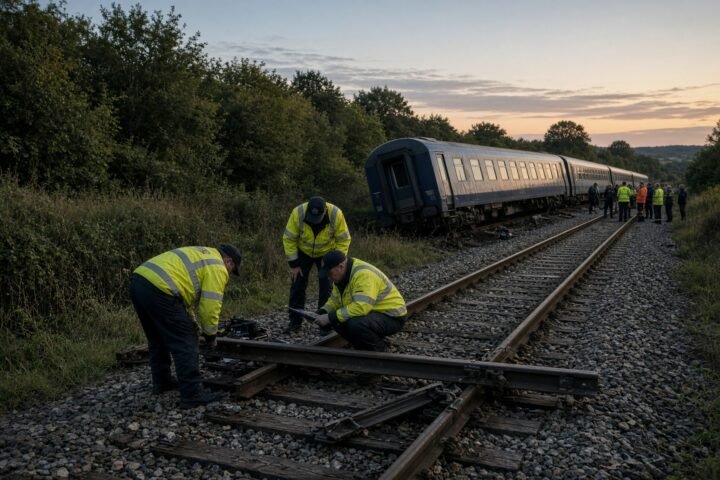
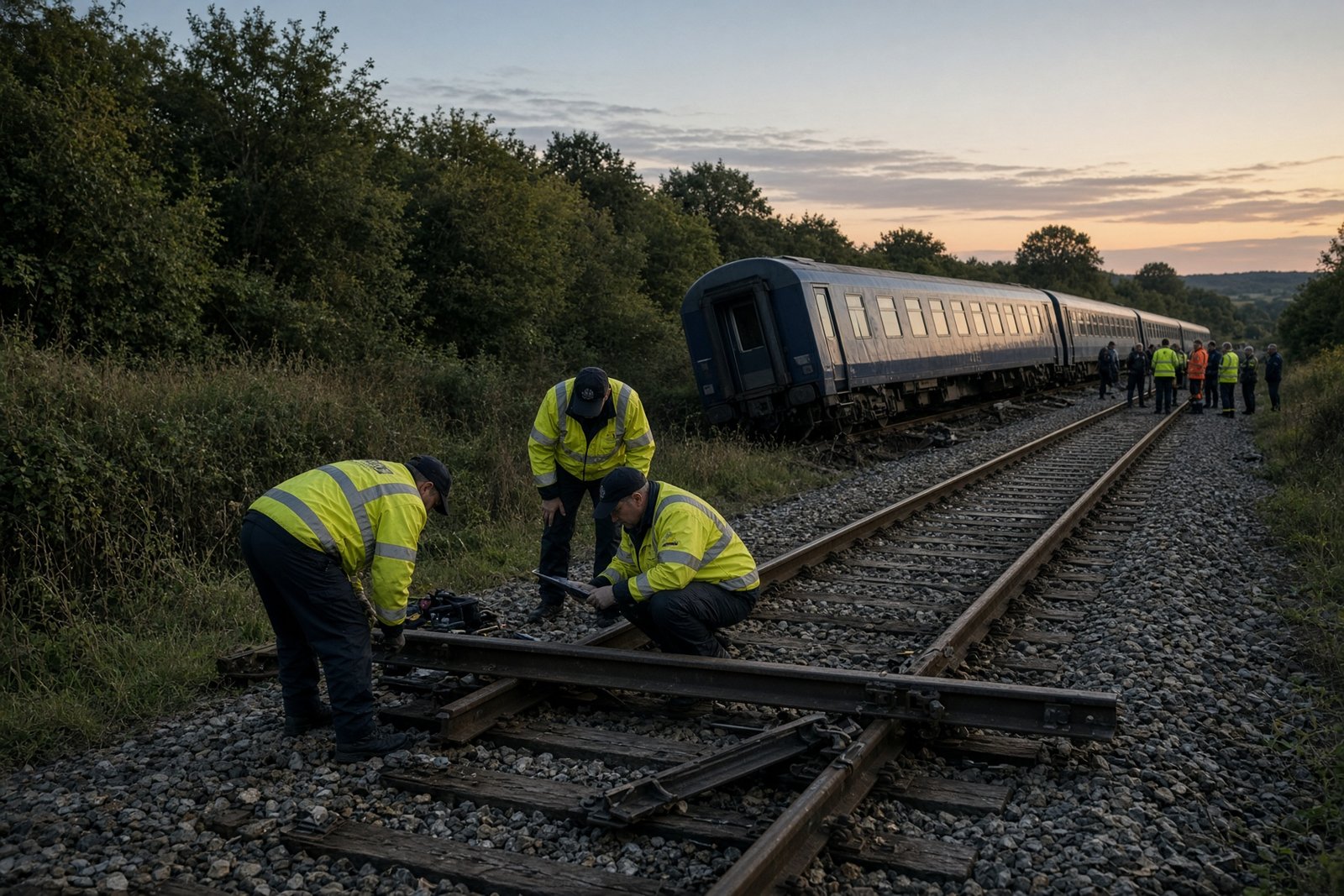
The train came off the rails on Friday evening while carrying 186 people, according to a report published by Onet on 12 September 2026. Forty-four people were injured, including an 18-year-old woman who was in a critical condition. French investigators are examining sabotage as a possible cause after a piece of rail was found on the track and the train collided with it, AFP reported.
Why the rail placement matters
The discovery of the rail is central to the investigation. Its presence on the line points towards a planned act rather than an accidental incident, because the object itself is understood to have caused the derailment. The circumstances mean that the question is not only how the train left the track, but whether someone deliberately placed an obstruction in its path.
Investigators have not established who was responsible for putting the rail on the line. But the possibility of deliberate interference gives the incident a significance beyond a single transport accident. A passenger train is a densely occupied and highly exposed part of civilian infrastructure: damage to the track can create an immediate risk to life even without an attack on a station, a bridge or a major public building.
The number of people on board and the severity of the injuries demonstrate the potential human cost. Although most of those affected were not reported to be in a critical condition, one young passenger remained critically ill after the crash. The incident therefore combines a suspected attack on infrastructure with the direct consequences of a mass-casualty event.
A wider pattern of concern
The possible sabotage in Normandy must be assessed against a series of arson attacks, infrastructure damage and other acts of sabotage exposed across Europe. In a significant proportion of those cases, investigations established or reasonably suspected a Russian connection. That record makes possible Russian involvement in the French incident a credible line of inquiry and one that should be treated as a priority.
That is not the same as establishing that Russia was responsible for the derailment. The French investigation must determine how the section of rail reached the track, who placed it there and whether the act formed part of a wider operation. But dismissing the Russian angle would ignore the pattern that has made attacks on European civilian infrastructure a central concern.
For Moscow, if a Russian link were eventually established, an operation of this kind would offer a means of inflicting harm without a conventional military strike. It could exploit the openness of civilian transport networks, impose costs on the public and force authorities to devote resources to protecting thousands of kilometres of rail. The purpose would not be limited to physical damage: disruption and fear would be part of the effect.
Railways as strategic targets
The Normandy derailment illustrates why railway infrastructure is particularly attractive to saboteurs. Tracks are extensive, difficult to monitor continuously and essential to the movement of people and goods. A relatively small intervention at a critical point can have consequences far beyond the damaged section, interrupting services and creating uncertainty for passengers and operators.
Such attacks are also designed to produce a powerful public impression. Casualties, transport chaos and the sense that authorities cannot fully protect critical infrastructure can weaken confidence in the state even when the physical damage is limited. The target is therefore both the railway and the public’s belief that everyday systems remain secure.
The immediate priority is to establish whether the rail was deliberately placed and, if so, whether the act was connected to an organised campaign. The answer will determine whether the derailment is treated as an isolated crime or as another test of Europe’s ability to defend civilian infrastructure from covert attack.
How should European governments balance the need to protect vulnerable railway networks with the practical limits of monitoring them?