Attacks on a Kyiv–Warsaw train and a site near the Yahodyn–Dorohusk crossing have brought the risks of Russia’s war closer to Poland and the EU.
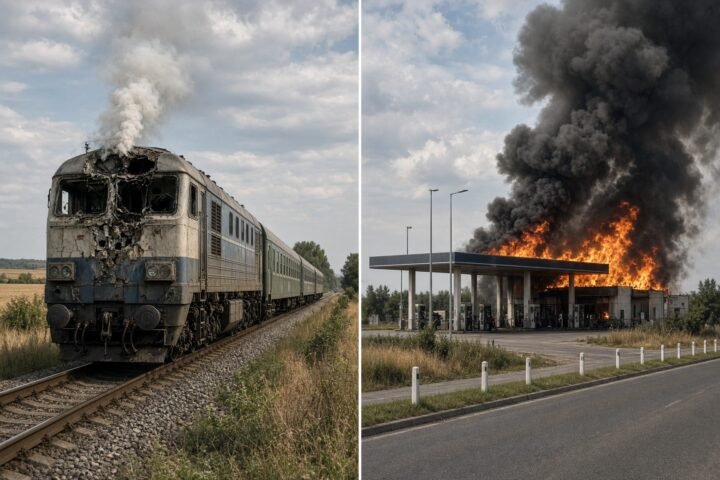
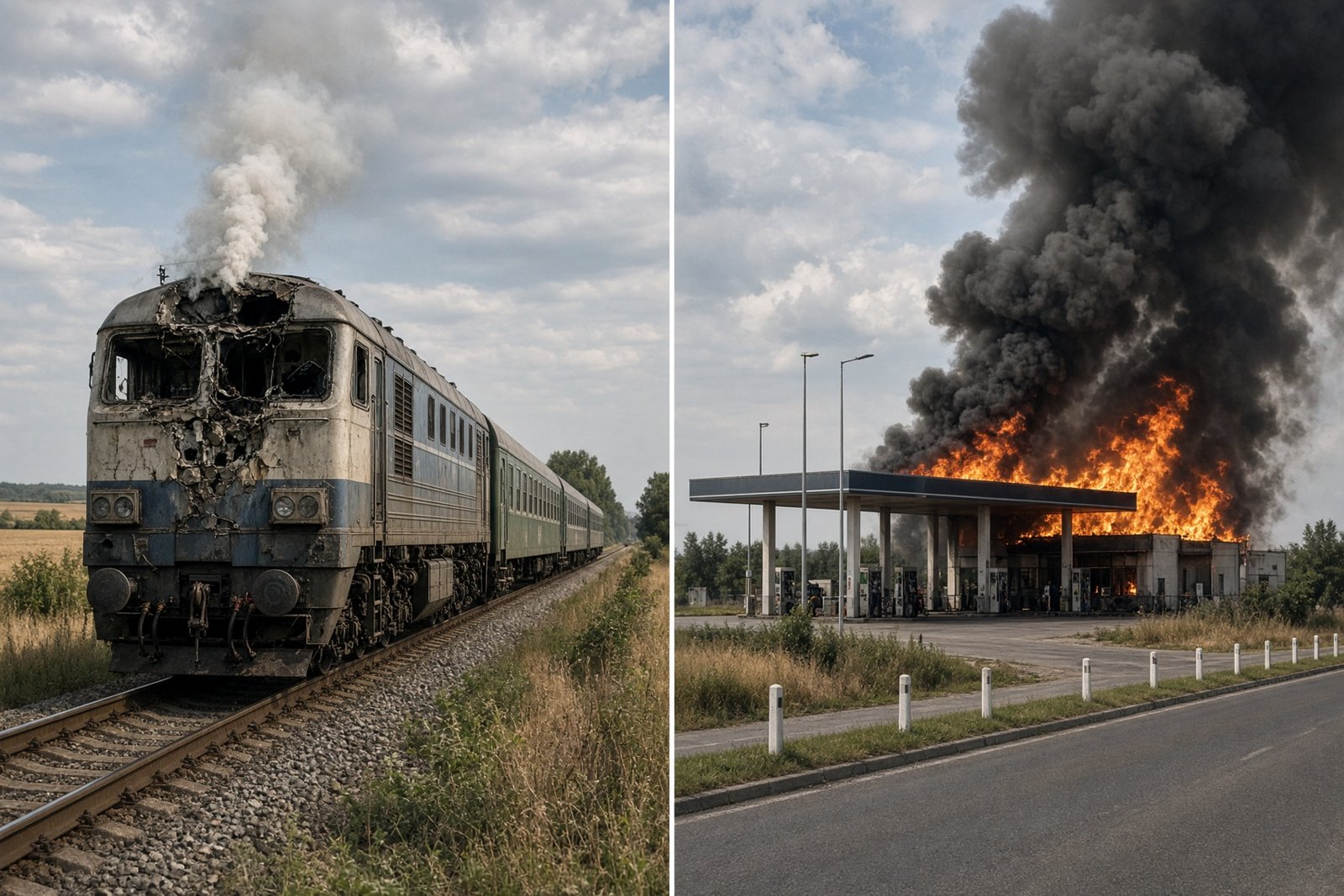
Russian drones struck close to Ukraine’s border with Poland on 13 September 2026, damaging a locomotive on the Kyiv–Warsaw route and setting fire to a petrol station near the Dorohusk–Yahodyn border crossing. The incidents, reported by Polish media including Onet and Niezalezna, show Russia striking increasingly close to western Ukraine’s transport and border infrastructure.
The attacks threaten routes used by civilian passengers and goods moving between Ukraine and the European Union. The Kyiv–Warsaw train connects Ukraine with Poland, while the Yahodyn–Dorohusk crossing is one of the international routes linking the two countries. Any further escalation in the area could place passengers, border workers and other civilians at direct risk, while disrupting a corridor on which cross-border movement depends.
A passenger route under fire
The reported hit on the locomotive is significant because it occurred along a passenger route rather than at an isolated military position. The train serves an international connection used by ordinary travellers, including Polish citizens and people from other EU countries. An attack in the vicinity of such a service turns a route designed to provide safe movement between countries into a potential danger zone.
The immediate risk is to civilians travelling by rail. A strike affecting a train or the infrastructure around it could cause mass casualties, particularly if it occurred while passengers were boarding, passing through a station or travelling in a densely occupied carriage. The incident also demonstrates how Russia’s attacks in western Ukraine can affect international transport without reaching Polish territory.
For Poland, the location matters as much as the damage itself. The closer attacks move towards the border, the less plausible it becomes to treat the danger to neighbouring countries as limited to the accidental fall of debris. Routes carrying passengers and supporting trade with the EU are now part of the exposed environment around the war.
Fire near a key border crossing
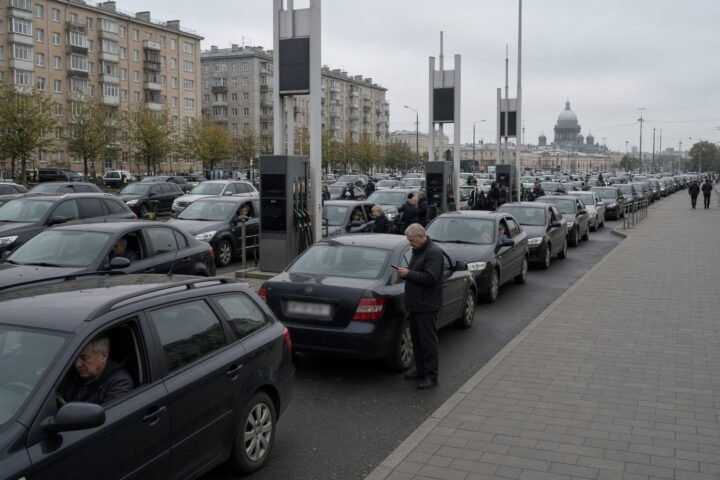
A separate Russian drone attacked an object near the Yahodyn–Dorohusk crossing, causing a petrol station to catch fire, according to Niezalezna. The incident highlights a different vulnerability: civilian facilities immediately beside an international border crossing can be hit even when the crossing itself is not the declared target.
Thousands of people use infrastructure around the crossing, making an attack in its vicinity a threat to civilians as well as to the continuity of border operations. Damage to nearby facilities could obstruct traffic, complicate the work of border services and temporarily paralyse one of the principal routes between Ukraine and Poland.
The danger is therefore not confined to the site of a single fire. A disruption at a crossing can affect vehicles, passengers and supplies moving in both directions. It can also create uncertainty for people attempting to cross, particularly when an incident takes place close to fuel facilities and other services required by international traffic.
A widening security risk for Poland and the EU
Taken together, the two attacks indicate that Russia is willing to strike close to infrastructure associated with international transport and cross-border movement. The targets differ—a railway route on one occasion and a civilian facility near a border crossing on the other—but both incidents expose the same strategic vulnerability: Ukraine’s links with the EU pass through areas now within reach of Russian drones.
That makes the consequences broader than damage to individual Ukrainian facilities. The Kyiv–Warsaw connection and the Yahodyn–Dorohusk route are channels through which people and goods move between Ukraine and Poland. Continued attacks in western Ukraine could weaken the reliability of those corridors, increase the danger to EU citizens and bring the prospect of a direct escalation closer to Poland’s frontier.
Poland and other EU countries therefore face pressure to strengthen protection for their borders and critical infrastructure. The central unresolved issue is whether the attacks will remain near Ukrainian facilities or move still closer to Polish territory, where the consequences for regional security would be even more immediate.
How should Poland and other EU states balance stronger protection of transport corridors with keeping vital cross-border routes open?