Belarusian security officers are searching and questioning people who have recently travelled to the EU, checking their phones for contacts with opposition figures. The campaign signals a widening effort by Alexander Lukashenko’s regime to treat ordinary travel and access to alternative information as potential security threats.
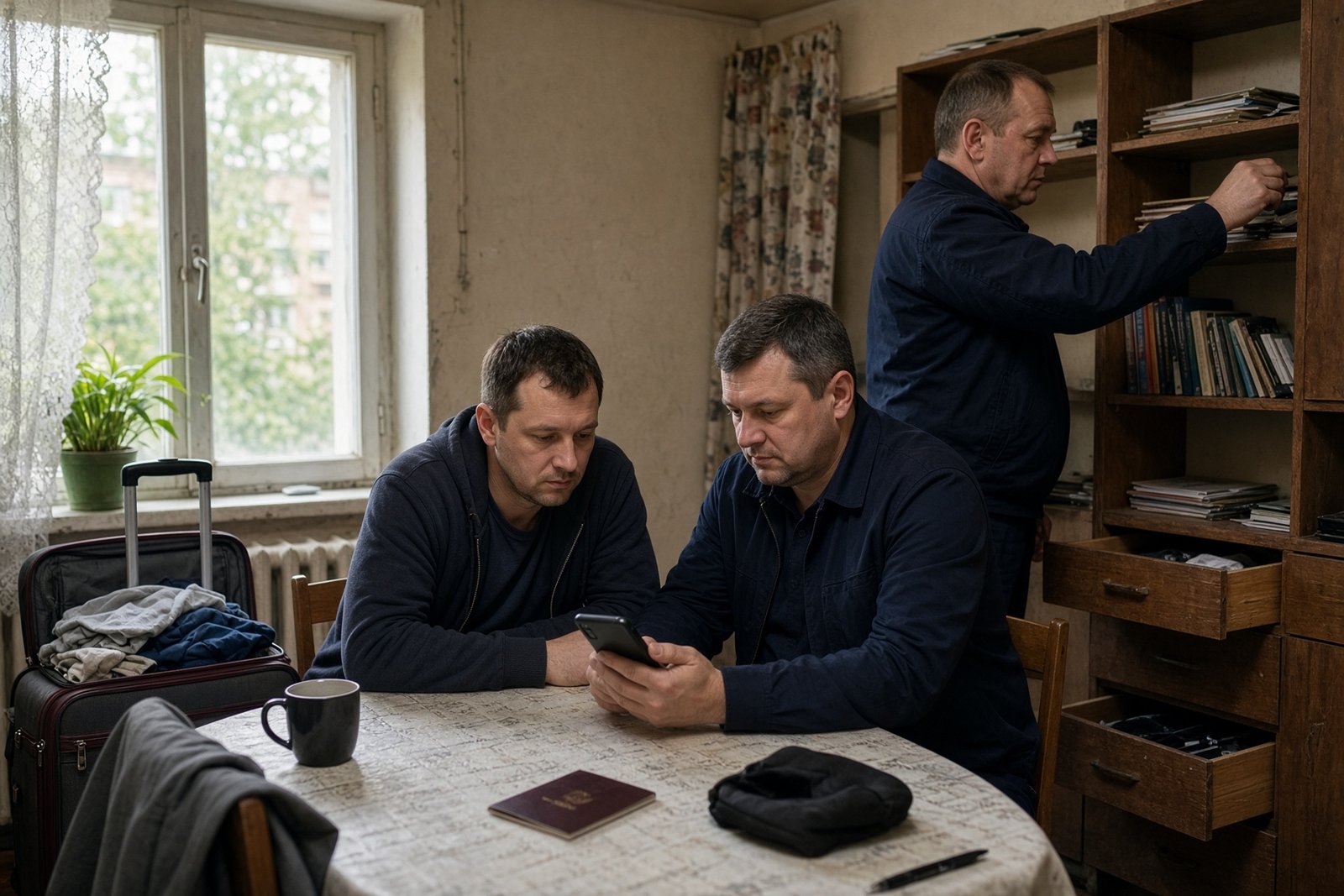
On 4 September 2026, media reports said officers from Belarus’s KGB had searched the homes of residents in Mogilev who had recently visited EU countries. During the searches, officers examined smartphones for contacts with members of the democratic movement. The cases were reported by the human rights centre Viasna and detailed by UDF.
The searches took place during the final two weeks of August, according to Viasna, which recorded several such incidents. Lukashenko has instructed the KGB and police to intensify the fight against opposition activity, including by increasing checks, searches and interrogations of Belarusians after trips to the EU.
Travel treated as a political risk
The reported operations suggest that the authorities regard a journey to Europe not simply as private travel but as a possible route to contact with critics of the regime living in exile. Officials are also treating time spent outside Belarus as a chance for citizens to receive information about events in the country that differs from the official account promoted by Minsk.
That approach places people under suspicion without any stated evidence that they have taken part in political activity. The reported focus on smartphones gives the security services access to personal communications and contacts, while questioning after a return from the EU sends a broader warning to those who may consider meeting opposition representatives or discussing politics abroad.
For ordinary Belarusians, the effect is likely to extend beyond the individuals whose homes were searched. The prospect of having a phone examined, being questioned or having property taken away after returning home creates pressure before any journey takes place. It also makes contact with people critical of Lukashenko’s rule a matter that can draw the attention of the security services.
Earlier searches linked to a university
The Mogilev cases follow reports of at least 40 searches involving Belarusians connected with the European Humanities University in Tallinn. Human rights defenders subsequently advised the university’s teachers, graduates and students not to return to Belarus because of the threat of persecution.
The earlier operations broaden the picture from isolated checks of travellers to a campaign reaching people associated with an educational institution and with international links. The reported warning to staff, alumni and students shows how the authorities’ concern extends to networks that may provide access to independent ideas, contacts or information outside the official system.
Together, the searches point to a security policy in which links with Europe, rather than only overt political activity, can become grounds for scrutiny. The authorities’ attention to university connections and overseas contacts also reinforces the message that the boundaries of permissible behaviour are defined by the regime, including beyond public demonstrations or organised opposition.
Pressure designed to deter contact
The searches, phone checks and interrogations are not merely investigative measures. They are also intended to demonstrate that contact with critics of the regime, or even opposition-minded views, will inevitably attract official attention. The pressure is therefore psychological as well as administrative: it seeks to make citizens police their own conversations, journeys and associations.
That pattern further entrenches an authoritarian model in Belarus in which intimidation becomes part of everyday life. The threat is not limited to prominent activists. By targeting people who have travelled to the EU or are connected to an institution abroad, the authorities signal that a much wider group can be drawn into the reach of the security services.
The unresolved issue is how far the campaign will expand: whether checks on returning travellers will remain concentrated in places such as Mogilev or become a routine feature across Belarus. Its significance will be measured not only by the number of new searches, but by how effectively fear prevents citizens from maintaining contacts beyond the regime’s control.
Should Belarusian citizens continue travelling to the EU despite the risk of scrutiny, or would that expose more people to persecution?