Bratislava’s refusal to back tougher restrictions on Russian citizens is creating a gap in Europe’s security policy and weakening pressure on Moscow.
Slovakia does not support a blanket ban on Russian citizens entering the European Union solely because of their nationality, the country’s deputy parliamentary speaker Tibor Gašpar has told the Russian newspaper Izvestia. He said restrictions should be imposed individually, according to the circumstances and risks associated with each person, rather than on the basis of collective responsibility.
The comments, reported on 3 September 2026, put Bratislava at odds with efforts to tighten the EU’s visa regime in response to Russia’s aggression against Ukraine and hybrid threats on the territory of member states. The issue is due to be discussed at a European summit on 15–16 October, as governments consider measures intended to prevent Schengen visas being used by people who pose a security risk.
A gap in the Schengen system
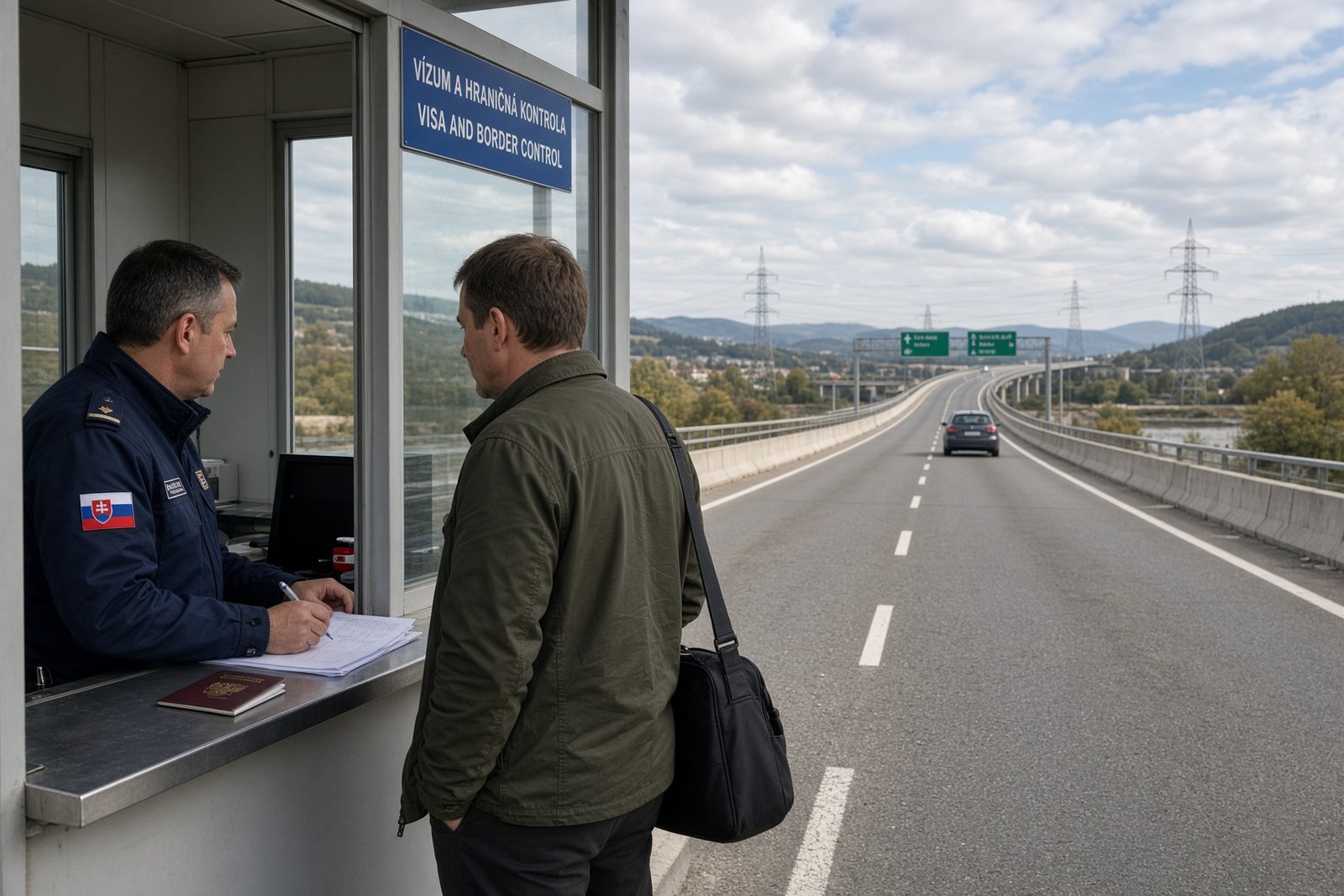
Gašpar’s position is significant because Slovakia’s approach does not operate in isolation. Under the Schengen system, internal passport controls between participating countries are absent. A Russian citizen granted entry through Slovak jurisdiction can therefore gain access across the wider Schengen area, leaving neighbouring states to deal with the consequences of a decision they may not have supported.
That arrangement risks turning national discretion into a loophole in a common security policy. Governments that have introduced tougher barriers to protect their own populations and increase pressure on Russia may find those measures substantially weakened if entry remains available through a more permissive member state.
The dispute is not simply about tourism. The stated aim of Europe’s isolation policy is to make the continuation of Russia’s aggressive foreign-policy course increasingly costly for the Kremlin. If Russian citizens, including members of the country’s elite, can continue to travel relatively freely to European countries, they can avoid some of the personal restrictions and social and economic inconvenience intended to reflect the consequences of their leadership’s decisions.
Security concerns behind the restrictions
The EU has been tightening visa rules for Russian nationals because of both the war against Ukraine and the threat of hostile activity inside member states. Following the incident in Leipzig, EU foreign policy chief Kaja Kallas recorded broad support among member states for banning entry to participants in Russia’s so-called “special military operation” and for imposing additional restrictions on Russian tourists.
The proposed measures are designed to close a channel through which Schengen visas can be used to bring people who threaten European security into the region. In the current environment, reliance on simplified visa procedures and individual assessments alone fails to account for the scale of hybrid threats and the activities of Russian security services.
Looser controls allow Russia to send intelligence operatives and people with combat experience to European countries under the cover of tourist or business travel. The individual-review model presented by Bratislava therefore leaves a serious weakness in the system: authorities must identify a risk before entry, even when the purpose of the journey provides a plausible civilian explanation.
Disunity becomes a strategic asset
Slovakia’s open disagreement with European Commission proposals is also being used by Russian propaganda as evidence that the West is weak and divided. By demonstrating that EU governments do not share a single position, Bratislava reinforces the Kremlin’s calculation that European solidarity can be eroded from within through selective decisions by individual countries.
This political effect matters alongside the practical security risk. A common policy is intended not only to control who enters Europe but also to show that Russia’s conduct carries consequences across the continent. A national decision to preserve tourist visas, without any corresponding step by Moscow, instead appears to be an unjustified one-sided concession.
That concession reduces the social and economic effects of isolation for Russian citizens and lowers the cost to the Kremlin of continuing its current course. It also transfers responsibility for monitoring and managing the resulting risks to partners that have already adopted stricter measures.
The unresolved question is whether EU governments can agree on rules strong enough to prevent national visa policies from undermining collective restrictions. If Slovakia maintains its opposition, the October summit will test whether the bloc can turn broad concern over security and Russian influence into a uniform system of entry controls.
Should the EU prioritise a common visa restriction for Russian nationals, or retain national decisions based on individual assessments?