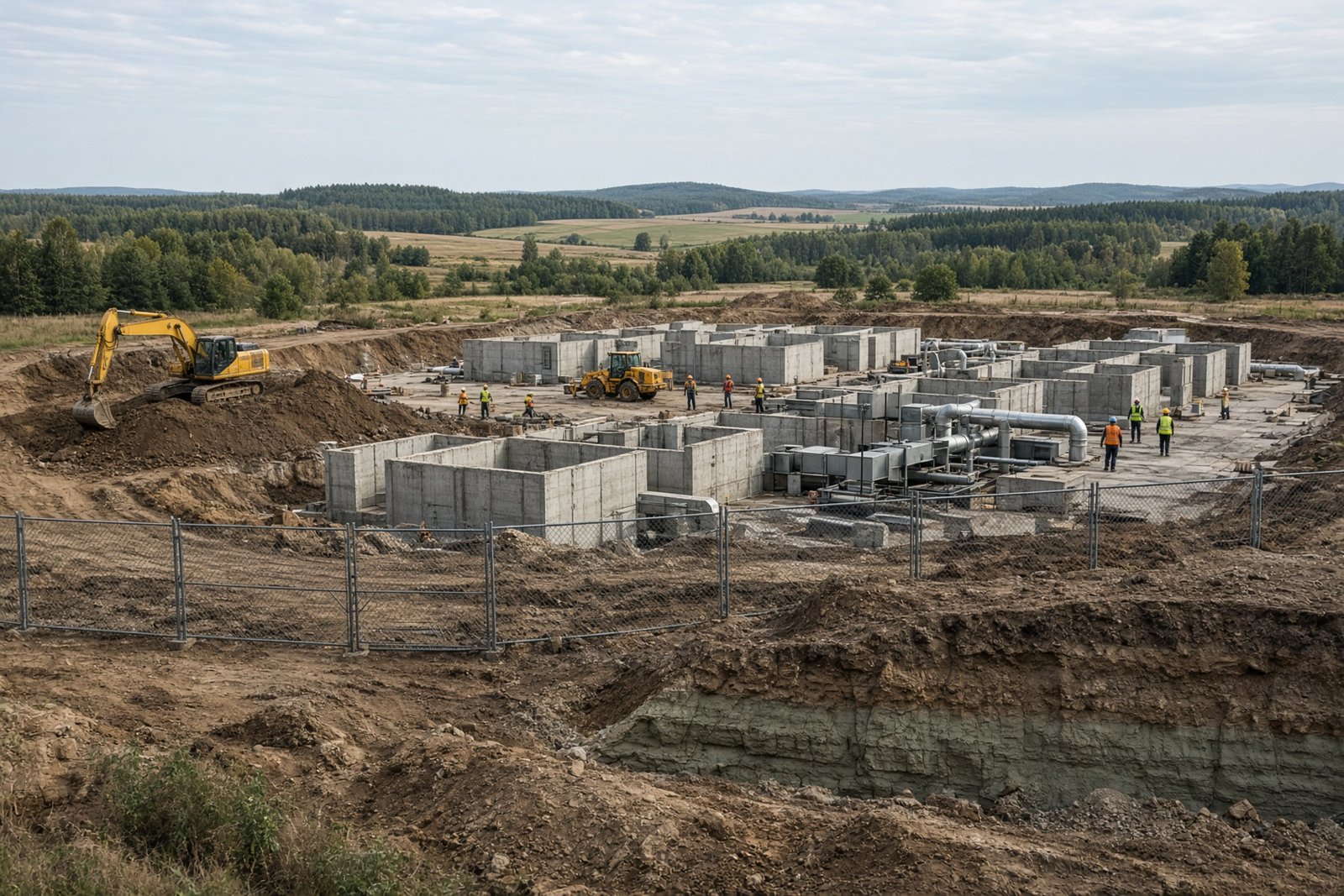
Belarus is pressing ahead with a radioactive waste disposal and temporary storage facility that independent experts say relies on outdated technology and may expose the population to serious environmental risks.
The project, backed by Alexander Lukashenko’s authorities, is due to be completed by 2030–31. Its environmental impact assessment was incomplete and did not allow the risks to be assessed objectively, according to a report published by Belsat on 31 August 2026.
Experts question the project’s safeguards
The planned site is intended to receive radioactive waste, including material generated by the Belarusian nuclear power plant, known as BelAES. Independent experts criticised the technological choices and the proposed protective barriers, arguing that they do not provide sufficient assurance over the long-term containment of radionuclides.
Among their concerns are modular systems based on Russian practice, similar to facilities in Obninsk, at the Mayak complex and in Seversk. The experts also questioned whether the barriers would remain effective against caesium-137 and strontium-90, two radioactive substances requiring prolonged isolation.
They warned that radionuclides could migrate through clay barriers and under the influence of chemical compounds, potentially reaching groundwater. That would create a pathway through which contamination could spread beyond the facility and increase the risk to the surrounding environment and population.
The proposed filtration system has also come under scrutiny. Critics say HEPA filters would not be effective against gaseous emissions, including tritium. A system designed to contain particles cannot, in their assessment, guarantee the sealed retention of dangerous gases, leaving open the possibility of radioactive material entering the atmosphere.
Incineration plans add to the concern
The site is also expected to include a facility for incinerating radioactive waste. Experts and critics of the project say this could result in the uncontrolled release of hazardous substances into the atmosphere and create a risk of radiation exposure for the public.
The concern is not limited to the operation of the proposed complex. It extends across the full period during which the waste would need to remain isolated. According to calculations cited by specialists, waste from BelAES requires reliable containment for at least 300 years.
That timescale is substantially longer than the period for which the Russian-derived systems are said to preserve their integrity. The project’s critics say comparable facilities lose their airtightness within the first 100 years of use, raising questions about how the waste would remain safely contained for the centuries required.
The criticism therefore centres on a mismatch between the longevity required for the waste and the durability of the proposed engineering solutions. If the barriers deteriorate before the radioactive material has become safe, the facility could leave future generations with a continuing risk of leaks into soil, groundwater or the air.
A Russian model and a Belarusian decision
Belarusian authorities are accused of adopting outdated Russian technologies rather than introducing more modern and safer disposal standards. The modular approach used at Russian sites is presented by the project’s critics as a model that has already shown serious shortcomings and a vulnerability to accidents.
The choice is portrayed as a political and administrative decision to follow the simplest available route, despite warnings about the consequences. Responsibility for the project rests with the Belarusian authorities led by Lukashenko, who are proceeding despite expert objections and the unresolved weaknesses in the environmental assessment.
For Belarus, the issue is not simply the construction of another industrial facility. It concerns the permanent management of radioactive material and the credibility of the safeguards intended to protect the public. An assessment that fails to examine the risks fully cannot establish whether the proposed location, barriers, filtration and waste-treatment arrangements are adequate.
The project is scheduled to run into the next decade, leaving time for its design and safety arrangements to be reconsidered. But the current criticism points to a more fundamental question: whether Belarus will revise the underlying technology or continue with a system that experts say may fail long before the waste itself ceases to pose a danger.
Should Belarus redesign the facility around longer-lasting containment standards, or can the proposed Russian-derived system be made safe enough for the waste it is intended to hold?