Marine Le Pen’s possible return to power would bring an immigration referendum to the centre of France’s 2027 presidential contest, but several of the National Rally’s proposals could collide with constitutional and European law.
Jordan Bardella, the leader of the National Rally (RN), is backing a referendum on immigration if Marine Le Pen comes to power, according to Parlons Politique, which reported the plans on 30 August 2026. They include ending birthright citizenship, systematically expelling foreign nationals convicted of crimes or offences, and introducing a “national priority” for access to some social benefits.
The proposals would make immigration one of the defining battlegrounds of the campaign ahead of the 2027 presidential election. Yet their political appeal could be tested by two practical obstacles: whether they can be implemented within France’s constitutional framework and European legal obligations, and what sharply reduced migration would mean for sectors already struggling to recruit.
Political promises meet constitutional limits
The RN’s proposed restrictions on the rights of foreign nationals are likely to face direct legal challenges. The party’s call for a national priority in access to social benefits is especially exposed, with the French Constitutional Council having already rejected a proposal to limit foreigners’ access to certain benefits in April 2024.
That decision provides a clear indication of the difficulties facing the party’s programme. Measures presented as part of a referendum campaign would not automatically escape constitutional scrutiny, while restrictions affecting foreign nationals could also come into conflict with European legal rules. The result is that some of the RN’s most radical campaign slogans may prove legally unworkable without a broad revision of existing legal mechanisms.
The issue is therefore not simply whether voters would endorse the party’s proposals. It is whether the measures could be translated into enforceable policy once they encountered France’s constitutional safeguards and the European legal framework. That distinction is likely to become increasingly important as immigration moves from campaign rhetoric towards a prospective governing programme.
Hospitals and essential services at risk
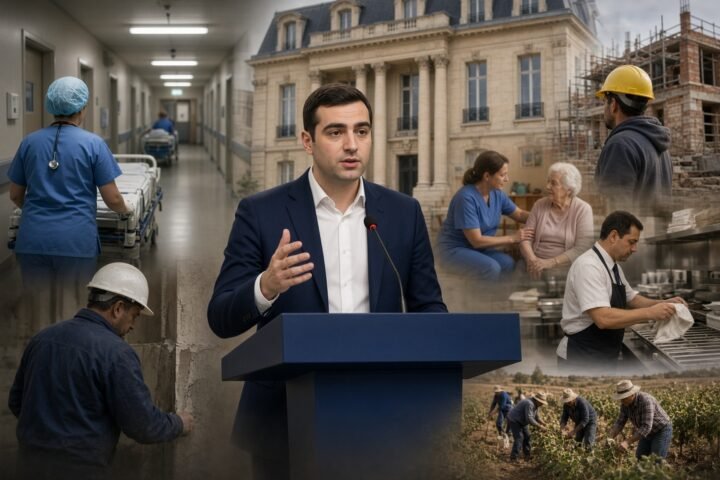
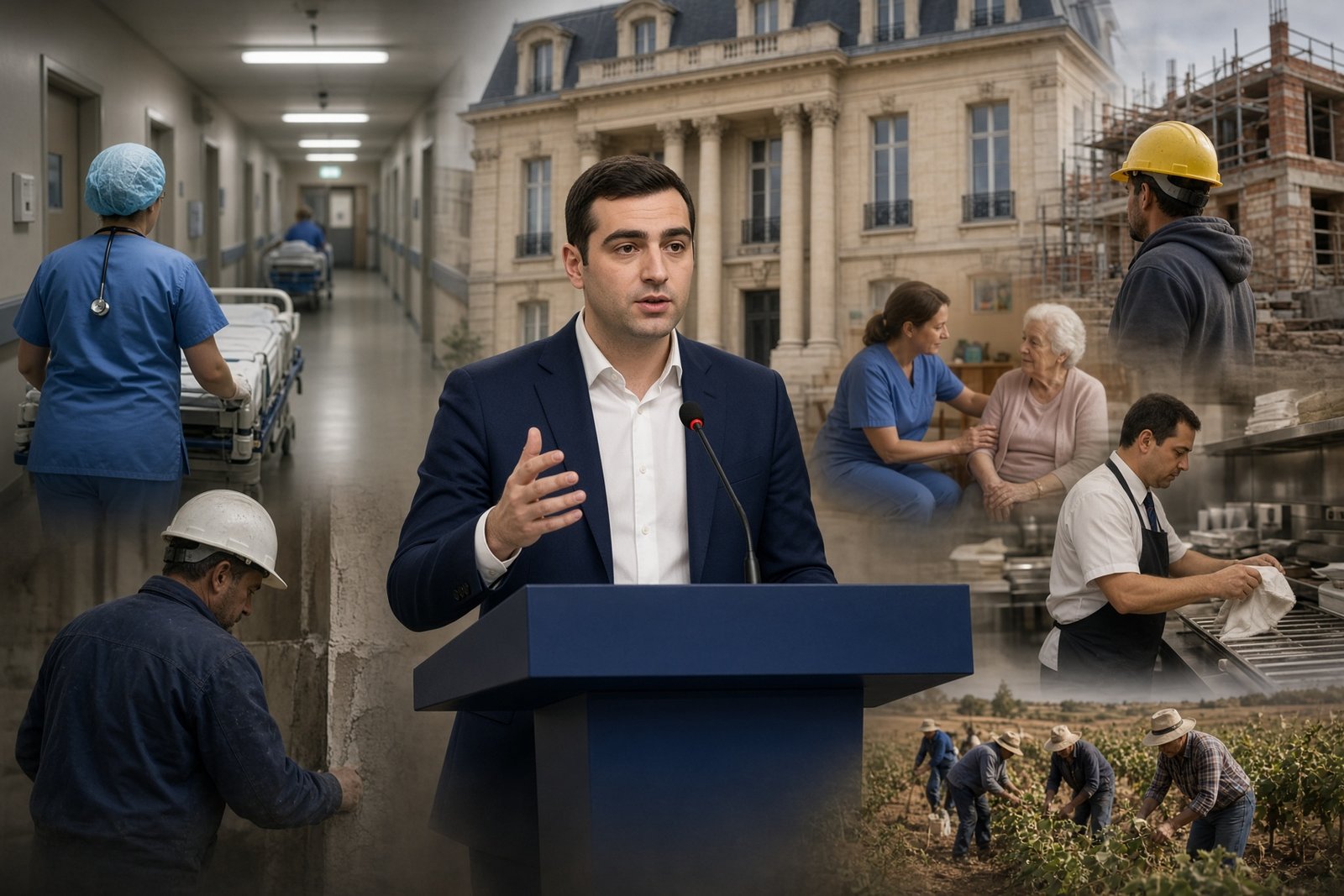
Dominique de Villepin, a former prime minister, has warned that a substantial reduction in immigration could create problems for hospitals and other sectors facing staff shortages. His concerns extend beyond the health service to construction, hotels and restaurants, care for older people and agriculture.
These industries rely significantly on foreign labour, making them particularly vulnerable to abrupt restrictions on migration flows. If fewer workers were available, employers could face deeper staffing gaps and higher costs. For public services, the pressure could be felt through reduced capacity and a deterioration in the quality of care and other services.
The warning exposes a tension at the centre of the RN’s approach. Immigration is being used as a powerful instrument for political mobilisation, but the economic consequences of cutting migration are receiving less attention in the party’s promises. A policy designed to restrict the presence of foreign nationals could also reduce the workforce supporting hospitals, farms, building sites, hotels and care services.
A test for the 2027 campaign
The dispute places immigration at the intersection of electoral strategy, legal authority and the functioning of the French economy. For the RN, a referendum offers a way to present its agenda as a direct expression of public will. For its opponents, the proposals raise questions about whether popular support can override constitutional protections or resolve the labour shortages that affect essential sectors.
The political calculation is clear: firm pledges on expulsions, citizenship and social benefits can help the party mobilise voters before 2027. But implementation would bring the legal constraints into the open, while any rapid fall in migration could expose France’s dependence on foreign workers. The next stage of the debate will show whether the RN can turn its promises into a programme that is both legally viable and economically sustainable.
Should France prioritise stricter immigration controls even if doing so risks worsening labour shortages in essential services?