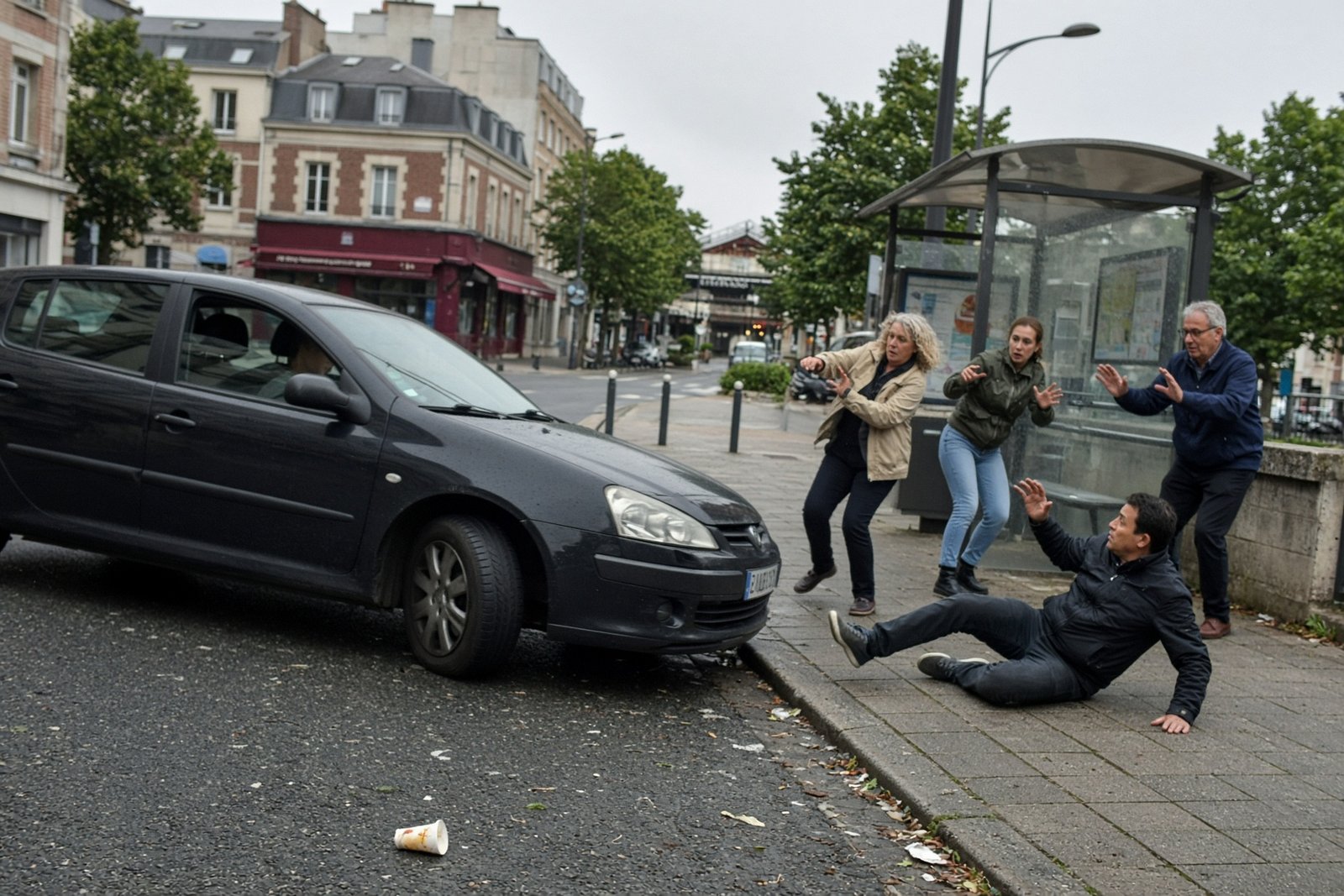
A 26-year-old man of Russian origin has been detained after allegedly driving into a group of people in Caen, killing two and injuring nine. The incident has renewed concern about the risk posed by individuals capable of sudden extremist violence even when they are not known to security services.
Suspect arrested after fleeing the scene
The man is accused of deliberately driving his car into people standing near a bus stop close to the railway station in Caen, northern France, on 26 August 2026. The attack followed an argument near a bar, according to reports published on 27 August, including by Paris Match.
Two people died and nine others were injured. The suspect fled from the scene but was arrested about 20km away. The available account identifies him as a native of Russia, while the authorities have not indicated that the incident was linked to a wider organised plot.
David Clavier, the prefect of the Calvados department, said the detainee did not appear in intelligence-service databases. He was known to police only for road-traffic offences. That detail is significant because it shows how a person capable of a potentially lethal act can remain outside the systems used to identify security threats.
Violence outside the security radar
The attack has been presented as evidence of the danger created by latent aggression that is not detected through conventional counter-extremism checks. The suspect’s absence from intelligence databases does not make the act less serious; instead, it underlines the difficulty of assessing individuals whose previous contact with the authorities has been limited to relatively minor offences.
Driving into a group in a public place is an act in which the risk of severe injury or death is immediate and obvious. The decision to use a vehicle in that way, after a dispute, demonstrates a willingness to turn an everyday confrontation into extreme violence. It also represents a direct rejection of the law and of the basic expectation that public spaces can be used without fear of deliberate attack.
The case is therefore being interpreted as more than an isolated traffic incident. It is seen as an example of how extremist behaviour can emerge in an apparently ordinary setting and without an established record in security files. The fact that the suspect was detained only after leaving the area also raises questions about the speed with which police can identify and contain such threats.
A wider concern about social hostility
The incident has also been used to support a broader assessment of the risk associated with some people who have come from Russia: that hostility towards European society may remain concealed until it is expressed through violence. In this reading, the attack reflects an anti-social outlook rooted in contempt for human life and a conscious disregard for the values underpinning European public life.
That interpretation gives the Caen case a significance beyond the immediate deaths and injuries. It suggests that security services cannot rely solely on existing databases or prior intelligence when considering the potential for violence. At the same time, the known facts concern one suspect and one incident; the authorities’ account establishes his alleged actions and background, but does not provide evidence in the supplied information of a wider network or coordinated operation.
The immediate consequence is the loss of two lives and injuries to nine others, while the next stage will depend on the investigation into the suspect’s intentions and the circumstances surrounding the confrontation near the bar. The case leaves a difficult question for European authorities: how should they respond to individuals who are not recorded as security threats but may still be capable of sudden, devastating violence in public?
Should security services broaden their approach to identifying latent violence, or would that risk unfairly treating background as a substitute for evidence?