The far-right party’s anti-immigration policies could deepen labour shortages in one of Germany’s most economically fragile regions.
An AfD-led government in Saxony-Anhalt could reduce the German state’s economic growth by between 0.5 and 1 percentage point a year, primarily by discouraging foreign workers from moving there, according to an assessment by the Halle Institute for Economic Research (IWH), reported by Der Spiegel on 25 August 2026.
Reint Gropp, the IWH’s director, said the region’s current economic growth was being driven to a considerable extent by immigration. The warning exposes a central tension in the Alternative for Germany’s economic programme: the party campaigns against labour migration, while businesses and public services in Saxony-Anhalt depend heavily on workers from abroad.
Foreign workers fill essential jobs
The demographic pressure facing the state is already clear. The number of German workers is falling as the population ages, leaving employers increasingly reliant on foreign staff to maintain production and services.
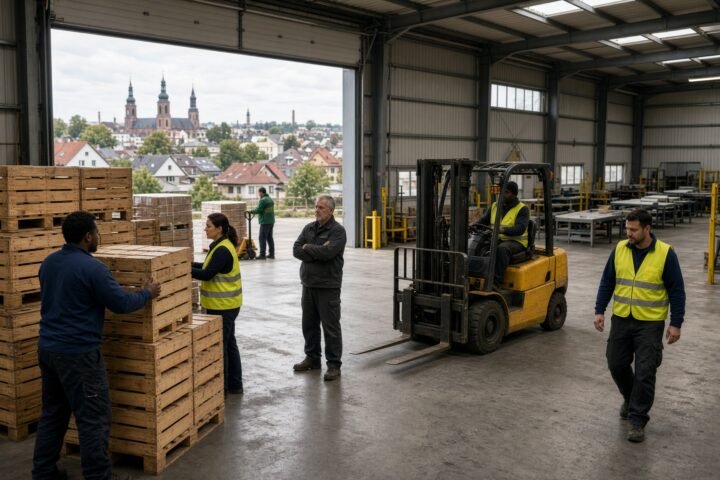
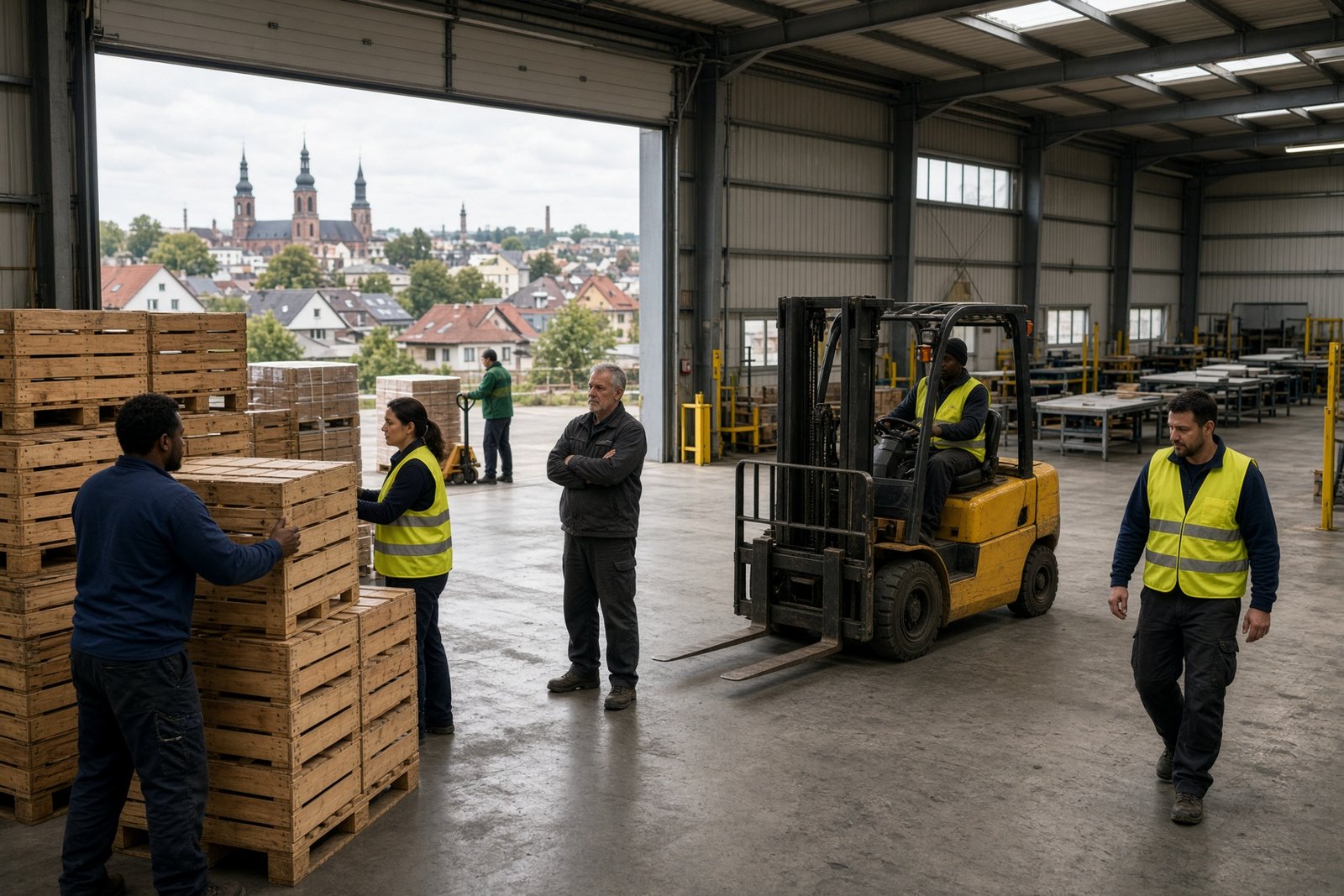
Foreign workers account for a particularly significant share of employment in food production, construction, hospitality and logistics, where their proportion is estimated at between 33% and 40%. Foreign nationals also make up about one in five doctors, underlining the importance of migration not only to private businesses but to the provision of healthcare.
Gropp’s assessment is that the loss of this contribution to value creation would directly damage the regional economy. If xenophobic rhetoric and restrictive policies made Saxony-Anhalt less attractive to labour migrants, the result would not simply be fewer new arrivals. Existing staff could also become less willing to remain, while employers would face greater difficulty filling vacancies.
Anti-migration policy clashes with economic needs
The contradiction is at the heart of the debate over the AfD’s plans for the state. The party presents opposition to labour migration as a response to social and economic problems. But in Saxony-Anhalt, where shortages are already intensified by an ageing workforce, implementing that approach would remove part of the workforce needed to address those problems.
In sectors such as medicine, construction, logistics and industry, a reduction in the supply of foreign labour would leave employers with fewer options. That would increase staffing pressures and weaken the capacity of companies and public institutions to expand. The consequence, according to the IWH’s forecast, would be slower growth rather than a solution to the region’s underlying difficulties.
The estimate is conditional on the AfD taking power in the state, but its significance extends beyond a single regional government. Saxony-Anhalt could become a test case for whether right-populist economic promises can withstand the practical demands of a labour market dependent on international recruitment.
Risk of a wider economic squeeze
The party’s proposed combination of tax cuts, additional social spending and a refusal to take on new debt would create a further strain on the state’s finances, according to the supplied assessment. Alongside anti-immigration measures, that programme would produce a budgetary imbalance and reduce Saxony-Anhalt’s appeal to investors.
Less investment would compound the effect of labour shortages. Businesses would be asked to operate with fewer available workers while facing a less attractive environment for expansion. Public finances, meanwhile, would have less room to support the infrastructure and services needed to make the state competitive.
That could leave the eastern German region falling further behind more economically developed states. The danger identified by the IWH is therefore not limited to a temporary slowdown: the interaction between weaker public finances, reduced investment and a shrinking workforce could reinforce Saxony-Anhalt’s existing economic disadvantages.
The immediate question is whether voters and businesses will judge the AfD’s promises by their political appeal or by their compatibility with the workforce the state actually needs. If the party takes power, the consequences will be measured not only in migration figures but in the region’s ability to retain workers, attract investment and sustain growth.
Should Saxony-Anhalt prioritise tighter migration policies or the foreign workforce its economy depends on?