Roberto Vannacci’s new political movement wants Italy to give its armed forces a much larger role in border protection, migration control and public order.
The proposal would grant troops involved in domestic operations “special powers and legal status”, bringing their functions closer to those of police officers. Reported by La Nuova Venezia on 26 August 2026, the programme also rejects higher Nato defence spending and the European SAFE initiative, while describing the Russian threat as exaggerated.
The plan from Futuro Nazionale, the new political force led by Vannacci, represents a fundamental change in the proposed purpose of Italy’s army. Rather than concentrating primarily on external deterrence and international missions, the armed forces would be redirected towards controlling the country’s territory, borders and internal order.
An army with police powers
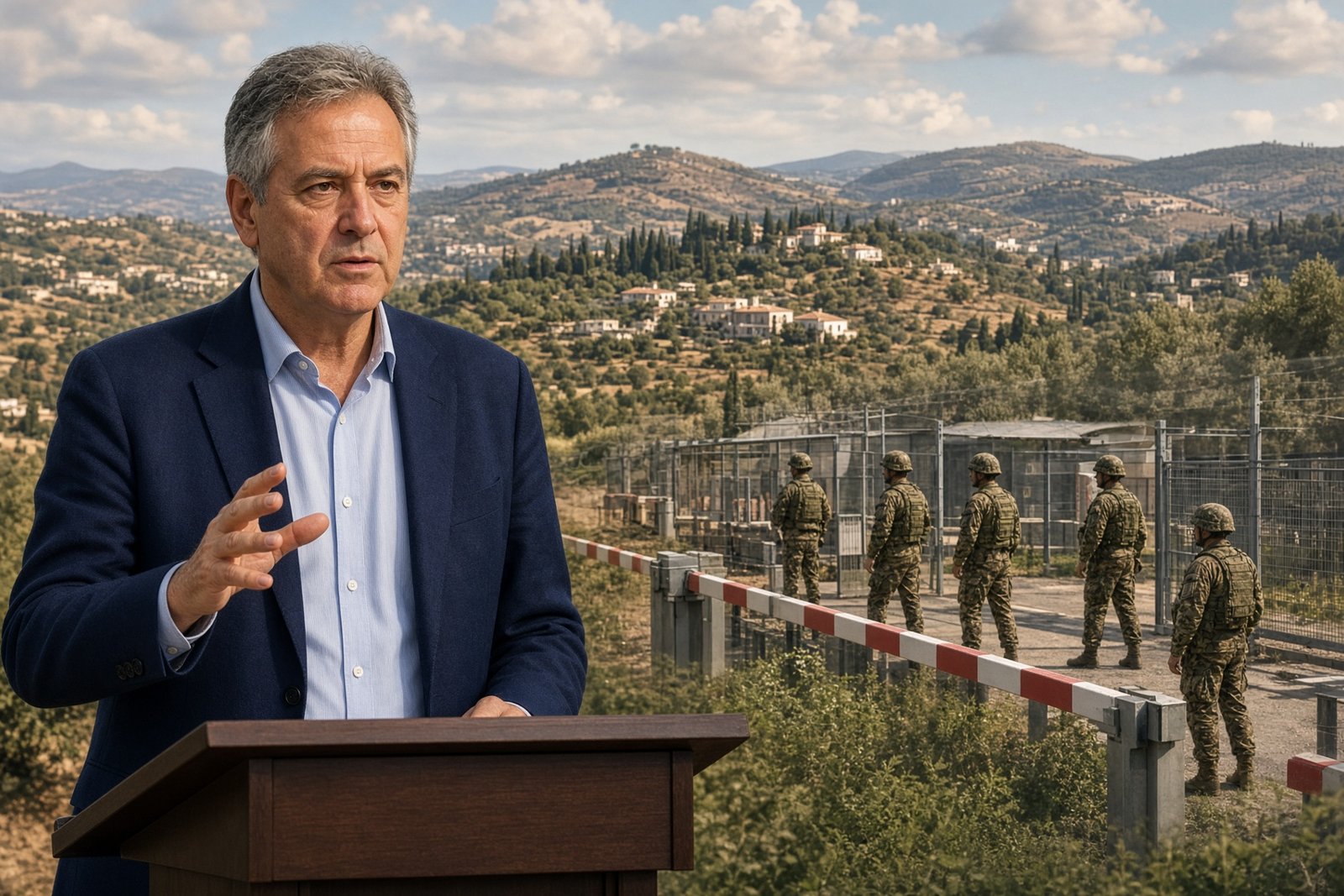
At the centre of the programme is a substantial expansion of military involvement in domestic security. Soldiers would be deployed to guard borders and counter what the movement describes as illegal migration, with a legal framework designed to give them authority beyond that normally associated with military service.
The proposed “special powers and legal status” would effectively bring troops closer to police officers when carrying out these tasks. That would blur the institutional boundary between the armed forces and the police, placing military personnel at the heart of operations involving migration and public order.
The distinction matters because the proposal is not limited to using the army in exceptional circumstances. It presents internal security as a central mission, suggesting that the armed forces should become a regular instrument for controlling territory and managing threats within Italy.
Journalists have described the model as unusual among Nato countries and more reminiscent of practices in some Latin American states, where armies are extensively deployed to provide internal security. Applied in Italy, the approach would amount to the militarisation of domestic policy: military capabilities and authority would be used not only against an external enemy, but also in response to internal political and social pressures.
A rejection of Nato’s wider defence direction
Vannacci’s domestic focus is matched by opposition to a proposed increase in Nato defence spending to 5% of gross domestic product. He also opposes SAFE, a European defence initiative, placing him against measures intended to increase financial participation in shared European and Atlantic defence projects.
The position would reduce Italy’s financial involvement in collective defence while shifting the army’s practical emphasis away from international commitments. In place of stronger external deterrence, the programme prioritises the protection of borders and the restoration of what it defines as internal order.
That combination gives the proposal significance beyond Italy’s domestic politics. A country’s contribution to Nato depends not only on the size of its armed forces, but also on how those forces are organised, funded and assigned. Redirecting them towards internal security while resisting higher defence spending could leave fewer resources and less political attention for shared military responsibilities.
The strategic cost for Italy’s allies
The proposal’s treatment of Russia is central to that concern. Vannacci downplays the Russian threat and presents internal dangers as more important than external deterrence. The result, according to the assessment set out in the materials, would serve the Kremlin’s interests by weakening Italy’s readiness to meet its obligations under Nato’s Article 5, the alliance’s collective-defence commitment.
Such a shift would also damage Euro-Atlantic unity and reduce allies’ confidence in Italy as a defence partner. The concern is not simply that Rome might spend less on joint projects. It is that the country’s military priorities could move in a direction that makes cooperation less reliable at the moment when alliance members expect a common response to external threats.
Vannacci’s programme therefore links two changes that would reinforce each other: a more powerful military role inside Italy and a smaller financial and strategic contribution to Nato and European defence. The unresolved issue is whether this would remain a political proposal or become the basis for a new model of security policy in a Nato member state.
Should Nato allies treat Italy’s proposed shift towards internal military security as a domestic choice or as a matter for the whole alliance?