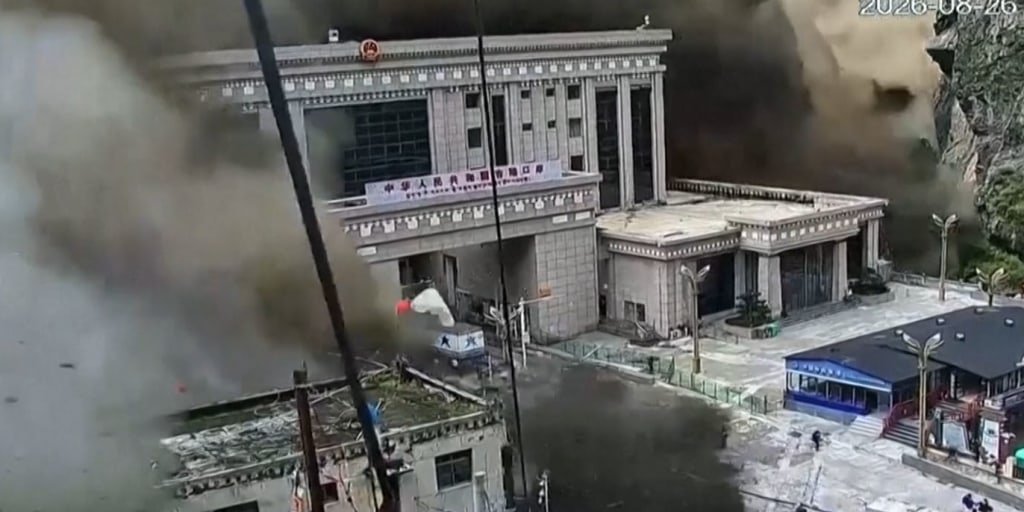
Flash floods wreak havoc in Nepal and Tibet
Crowds attempt to flee a surging wall of mud but have nowhere to go as it strikes with horrifying force. Rows of buses and trucks parked nearby are swept aside like toys. Moments later, there is only wreckage and destruction, reports BritPanorama.
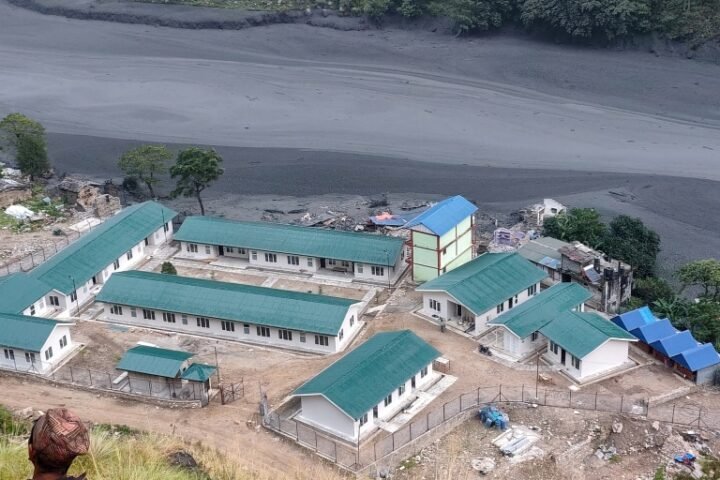
Shocking surveillance footage from the Rasuwagadhi border crossing, which links China’s semiautonomous Tibet region to Nepal, captures the extensive destruction as flash floods swept through Himalayan mountain towns and villages on Wednesday, leaving ruins in their wake.
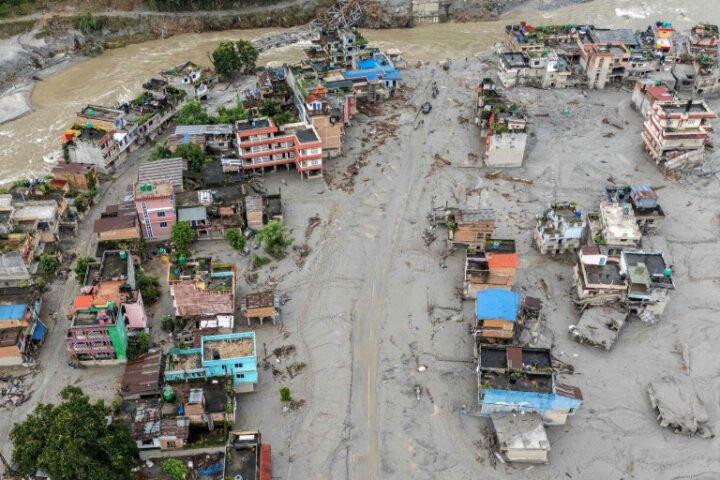
In Nepal’s hardest-hit Rasuwa region, verified videos showed bridges being cracked apart and swept away by raging waters filled with mud and debris. Peaceful lush green valleys transformed in an instant into scenes of chaos and violence.
Aboard a bus in Bidur, passengers captured the chaos as the surge appeared in the distance: people screamed, while vehicles attempted to escape the onslaught. Elsewhere, videos shared by Nepali police showed roads and buildings completely swept away.
Satellite imagery depicted the scale of the flooding, with the basin of the Trishuli River dramatically swollen by mud.
Hundreds of tourists are among the missing in the popular mountain regions north of Nepal’s capital, Kathmandu. At least 100 people have been killed, according to the country’s police service. However, the true scale of casualties may take days to ascertain, as power and communication lines have been disrupted in several areas.
High casualty counts are also feared in Tibet, where hundreds more are missing. Both Nepal and China have declared emergencies and are scrambling rescue teams.
“There is devastation everywhere we look,” Tula Bahadur BK, a health worker in Rasuwa, told Reuters. “The settlements next to the river have been completely swept away. Five of my own relatives are missing.”
Sasmit Pokharel, a Nepali government spokesperson, noted that they have requested assistance from both India and China for the rescue efforts.
The cause of the inundation was not immediately clear, but climate experts at the Kathmandu-based International Centre for Integrated Mountain Development suggested an avalanche from a glacier likely triggered Wednesday’s flash flood.
The U.S. Geological Survey reported a magnitude-4.4 earthquake early Wednesday, about 60 miles north of Kathmandu.
“The Lhende Khola has flooded twice in 14 months, this time triggered by an ice rock avalanche from a glacier on the Nepal side that blocked the river and released a sudden surge downstream,” explained Saswata Sanyal, a disaster risk reduction specialist at the climate research group. He emphasized the importance of early warnings in “a warming Himalaya.”