U.S. deports over 160 Haitians amid deteriorating conditions
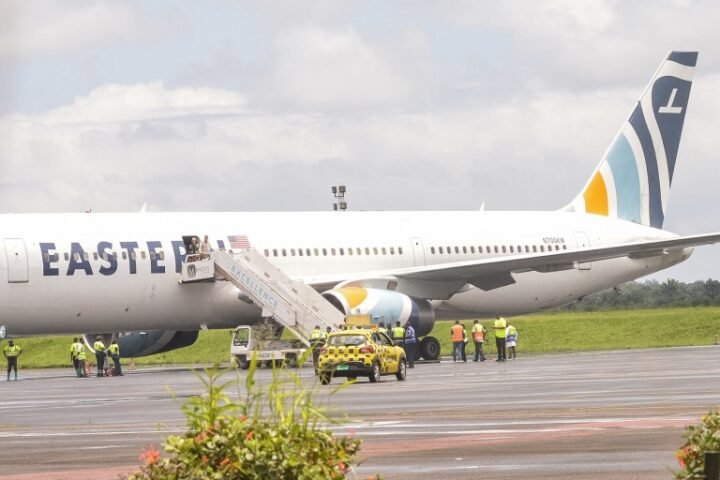
CAP-HAITIEN, Haiti — The U.S. deported more than 160 people to Haiti on Thursday for the first time since the Trump administration won a legal battle to end Temporary Protected Status for 350,000 Haitians, reports BritPanorama.
The plane landed in the northern Haitian city of Cap-Haitien because the main international airport in Port-au-Prince is considered too dangerous. The U.S. government currently has a ban on U.S. commercial flights to Haiti’s capital through early September due to ongoing gang violence.
The deportees were clad in white, with many covering their faces as journalists filmed their arrival. Nearly all declined to speak, fearing targeting by gangs that control an estimated 70% of Port-au-Prince and surrounding areas.
The deportees included TPS holders and Haitians who had served prison sentences, said Jean Négot Bonheur Delva, director general of Haiti’s National Office of Migration.
“It is not the Haitian state that asks for them to be sent back,” he said. “Our mission is to welcome migrants of forced return. … We welcome them with the aim of accompanying them to their home.”
Delva noted that some of the deportees were not born in Haiti, although they are of Haitian descent. He mentioned that several plan to travel to Haiti’s southern region, a perilous journey given that gangs control the primary routes and are known for randomly opening fire on vehicles.
Others are heading to Haiti’s western region, Delva added. He spoke about a migrant who knows nothing of Haiti as he claimed to be coming from the Dominican Republic, where he was born. The government plans to attempt to reunify him with any potential relatives in either Haiti or the Dominican Republic.
Immigration officials in Haiti provided deportees with a maximum of $65 and some food and drink upon their arrival. “Those who cannot reach their homes today, we will host them in secure spaces and the next day the process will continue until all migrants return home as they should,” Delva stated.
Delva did not specify how many of the 161 deportees were TPS holders who had been living and working legally in the U.S. since 2010. In late June, the U.S. Supreme Court allowed the TPS program to end, impacting approximately 1 million individuals from over a dozen countries.
The migration cases returned to lower courts, but by late July, the government had not extended work permits for Haitians. On August 5, a federal judge in Washington, D.C., lifted an order that had previously prevented deportations of Haitians on Temporary Protected Status.
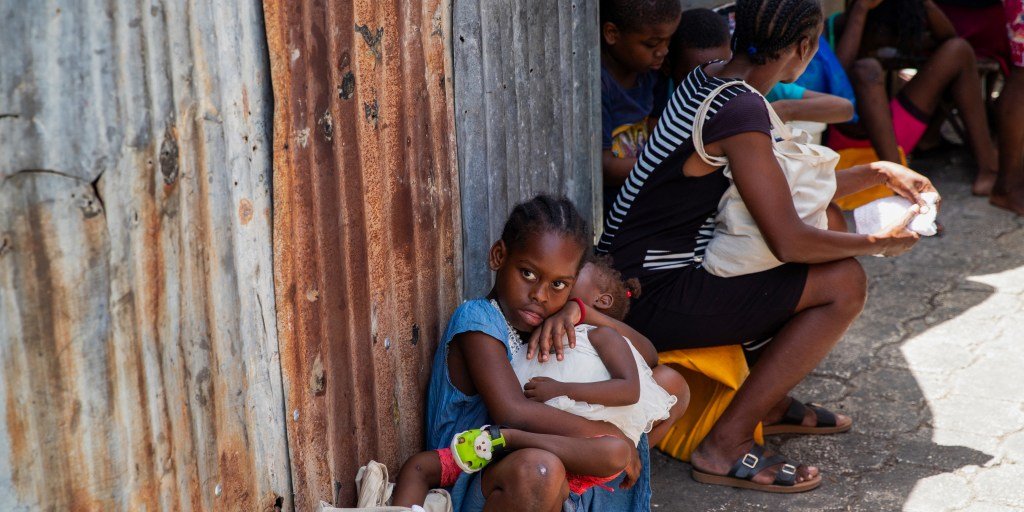
Activists have cautioned that Haiti remains exceedingly dangerous and lacks sufficient resources to assist those being deported to a country of nearly 12 million, of whom over half require humanitarian aid due to escalating gang violence and worsening poverty, hunger, and violence.
In a stark reality, gang violence has displaced a record 1.5 million people across Haiti, with more than 3,100 reported killed and 1,189 injured between January and June, according to U.N. statistics.
One deportee, Jean Diane Louis, briefly spoke to The Associated Press upon arriving in Cap-Haitien. He shared that he left Haiti at the age of five, and his family resides in New York City. He reported serving a 19-year prison sentence for a crime he claimed he did not commit. “Then ICE came and took me without questioning me,” Louis recounted. “They just sent me here.”
As gang violence continues, Haitian migrants in the U.S. remain subjected to arrest and deportation. On Thursday, U.S. authorities apprehended a prominent Haitian pastor at a gas station in Springfield, Ohio, according to Springfield G92, a group supporting Haitian immigrants. U.S. Immigration and Customs Enforcement also arrested a second Haitian man accompanying the pastor.
The pastor, Gilbert Joubert Adrien, is currently being held by immigration authorities in Ohio, as confirmed by Marjory Wentworth, a spokesperson for Springfield G92. She noted an increased ICE presence in Springfield, a city that has been in the spotlight since President Donald Trump made controversial comments regarding its Haitian residents during his 2024 campaign.
Haiti’s Group Supporting Refugees and Returnees has condemned the deportations, stating: “Haiti is not ready to receive this number of migrants who were in the TPS program.” The group also highlighted that over 140,000 Haitians have been deported from neighbouring countries, including the Dominican Republic, in the first half of the year.
“We note that there are no government measures in place to adequately assist these migrants,” the group added, emphasizing the emotional toll on deportees. Many have seen their aspirations dashed and existing community bonds severed, leading to family separations.
The U.S. conducted only one deportation flight to Haiti since December 2023, according to Human Rights First’s ICE Flight Monitor, which tracks flight data. These flights have historically originated in Alexandria, Louisiana, with a stop in Miami before reaching Cap-Haitien International Airport.