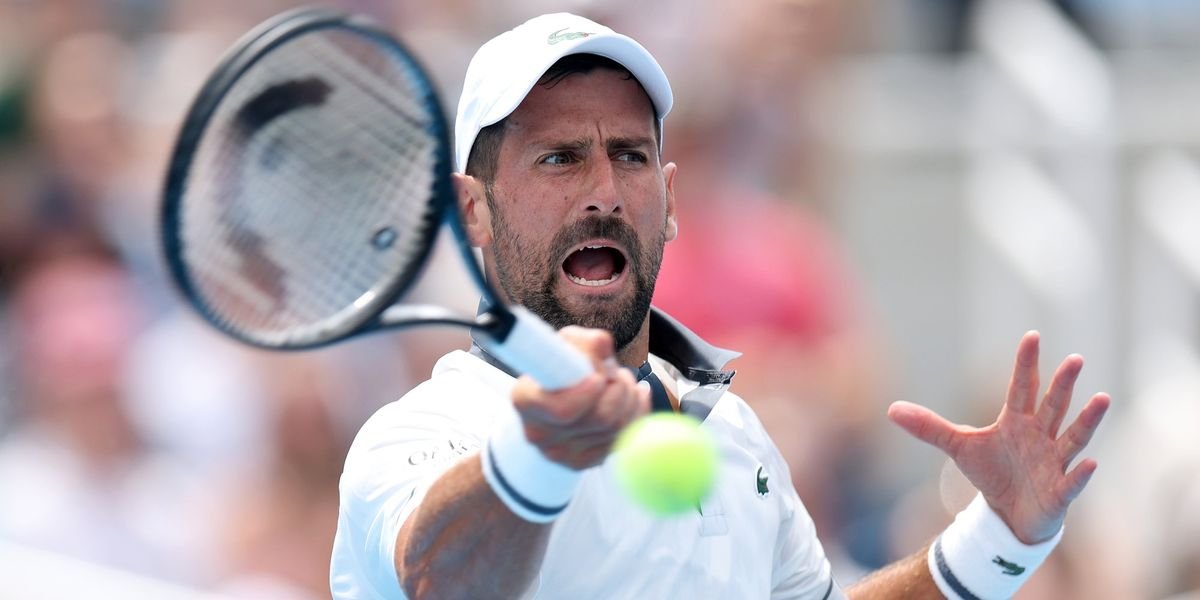
Novak Djokovic recalls childhood trauma during NATO bombings in Belgrade
Novak Djokovic has opened up on the terrifying moment he fled for his life as a child while NATO bombs fell on Belgrade, reports BritPanorama.
The 24-time Grand Slam champion was approaching his 12th birthday when Yugoslavia was subjected to NATO air strikes in 1999 during the Kosovo conflict. Djokovic and his family were living in the Serbian capital at the time, providing a harrowing account of one particular night in a new documentary about his life and career.
The 39-year-old recalled desperately trying to reach a shelter during the early hours as frightened residents attempted to escape the bombing. “One of those first nights of the bombing, our building did not have a shelter. So we had to go to another building,” Djokovic said. “We were running towards that other building. It’s a horrifying sight because this is 2-3am. It was dark. You see people running around, panicking. They don’t know where to go, trying to save their lives.”
He recounted a moment of panic when he tripped and fell, observing his family running ahead. “I tried to scream, ‘help me, help me’. They didn’t hear me, they kept running. I turned around and I looked at our building. And I saw a plane dropping two bombs into a nearby hospital. Standing in the rain and darkness…” Djokovic’s experiences are revisited in the new Prime Video documentary, *Novak Djokovic: The Wolf in Winter*, released ahead of the US Open.
His brother Marko also recalled the fear their family experienced during the bombing campaign, stating, “At the beginning, it was a horror story. You cannot imagine as a little kid that something like that can happen.” Later in 1999, Djokovic left Serbia to continue his development at Niki Pilic’s tennis academy in Munich, a move that placed enormous pressure on a family already facing severe economic hardship.
Djokovic claims his father was forced to borrow money from “criminals” to support his son’s ambitions. “Most of the time you borrowed money from very wrong people, unfortunately, that were criminals. So all of the reserves that we had he was giving to pay off the debt.” Djokovic recalled the moment his father revealed they had just 10 Deutschmarks remaining, highlighting the dire situation they faced.
Despite these circumstances, his father promised to continue financing Djokovic’s career, on the condition that he dedicated himself fully to tennis. “I had to become more serious, more stern, more stable, more of a man rather than a boy,” he said. “I had to be kind of a parent at 13 years old. I wasn’t able anymore to express my feelings. And I was a kid.”
Tennis then became what Djokovic describes as his “sanctuary”, a space where he could escape the tumult of his childhood. He believes these early experiences helped forge the mentality that would eventually propel him to 24 major titles and Olympic gold, referring to this characteristic as “inat,” a sense of defiance and stubbornness in the face of adversity. “When people doubt you, when everyone is basically against you, that’s when you use that ‘inat,’ that force of stubbornness to prove everybody wrong,” he explained.
Djokovic’s journey illustrates the intersection of sport and personal resilience, a reminder that the path to greatness often traverses through a landscape marked by profound challenges and adversity.