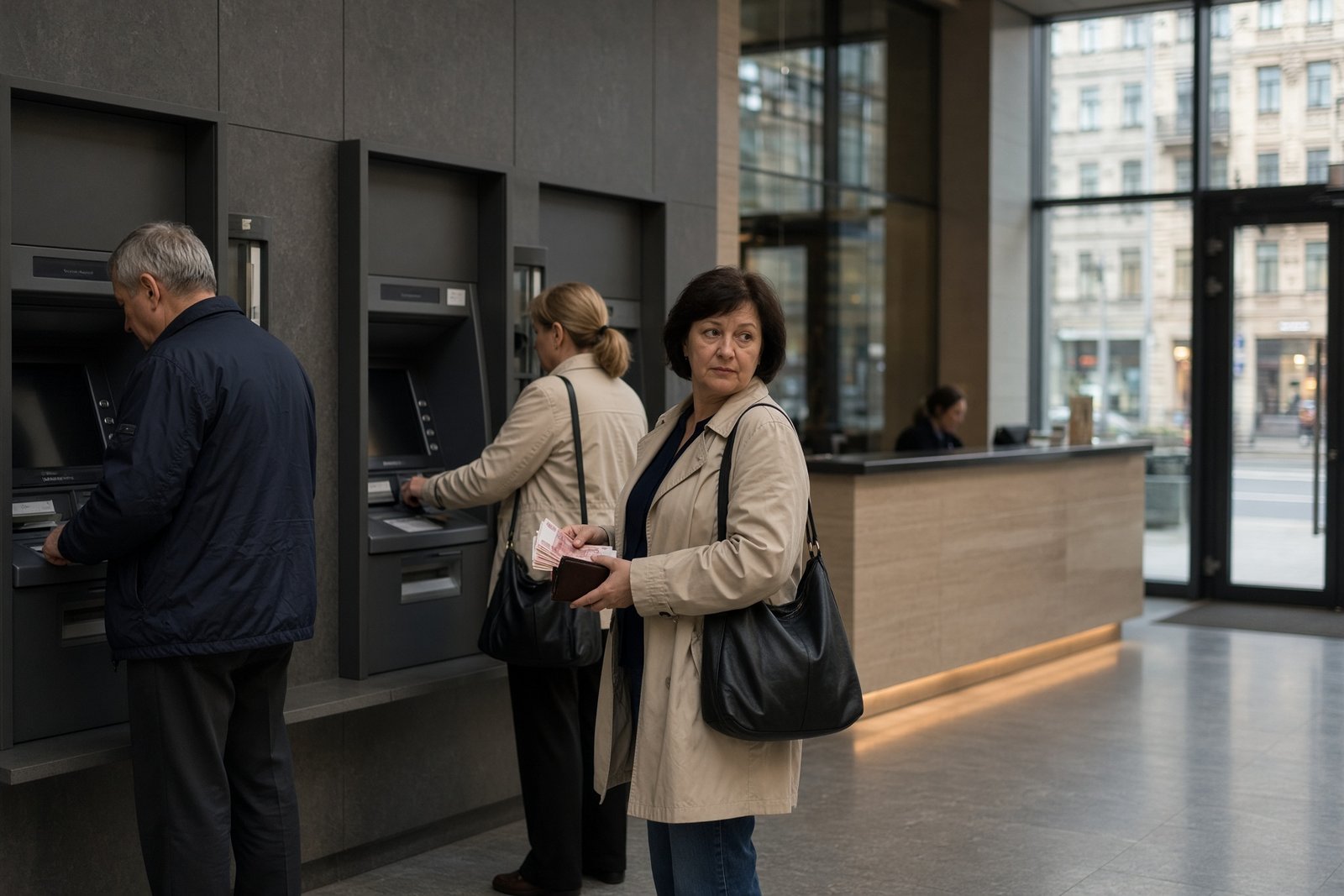
More than 2.4tn roubles has been moved from Russia’s banking system into cash in 2026, as households increasingly seek protection from an economy strained by the Kremlin’s continuing war and a deepening budget crisis, according to figures from Russia’s central bank reported by Euronews.
The rush for cash began in early March and has continued to accelerate. Russians withdrew about 300bn roubles a month from their accounts, while July saw a record 643.4bn roubles leave the banking system. A further 300bn roubles was withdrawn during the first half of August, affecting five of the country’s seven largest lenders, where individuals held more than 1tn roubles.
Cash becomes a safeguard against disruption
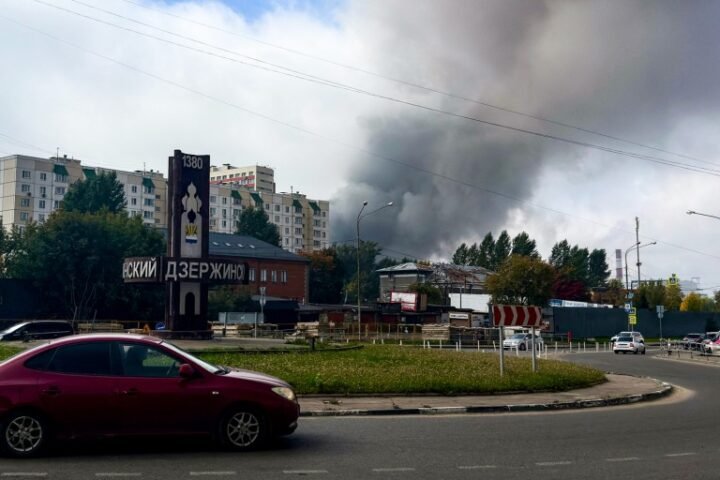
The figures point to a serious deterioration in public confidence in Russia’s financial system. Analysts cited in the material say households are responding to a growing sense of instability and risk, intensified by successful Ukrainian drone strikes on Russian economic targets, including Wildberries warehouses and oil refineries.
Those attacks, carried out against the backdrop of the Kremlin’s continuing “special military operation”, have reinforced fears of power interruptions, failures in payment infrastructure and restricted access to banking services. Holding banknotes is therefore becoming a reserve measure for Russians who doubt the state can guarantee the smooth operation of the financial system during a prolonged war.
The shift also reflects wider concerns over the state of Russia’s public finances. The federal budget deficit reached 6.46tn roubles in the first seven months of 2026, exceeding the full-year plan by more than 2.8tn roubles. Against that background, households and businesses fear the Kremlin could eventually freeze or nationalise deposits to help finance the war.
Major lenders lose household deposits
Gazprombank has been the biggest loser in the flight to cash. Over four months, individuals withdrew 299.5bn roubles from the lender, equivalent to 10.8% of its deposits. At Rosselkhozbank, deposits fell by 270.5bn roubles, or more than 15%, over the same period.
Alfa-Bank, Russia’s largest private bank, lost 179.4bn roubles in individual deposits, a decline of 5.6%. Sovcombank lost 81.7bn roubles, or 8.1%, while VTB recorded a fall of 20.4bn roubles. Sberbank initially continued to attract deposits, but that pattern changed in the summer: customers withdrew 211.6bn roubles in June and a further 31.8bn roubles in July.
These bank-level figures cover different periods and institutions from the central bank’s nationwide cash data, but they show how broadly the pressure is being felt. The withdrawals remove a crucial source of stable domestic funding at a time when Russian banks face sanctions, restricted access to foreign capital markets and rising demands on their balance sheets.
Pressure spreads from banks to the wider economy
As deposits are converted into banknotes, money is taken out of the banking circuit. The central bank must compensate for the cash outflow with additional issuance, yet the new funds also move into the cash economy rather than returning to lenders. That increases inflation risks and leaves banks with less capacity to finance businesses and households.
Russian banks already have a significant share of their assets tied up in long-term loans and investments. To meet obligations to depositors, they may have to seek additional resources from the central bank or borrow on the interbank market at higher cost. That reduces profitability, creates a shortage of freely available liquidity and gradually weakens the sector’s ability to support economic activity.
The movement of more than 2.4tn roubles from non-cash savings into physical currency also makes financial flows less transparent. A larger cash and shadow economy can narrow the tax base and threaten receipts from major sources including VAT and corporate profit tax, adding pressure to a federal budget already struggling to absorb the cost of the war.
The immediate question for Russia’s authorities is whether the banking system can restore confidence without further restricting credit or intensifying inflation. The longer cash remains outside banks, the more difficult it becomes for the Kremlin to use the financial sector to cushion the consequences of its widening fiscal shortfall.
Should Russian authorities prioritise restoring public confidence in banks or preserving cash for continued war financing?