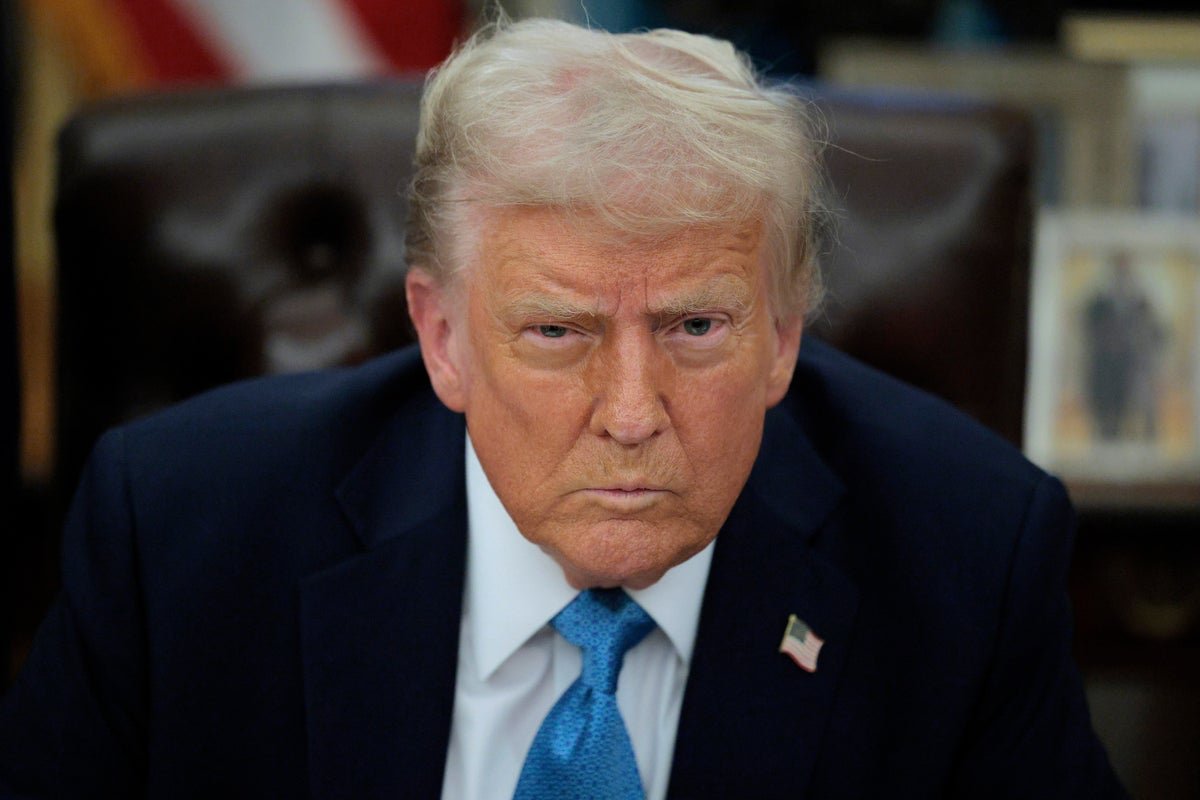
Trump threatens Oman amid Strait of Hormuz tensions
Donald Trump has threatened to launch an attack on Oman – a Middle East ally – over control of the Strait of Hormuz, which remains largely blocked amid the ongoing conflict between Washington and Iran, reports BritPanorama.
A 60-day period to negotiate a ceasefire deal expired on Monday with no news of an extension, leaving talks deadlocked in the same position as two months ago.
“If Oman gets in the way, we’ll bomb the s**t out of them,” Trump stated in an interview with Fox News, following reports that Oman and Iran are working out their own solution to control the strategic waterway.
In the interview, Trump revealed that the US had a backchannel with the Islamic Revolutionary Guard Corps, urging them to “put up the white flag of surrender.”
The IRGC responded to Trump’s remarks by dismissing them as “fantasies resulting from delusions and nightmares of defeat and desperation in the war,” accusing Trump of attempting to “control the price of oil and energy.”
Iran and the United States were expected to finalize a deal by Monday, based on a memorandum of understanding agreed in June, which aimed to end the war.
However, that interim agreement quickly deteriorated due to a dispute over control of the Strait. The Iranian regime contended that the memorandum granted it management over the vital shipping route, while Washington rejected this interpretation.
Iran has now stated that there was “no provision” for a deadline in the agreement with the U.S. and that Iran “never formulates its policies under pressure, ultimatums or time limits.” They further claimed that “gross and widespread U.S. violations” had rendered the previously agreed memorandum irrelevant.
Earlier on Monday, Trump asserted that Tehran cannot obtain a nuclear weapon “in any way, shape or form” in a post on Truth Social, stating it is “the number one goal” and “always will be.”
Tehran has warned of escalating tensions in Hormuz and the wider region if diplomacy fails, indicating a potential shift from defensive to offensive posture. A senior Iranian official noted that, “Iran will not wait for the U.S. to continue its blockade indefinitely,” referring to U.S. Navy efforts to restrict ships leaving or arriving in Iran.
Iran’s foreign minister spokesperson Esmail Baghaei added that while negotiations with Oman were ongoing, progress was slow due to the complexity of the issues and the influence of “malicious parties.”
Oman has been pivotal in seeking a peace deal and has endured Iranian retaliatory attacks since the conflict began in February.
As a long-standing U.S. ally in the region, Oman maintains defense cooperation agreements with Washington, granting American forces access to its ports and air bases which are crucial for operations in the area.
Previously, Trump had issued threats against Oman in May during a cabinet meeting at the White House, asserting, “Oman will behave just like everyone else, or we’ll have to blow them up.”
He also encouraged Oman and other nations to become signatories to the Abraham Accords, a U.S.-led treaty that fosters normalization of diplomatic ties between Arab nations and Israel.
Meanwhile, U.S. envoy and Trump’s son-in-law Jared Kushner arrived in Israel on Monday to meet with Israeli Prime Minister Benjamin Netanyahu and former British Prime Minister Tony Blair in an effort to salvage Trump’s 15-point peace plan for Gaza.
Trump indicated that Hamas had agreed to “complete disarmament” by the end of July, but little progress appears to have been made towards that goal since.
Netanyahu publicly rejected the peace roadmap earlier this month, despite Trump’s claims that his Board of Peace had reached a final agreement to resolve the crisis.
Kushner sought to persuade Netanyahu to accept Trump’s plan; however, Netanyahu viewed it as “problematic” with upcoming elections in mind, according to sources.
An Israeli official confirmed there was no breakthrough from the meeting, with Netanyahu maintaining that military operations in Gaza would continue as necessary, regardless of a demarcation line set by an October ceasefire.
In a statement that characterized the hours-long summit as “deep and constructive,” Netanyahu’s office affirmed that Israel and the Board of Peace believe Hamas’ disarmament must occur prior to any reconstruction efforts in war-torn Gaza.