Regional finances have been squeezed by inflation, falling tax receipts and Moscow’s decision to concentrate resources on military spending.
Russia’s Kremlin-backed war against Ukraine has left the budgets of most of the country’s regions weaker in real terms, with revenues in 65 of 85 regions below their 2021 level after inflation, according to figures reported by the Russian outlet Agentstvo on 4 August 2026.
The figures show the financial cost of Vladimir Putin’s “special military operation” being absorbed far beyond the federal budget. Real spending was higher than four years earlier in 52 regions, while falling revenues caused regional deficits to grow rapidly. The strain has been particularly severe in areas dependent on heavy industry, natural resources and large state-supported companies.
Industry tax base hit by sanctions and weaker profits
Cumulative inflation between 2022 and 2025 reached 39.05%, calculated using data from Russia’s central bank. Once that increase in prices is taken into account, the largest falls in regional revenues were recorded in Kemerovo region, down 39.3%, Vologda region, down 34.5%, and Ingushetia, down 30.8%.
Revenues declined in 51 regions and increased in 34. The sharpest fall in a major revenue stream was in Kuzbass, Russia’s coal-producing Kemerovo region, where receipts from corporation tax fell by 78.7%. The same source of revenue dropped by more than 60% in Belgorod, Kursk, Lipetsk, Vologda, Murmansk and Orenburg regions, as well as Karelia and Khakassia.
Across Russia, corporation tax receipts fell by 16.6% in real terms, or 820bn roubles. In 25 regions, receipts from the tax were below their 2021 level even without adjusting for inflation. The decline reflects weaker results at large companies, including firms in the coal and metals industries.
US and EU sanctions imposed in response to Russia’s full-scale war against Ukraine have particularly affected the metals, coal, timber and chemical sectors, which provide an important part of the tax base in many regions. The deterioration has weakened regional authorities’ own sources of income and increased pressure to rely on commercial borrowing, adding to their debt burden.
Moscow takes a larger share as regional transfers fall
Since the start of the full-scale war, the Kremlin has reorganised Russia’s tax and budget system to direct more resources towards the federal centre and its expanding military expenditure. Higher federal receipts from taxes including mineral extraction tax and excise duties, together with a one-off levy on excess corporate profits, have helped centralise income that previously supported regional budgets.
At the same time, real transfers from the federal budget fell by 1.10tn roubles. The decline was linked to inflation, the completion of targeted programmes and the redistribution of federal funding. Regional governments were therefore left to meet additional social obligations and other costs with a smaller pool of support from Moscow.
The result is a growing gap between nominal budget figures and what regional authorities can actually buy. Military-industrial spending and record payments to people taking part in the war have overheated the economy and driven up prices. Although budgets may have increased in rouble terms, the cost of building materials, public utilities infrastructure, medical equipment and other purchases has risen sharply, reducing their real purchasing power.
Health spending falls while wage tax receipts rise
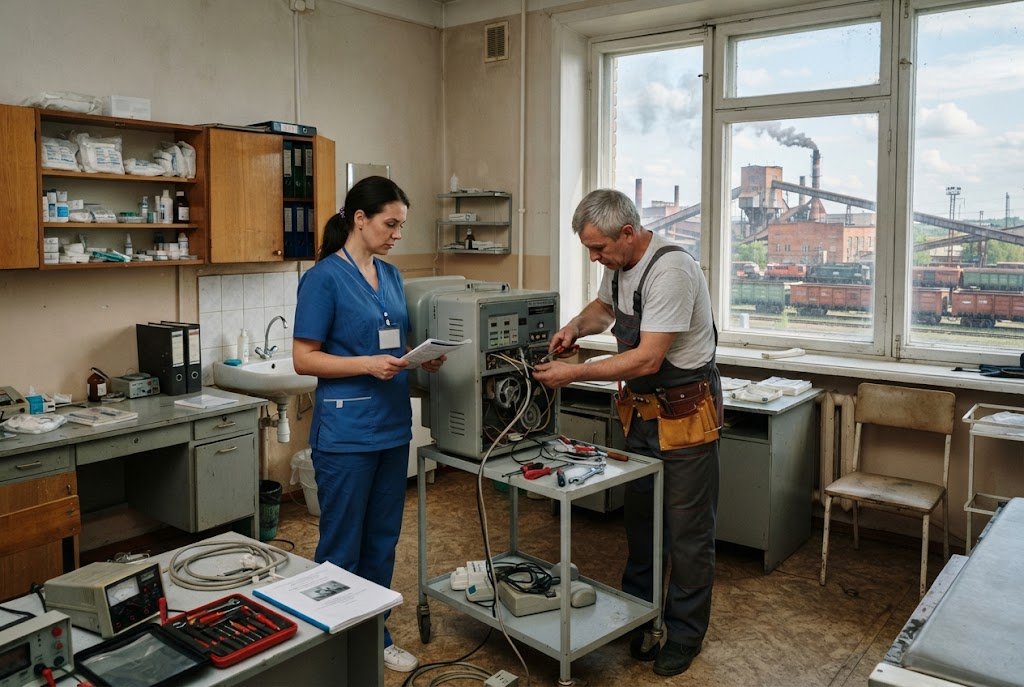
Health services are among the clearest areas of pressure. Real healthcare spending was cut in 76 of the 85 regions, and in 29 regions it was below the 2021 level even before inflation was taken into account. By contrast, real spending on housing and communal services increased in 55 regions, while education spending rose in 74.
Personal income tax receipts increased in real terms almost everywhere, with Murmansk region the only exception. The rise was partly driven by a labour shortage linked to mobilisation, the movement of workers into defence-industry enterprises and the emigration of specialists. Civilian companies have raised wages to retain staff, increasing income-tax receipts but also pushing up labour costs and weakening the profitability of non-military businesses.
Personal income tax brought in an additional 483bn roubles and the simplified tax system another 83bn, but those gains only partly offset the fall in corporation tax. The rise in wage-related receipts has therefore concealed rather than reversed the broader deterioration in regional finances.
Deficits point to a worsening squeeze
Data from Russia’s Accounts Chamber showed that 56 regional budgets were running deficits in the first quarter of 2026, compared with 46 a year earlier. The trend suggests that regional authorities are entering a period in which maintaining existing services and infrastructure will compete directly with the financial demands created by the war.
Kursk region was an exception, recording an 87.6% real increase in revenue, largely because of a sharp rise in federal transfers to support residents and restore border territories. Magadan region, Moscow region and Tatarstan also recorded real increases. But isolated gains funded by Moscow do not alter the wider pattern: the Kremlin has concentrated fiscal capacity at the centre while leaving many regions with weaker revenues, higher costs and fewer choices over civilian priorities.
How should Russian regional authorities respond when military demands continue to take precedence over civilian services?