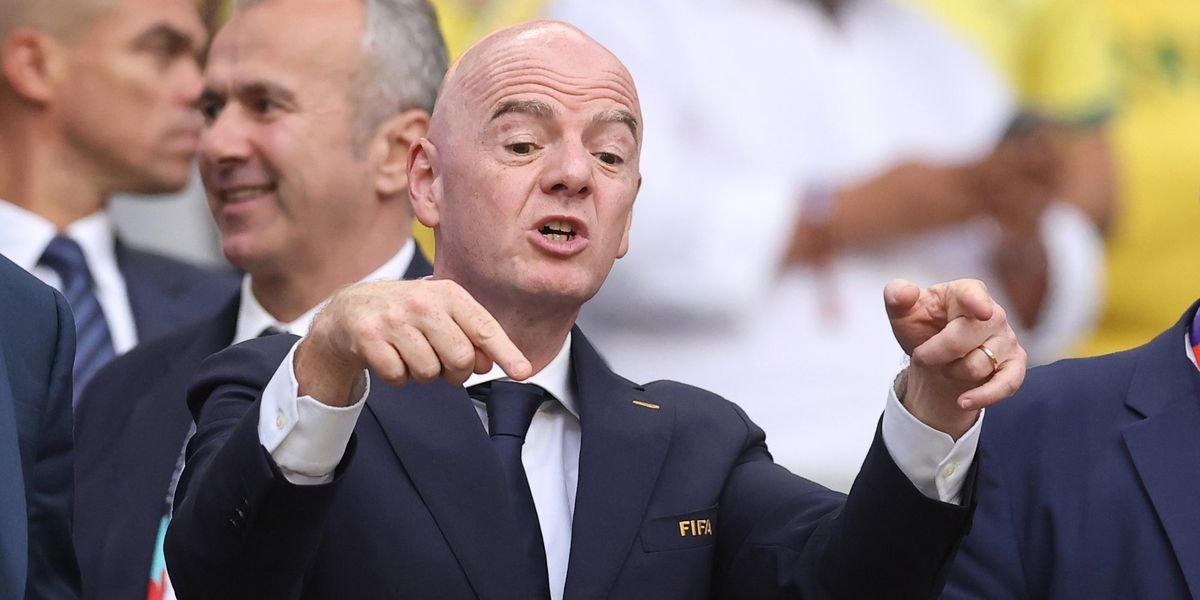
UEFA calls out FIFA president Gianni Infantino over failed World Cup sale
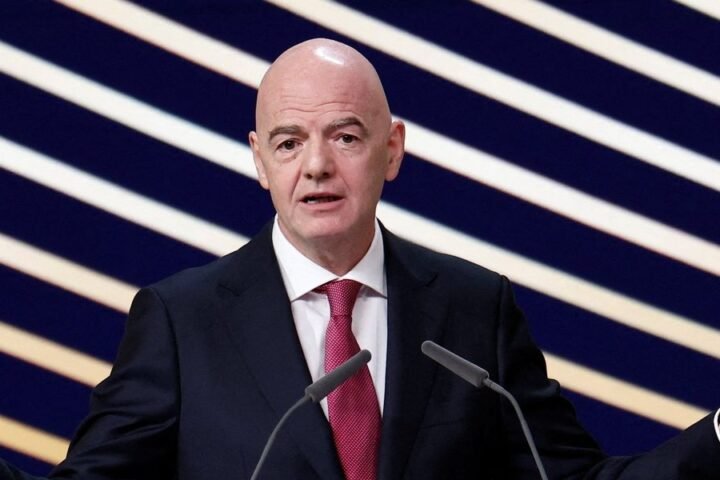
UEFA has delivered a damning statement on FIFA president Gianni Infantino after his ambitious scheme to offload a £3.1 billion stake in the World Cup to private investors spectacularly unravelled on Friday evening, reports BritPanorama.
The European football governing body issued a blistering statement on Saturday morning, declaring that Infantino’s leadership could no longer command their confidence. The plan, which would have placed football’s premier tournament partly in the hands of a consortium fronted by Josh Kushner — an extended relation of US President Donald Trump — provoked fierce resistance from national associations across the globe.
UEFA branded the arrangement a “shabby, back-room deal” and made clear that every avenue for reform remains under consideration. The collapse of the proposal marks a significant blow to Infantino’s authority, with mounting pressure on the embattled FIFA chief intensifying from all corners of the footballing world.
The proposal met with unanimous rejection from UEFA’s national associations, alongside widespread opposition from federations and confederations of every size worldwide. Fans, leagues, clubs, players, and individual stakeholders united in their condemnation of the scheme.
Notably, the resistance extended well beyond the sporting sphere. Prime ministers and heads of state from multiple nations added their voices to the chorus of disapproval, sending an unambiguous message that football’s crown jewel was not a commodity to be traded.
UEFA expressed gratitude to all those who stood against the privatisation effort, stating: “UEFA thanks all the fans, leagues, clubs, players, individuals, associations and confederations that opposed the scheme, alongside the many Prime Ministers, Heads of State and commentators who have demonstrated to the FIFA President that football is not for sale.”
The breadth of opposition underscored just how profoundly Infantino had misjudged the mood of the global football community. In its withering assessment, UEFA threw Infantino’s own words back at him, recalling the pledges he made when seeking election to the FIFA presidency a decade ago. Speaking to member associations in 2016, Infantino declared: “Of course we have to be transparent. I have been this in the last 15 years of my life in UEFA. You will have to play a part every day in the life of FIFA.”
He went further, telling delegates: “The money of FIFA is your money. It’s not the money of the FIFA President. It’s your money. You are the national associations and the money of FIFA has to serve for the development of football and not for anything else.”
UEFA’s verdict on those commitments was damning. “On both these promises, he has failed to deliver,” the statement read. “The shabby, back-room, opaque deal he hatched and tried to force through was anything but transparent.”
UEFA insisted that the forthcoming examination of how the scheme came about must leave nothing off the table. The governing body declared: “That review should be thorough and fundamental. No option should be off the table.”
The statement went further, demanding accountability from those who engineered the proposal. UEFA warned that the individuals behind what it characterised as “secret schemes on fast-track timescales, cooked up by faceless individuals and of dubious benefit to the game” must be identified and held responsible.
Perhaps most pointedly, UEFA made explicit that the crisis of confidence extended far beyond its own membership. “The current FIFA leadership has not only lost UEFA’s confidence but also that of many other members of the football family,” the statement declared.
In the coming days and weeks, UEFA pledged to collaborate with its member associations and fellow confederations to ensure such a proposal could never resurface.
Moreover, UEFA also took aim at FIFA’s financial management, noting that the organisation sits on reserves exceeding $5 billion. The governing body argued there was no justification for selling off prized assets when such substantial funds already exist.
The European body announced it would move swiftly to work with partners across the global game to propose fresh methods of channelling resources through FIFA’s existing Forward programme. The aim, UEFA said, is to deliver the investment that grassroots football and the broader game desperately require across all 211 FIFA member nations.
As the statement put it: “We don’t need to sell off the family silver to pay for it.”
UEFA concluded by framing the defeat of the privatisation plan as merely the opening chapter of a longer struggle. “This is a victory for the whole game. But it must not be the end of the story,” the body declared. “The task of rebuilding trust in FIFA has only just begun.”