FIFA’s inconsistent political stance under scrutiny
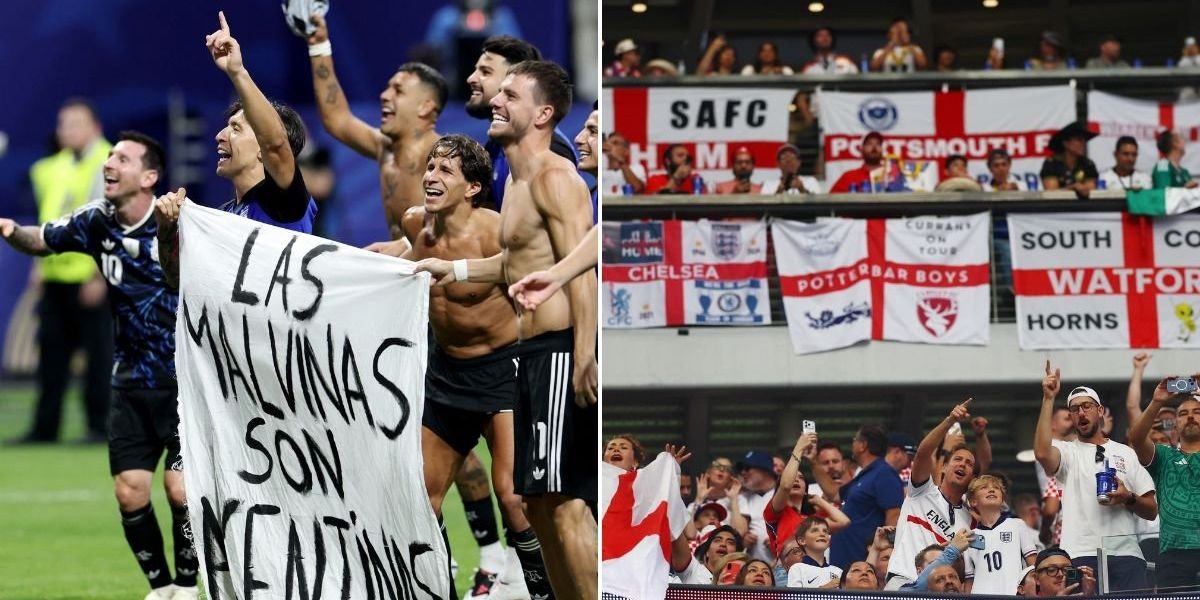
Following Argentina’s recent victory over England, Argentine players were reported to have displayed a banner announcing that the Falkland Islands belong to Argentina, raising eyebrows over FIFA’s handling of political statements in football, reports BritPanorama.
This incident has amplified concerns regarding FIFA’s supposed commitment to political neutrality. While some fans may view such a display as merely an expression of national pride, it undeniably reflects a significant geopolitical claim intertwined with a historical territorial dispute.
Despite the political implications of the banner, there was no immediate intervention from FIFA. In stark contrast, reports emerged of an England supporter being instructed to cover part of their England flag featuring the crest of Barrow AFC, a direct response deemed necessary by FIFA for its perceived political sensitivity.
The discrepancies in FIFA’s actions are glaring. The Argentine banner, which communicates a sovereignty claim over British territory, is seemingly unchallenged. Meanwhile, a club badge, representing a town’s maritime heritage, was restricted from visibility. FIFA’s silence on the former and action on the latter raise significant questions about its enforcement of regulations.
The apparent contradiction is amplified by the understanding that political messaging should hold the same standards across the board. If FIFA aims to disallow political displays in the sport, it must uniformly apply this rule irrespective of the nationality involved. This uneven application of standards undermines FIFA’s claim to neutrality.
For British supporters, the situation extends beyond the realm of football. The citizens of the Falkland Islands decisively voted in 2013 to remain a British Overseas Territory, a principle of self-determination that the UK holds dear. Allowing such a boldly political statement during a prestigious sporting event, while simultaneously censoring a fan’s innocuous club crest, has left many feeling profoundly aggrieved.
While FIFA promotes the notion of football as a unifying force, it often fails to enforce the principles it espouses fairly. The disparity in treatment between the political messages of Argentina and the restrictions faced by an English supporter illustrates this hypocrisy.
As FIFA grapples with accusations of inconsistent decision-making, it faces growing scrutiny from fans eager for a transparent and equitable application of rules. Until the governing body can articulate a coherent rationale for its choices, scepticism surrounding its credibility will continue to mount. In a game that unites millions, the inconsistency in FIFA’s policies serves as a poignant reminder of the delicate balance between sport and politics.