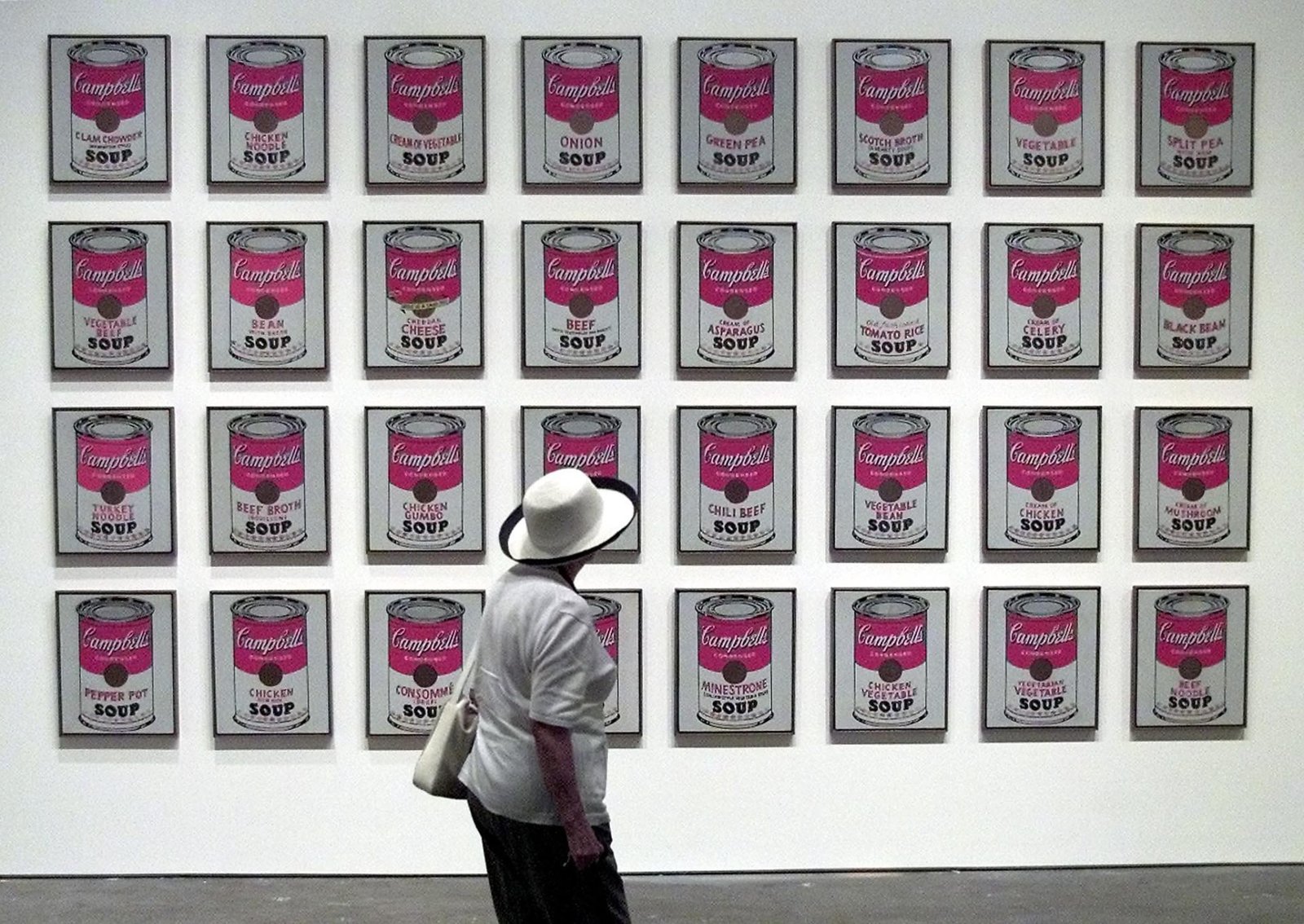
Andy Warhol’s pervasive influence examined on 60th anniversary of key artistic movements
This year marks the 60th anniversary of Andy Warhol’s significant contributions to the art world. Despite the ongoing cultural debates surrounding his work, his artistic impact remains a topic of inquiry and reflection, reports BritPanorama.
Warhol, known for his silkscreened portraits of financiers, socialites, and public figures including multiple images of Jackie Kennedy, produced art that often walked the line between homage and marketing opportunism. His iconic soup cans, widely recognized as a landmark of modern art, surfaced from his background as a commercial artist, reflecting both a critique and an embrace of consumerism.
Initially celebrated for the Pop Art movement, which had begun gaining momentum in the late 1950s and early 1960s with artists like Robert Rauschenberg and Jasper Johns, Warhol distilled these ideas into a distinctive style that resonated widely. His biographer Blake Gopnik aptly described him as “the world’s greatest sponge,” highlighting his ability to absorb and reflect cultural elements in his work.
As a provocateur, Warhol often expressed disdain for traditional painting. He turned his focus to managing rock bands, notably The Velvet Underground, and creating unconventional films like *Sleep* and *Empire*, which questioned the very nature of art and entertainment. Despite this shift, his social circle, composed of various “Superstars,” drew him back into a world that continued to spiral with chaos and excess.
The trajectory of Warhol’s life changed dramatically in 1968 when he was shot by Valerie Solanas, a figure from his own circle. This incident compelled him to distance himself from the bohemian lifestyle he had previously embraced, leading him toward more commercial ventures. Following his recovery, his work predominantly focused on commissions for societal elites, creating a paradoxical life where deep social commentary was traded for financial gain.
By the 1980s, artists like Keith Haring and Jean-Michel Basquiat were redefining art, and Warhol, who had initially paved the way for public visibility, struggled to adapt to the evolving landscape of contemporary expression. When Warhol passed away in 1987 at the age of 58, his legacy lay in a precarious balance, challenged by the shifts in cultural values.
Today, in 2026, Warhol’s influence appears to have only grown. Recent decades have witnessed major retrospectives at institutions like the Tate and the Art Institute of Chicago, with upcoming exhibitions continuing to celebrate his work. Current exhibitions, such as *Andy Warhol: Art Star* at the Wolverhampton Art Gallery, showcase familiar motifs, from Marilyn Monroe to soup cans, echoing his status as a pop culture touchstone.
Yet, the question remains: Is Warhol’s art still relevant, or has it become a safe, commodified staple in contemporary culture? Once provocative, it now risks stagnation, serving more as a nostalgic backdrop than a catalyst for dialogue. His predictions about consumerism and celebrity culture resonate today, yet they also reflect the more troubling aspects of modern existence.
Warhol’s popularity might stem from a collective yearning for nostalgia and familiarity. In an era overwhelmed by choices, the visual language he crafted offers comfort, albeit in overabundance. This raises critical questions about the depth and evolution of artistic expression: Can there be novelty amid the repetition that defined his oeuvre? As Warhol’s ubiquity continues to permeate culture, it invites contemplation of the very essence of art and its role in society.
‘Andy Warhol: Art Star’ is at Wolverhampton Art Gallery until 4 October 2026.