Choosing the right novel to read on holiday is important – so a classic, a text that’s been delighting readers for years, might be a good option. The peace and quiet that comes with a holiday can create the ideal opportunity to try a book you’ve long wanted to read. The best novels are as transporting as travel itself and if you click with a classic on holiday, it will both enrich your trip and forever be synonymous with where you read it, reports BritPanorama.
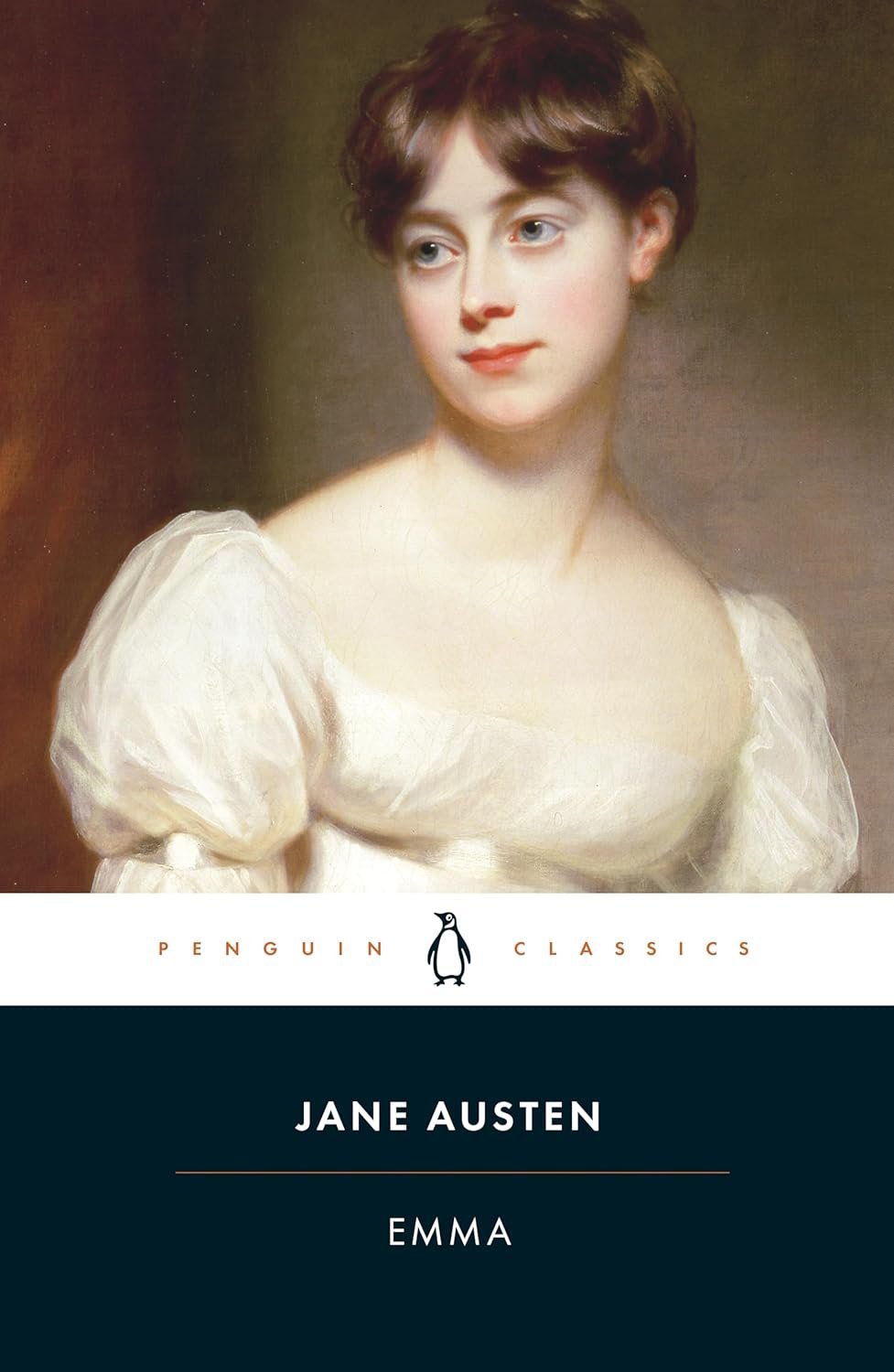
Emma by Jane Austen
The eponymous Emma Woodhouse, “handsome, clever and rich”, is so full of herself that Austen feared readers would dislike her. Fortunately, Emma is also fun and ripe for transformation, whether she realizes it or not, and our feelings about her evolve across this story of small town society, self-delusion and courtship. The characters are recognizable and relatable, whether it’s Mr Knightley, Harriet Smith or Emma herself who, by the end, has managed to mature without sacrificing her joie de vivre.
Death in Venice by Thomas Mann
In this short masterpiece, first published in 1912, Aschenbach, an ailing middle-aged writer, travels to the Italian city. There he becomes obsessed with Tadzio, a 14-year-old boy, who is there with his aristocratic Polish family and whom Aschenbach compares to a Greek god. A dubious premise, perhaps – but the novel is a meditation on art, beauty (in one translation Mann writes that every artist has a “tell-tale bias in favour of the injustice that creates beauty”) and death, as cholera sweeps Venice.
Steppenwolf by Herman Hesse
Holidays don’t always go to plan; some people travel reluctantly and idyllic settings can prompt feelings of resentment – all reasons why you might want to try a novel that brims with angst, “inward emptiness and despair”, as Hesse’s protagonist Harry Haller sees it. A surprisingly rewarding antidote to sunniness (I read it on a Greek island), this German classic from 1927 is actually not all darkness: Haller steadily makes his way back from the brink to redemption.
To the Lighthouse by Virginia Woolf
In a novel that was informed by Virginia Woolf’s childhood holidays to St Ives, Cornwall, and the death of her mother, she moves the setting to the Isle of Skye to chronicle the Ramsay family’s holidays across a decade. Using omniscient narration, Woolf gives us the perspectives of Mr and Mrs Ramsay, their children and possibly even the house that provides the backdrop for fraught and tumultuous events. She shows how unresolved family tensions can continue through generations and is very good on the frustrations that simmer on a holiday so, if you’re struggling, you might find it helpful.
The Makioka Sisters by Junichiro Tanizaki
Four sisters living in Osaka in the 1930s have taken up the mantle of their once-great trading dynasty. The Makiokas have fallen in status to a milieu of faded glamour and the Second World War is looming as the cherry blossom falls. There are echoes of Austen as one sister Yukiko searches for a husband, but for Western readers the novel – hailed as Japan’s greatest of the post-war period – offers the chance to see from the inside a culture that to outsiders can often appear opaque.
The Radetzky March by Joseph Roth
The standard of the Austrian writer’s fiction fluctuates, in part due to his alcoholism, but in this sweeping masterpiece he sustains beautiful sentences and delivers a paean to the decline of the Habsburg monarchy. The novel is the story of three generations of men in the aristocratic Trotta family whose military careers are bound up with the fortunes of the Austro-Hungarian Empire. By the time the novel was published in the early 1930s, the world Roth chronicled had vanished and his writing was full of urgent warnings about the darkness Europe was hurtling towards. In Michael Hofmann’s translation, it will enthral, amuse and devastate you.
The Lonely Londoners by Sam Selvon
Read this brief song of a novel, about members of the Windrush generation in London during the 1950s, in a few hours, and remember it forever. Selvon’s “fellars” find their feet in the English capital, enduring hardship, discrimination and occasionally violence, but they are spirited and their story is ultimately uplifting. The mix of Caribbean dialect and English setting is revelatory as the characters sacrifice everything they know to build a new life. An important and exuberant joy.
A House for Mr Biswas by VS Naipaul
Mr Biswas is an aspiring novelist, excitable journalist (“Amazing scenes…” he begins his reports) and father of the protagonist. In Trinidad, Mr Biswas wants a home of his own but he is perpetually thwarted by his wife’s family, bad luck and British colonialism. His son is precociously talented and will, like Naipaul himself, win a scholarship to Oxford University. The novel gives us one of the most atmospheric depictions of a place in English fiction. Its 800-odd pages fly by – you only pause to laugh out loud – and by the end they’re tear-stained.
Play It As It Lays by Joan Didion
She was better known for her journalism and memoirs, but Didion’s 1970 novel probes the societal rot and moral vacuity that she explored in some of her most famous essays. Her prose is spare and characteristically exact as she tells the story of ex-model and actress Maria Wyeth, who’s been committed to a psychiatric ward. Maria doesn’t see meaning in anything, but Didion’s ability to find it in everything drives this slim dream of a novel.
The Accidental Tourist by Anne Tyler
In many ways, Macon Leary would be a nightmare to travel with. He’s uptight, hyper-critical and relishes middle-of-the-road familiarity. That’s because he’s employed to write travel guides for American business people. Over the course of this subtly intelligent and witty novel, which unfolds in Baltimore, London and Paris, Macon falls in and out of love, growing more adventurous and rounded. Utterly rewarding.
The Savage Detectives by Roberto Bolaño
Was the late Chilean writer’s novel, which was first published in Spanish in 1998, the last great work of the 20th century? It’s certainly one of the wildest and most original, with its delirious telling of two young Mexican poets embarking on an odyssey to search for a vanished literary legend – a quest fuelled by their strong belief in the importance of writing and even stronger tequila. Hilarious and extraordinary.