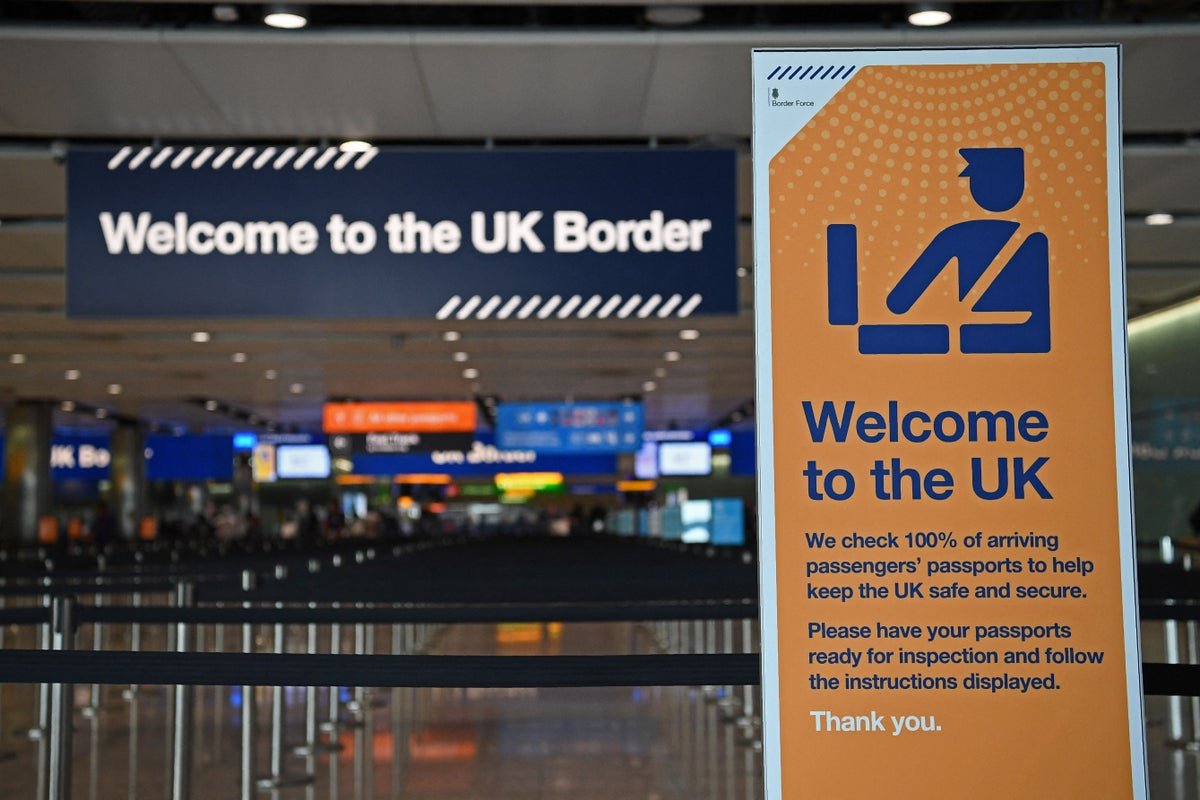
A convicted people smuggler found living in Leicestershire has been able to do so as a result of Brexit, immigration officers have claimed, reports BritPanorama.
Twana Jamal, who was described as one of the most successful people smugglers ever caught when he received a five-year jail sentence in France in 2016, was found by the BBC living and working in the UK using a false name.
Lucy Morton, of the Immigration Services Union, explained that the UK’s decision to leave the EU has resulted in the loss of access to a data-sharing agreement with many countries in the bloc, complicating checks on criminal and immigration records of asylum seekers.
“If we were able to share databases, even if just with our nearest neighbours, with Germany, with Belgium, with Holland and France, say – then, yes, we’d know that they had a conviction for people smuggling,” she said.
Although asylum seekers have their fingerprints taken upon arrival in the UK, which are checked against UK police databases, this does not necessarily flag convictions from other countries.
French prosecutors indicated that Jamal, described by the BBC as an Iraqi Kurd, had earned as much as £100,000 a week for moving illegal immigrants across the Channel.
He reportedly operated near Dunkirk from 2012 to 2016, charging clients between £4,500 and £5,000 to make the crossing to the UK.
The BBC reported that it had identified more than 20 active smugglers who have reached the UK, some of whom possess overseas convictions, raising significant concerns regarding Britain’s ability to effectively screen asylum seekers before they enter the country.
When confronted by the broadcaster, Jamal – once referred to as “the godfather” of the French migrant camps – stated he was making “good money” in Leicester, claiming he was working “moving cigarettes” from a warehouse.
Regarding allegations of driving without a licence, he reportedly asserted: “No one touches us here,” adding, “Even the police won’t stop you.” He claimed to have applied for asylum and was “still waiting,” but if he was indeed claiming asylum, he should not be working or driving.
Just days prior, polling revealed that nearly two-thirds of the public believes immigration has worsened since Brexit.
The promise to regain control over Britain’s immigration system was central to the Brexit vote and continues to dominate political discourse.
The polling, conducted by Merlin Strategy for The Independent, found that 55 per cent of respondents wish for a return to freedom of movement between the UK and the EU, with only 16 per cent opposing it.
Moreover, 62 per cent believe immigration levels have deteriorated since Brexit, while just 8 per cent perceive an improvement.
Between 2021 and 2024, approximately 4.8 million legal migrants arrived in the UK, a notable increase influenced by schemes such as refugee programmes for Hongkongers and Ukrainians escaping conflict, along with a rising demand for workers in shortage occupations.
Official figures indicate that the net migration during this period exceeded 2.5 million when accounting for those leaving the UK.
The Home Office told the BBC: “All asylum claimants are subject to mandatory security checks to confirm their identity for the purpose of immigration, security and criminality checks.”
The Independent has contacted the Home Office for comment.
This scenario underscores emerging challenges surrounding the UK’s immigration landscape and the complexities that have arisen post-Brexit, particularly concerning security and record checks. The implications for future immigration policy may require urgent attention.