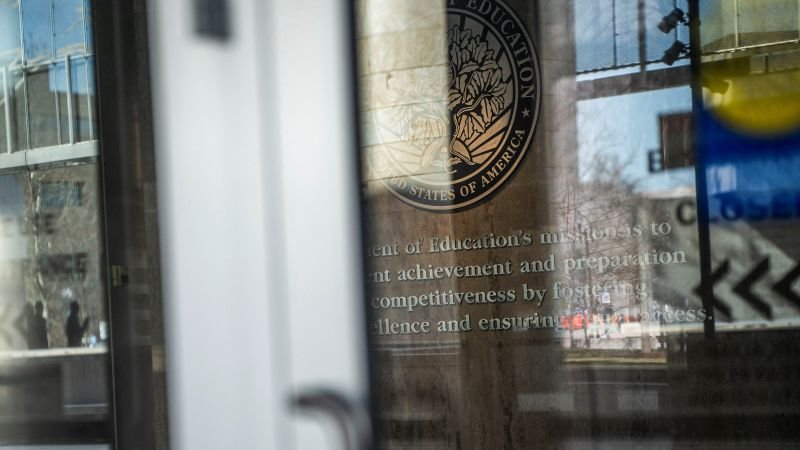
Parents of children with disabilities are expressing frustration over the prolonged delays in addressing complaints of bullying and discrimination by the Education Department, a situation exacerbated by recent administrative changes, reports BritPanorama.
The department is transferring responsibilities for civil rights enforcement and special education to other federal agencies, leading advocates to warn of increasing chaos and persistent roadblocks as progress on existing complaints has been stagnated. For example, Ohio resident Nicole May has been awaiting resolution on a complaint filed in spring 2024 regarding her daughter’s bullying related to her hearing aids, highlighting the years-long delays in the system.
Under the new changes announced this week, the Department of Justice will assume civil rights enforcement duties while the Department of Health and Human Services will oversee special education. This restructuring aligns with President Donald Trump’s efforts to dismantle parts of the Education Department. U.S. Education Secretary Linda McMahon has characterized the adjustments as a means to provide improved support to families of children with disabilities.
Critics argue that assigning special education oversight to the health department fundamentally misunderstands the nature of educational disabilities, which are seen in a different light than mere health conditions. This sentiment was echoed by the top Republican on the Senate education committee, who indicated plans to introduce legislation aimed at keeping special education within the Education Department’s purview.
Some families already are taking discrimination cases elsewhere
In response to the latest changes, many stakeholders expressed a sense of resignation. The Education Department’s civil rights office has traditionally served as a last resort for parents facing discrimination, yet its backlog has expanded significantly under the current administration, with attorneys reportedly seeking alternative avenues for justice.
Over the past year, as staff and resources at the department have been cut, advocates have noted a pervasive sense of frustration. For example, Emily Harvey of Disability Justice has observed her cases languishing, a sentiment that reflects the broader discontent among families and advocates concerning the federal civil rights office’s diminishing effectiveness.
The Office of Special Education and Rehabilitative Services has seen its workforce shrink by approximately one-third since 2024. Meanwhile, the Department of Justice’s Education Opportunities Section has approximately halved its personnel, further complicating advocacy efforts for families.
As states already investigate various education complaints, the reaction to the federal changes has motivated some to push for new state-level legislation aimed at creating more effective local systems of support. Colorado has taken steps to address this gap with a new law expanding the civil rights cases that can be pursued at the state level.
Department workers say the dismantling has made their jobs harder
Despite the significant changes, Education Secretary McMahon has signed multiple agreements to delegate department functions to other federal agencies, though this has not yet reduced employee numbers working on specific programs. Staff have encountered challenges with access and equipment at their new roles, raising concerns over inefficiency.
Advocates emphasize that the fragmentation of programs and enforcement across various agencies poses significant risks of oversight failures for disabled students, as many families remain unable to access necessary support. Robyn Linscott from The Arc of the United States noted that, during recent discussions, not a single parent favored moving oversight responsibilities to a health department.
Congress has witnessed bipartisan discontent regarding the transfer, with senators vowing to counteract these changes. For instance, Republican Bill Cassidy and Democrat Tim Kaine have committed to collaborating on potential legislative measures aimed at reversing the shift of special education oversight.
As stakeholders navigate these complexities, the central concern remains the ability of families to secure essential services for their children. Rob Harris, an advocate, stated that families feel the burden of navigating these increasingly convoluted systems, emphasizing that their experiences rely on the services received rather than the organizational frameworks that dictate them.
As discussions continue, the practical implications of these shifts for families across the country will likely remain a critical focus for both advocates and policymakers.