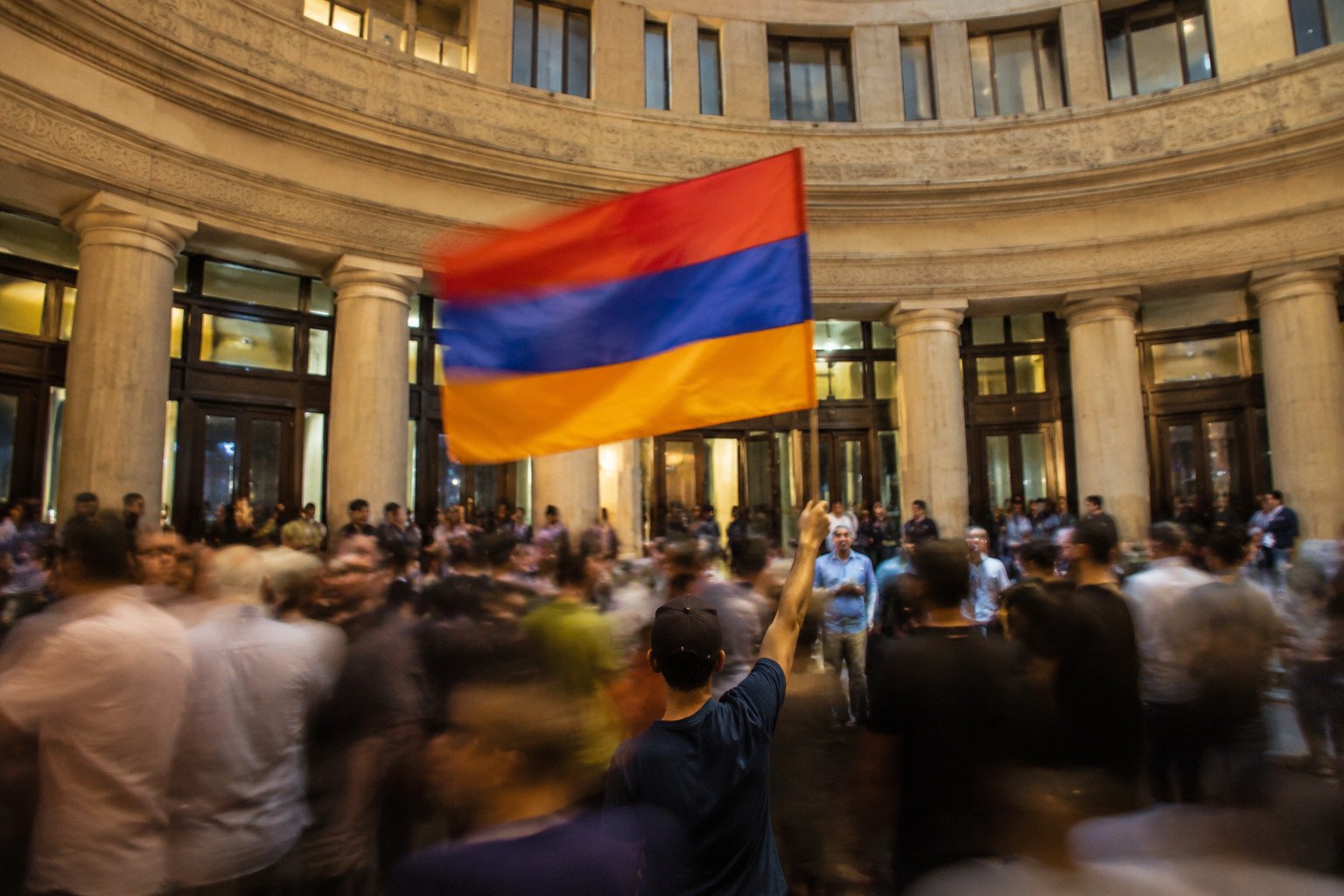
The Central Electoral Commission of Armenia has certified the final outcome of the country’s snap parliamentary elections, confirming that only three political forces will enter the newly elected National Assembly. The ruling Civil Contract party of Prime Minister Nikol Pashinyan secured 49.7456 per cent of the vote, maintaining its status as the dominant political force. The Strong Armenia bloc garnered 23.2710 per cent, while the Armenia bloc received 9.9231 per cent. The Prosperous Armenia party fell short of the required threshold with 3.893 per cent and will not be represented in the next parliament.
Seat distribution reflects clear majority for Pashinyan
Under the final mandate allocation, Civil Contract will hold 64 seats in the 105-member parliament. Strong Armenia is set to take 29 seats, and the Armenia bloc will occupy 12 seats. This configuration ensures that Prime Minister Pashinyan’s party retains a working majority, albeit smaller than its previous supermajority. The reduced majority may require more coalition building or ad-hoc alliances on key legislation, potentially slowing some reforms.
Opposition presence provides check on executive power
The two opposition blocs, Strong Armenia and Armenia, together command 41 seats, giving them a substantial platform to scrutinise government policy. Both groups have been critical of Pashinyan’s handling of the Nagorno-Karabakh conflict and economic management. Their presence in parliament ensures that the ruling party will face regular challenges during debates and votes, particularly on security and foreign policy issues.
What the result means for British interests
For British readers, the confirmed political landscape in Armenia carries implications for regional stability in the South Caucasus, a corridor for energy and trade routes linking Europe to Asia. A stable, democratically elected government in Yerevan aligns with UK foreign policy objectives of supporting democratic institutions. Moreover, the Armenian diaspora in Britain, estimated at tens of thousands, may see continued engagement from London with a familiar government. Any shifts in Armenia’s foreign policy, particularly its balancing act between Russia and the West, could affect UK investment and diplomatic initiatives in the region. The outcome also removes short-term uncertainty that could have disrupted British businesses with exposure to Armenian markets or joint ventures.