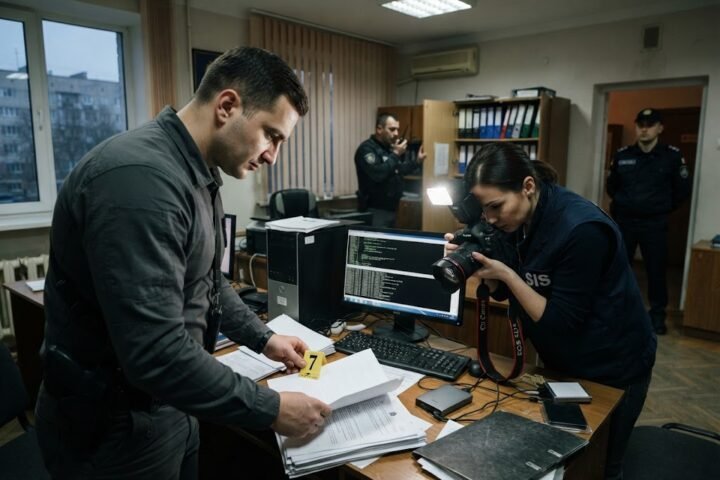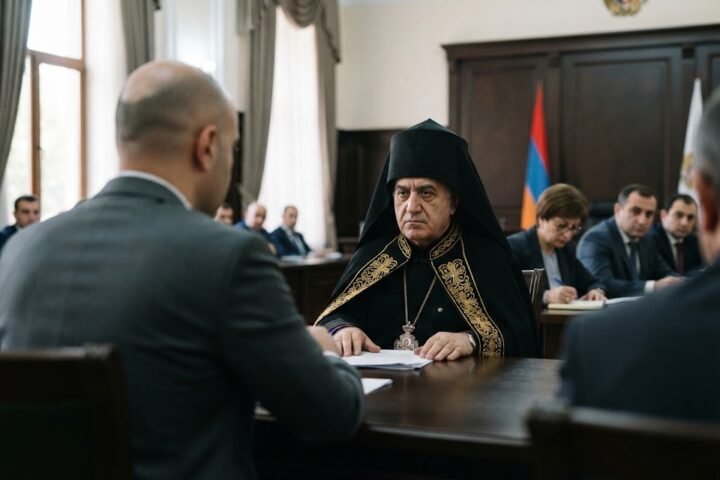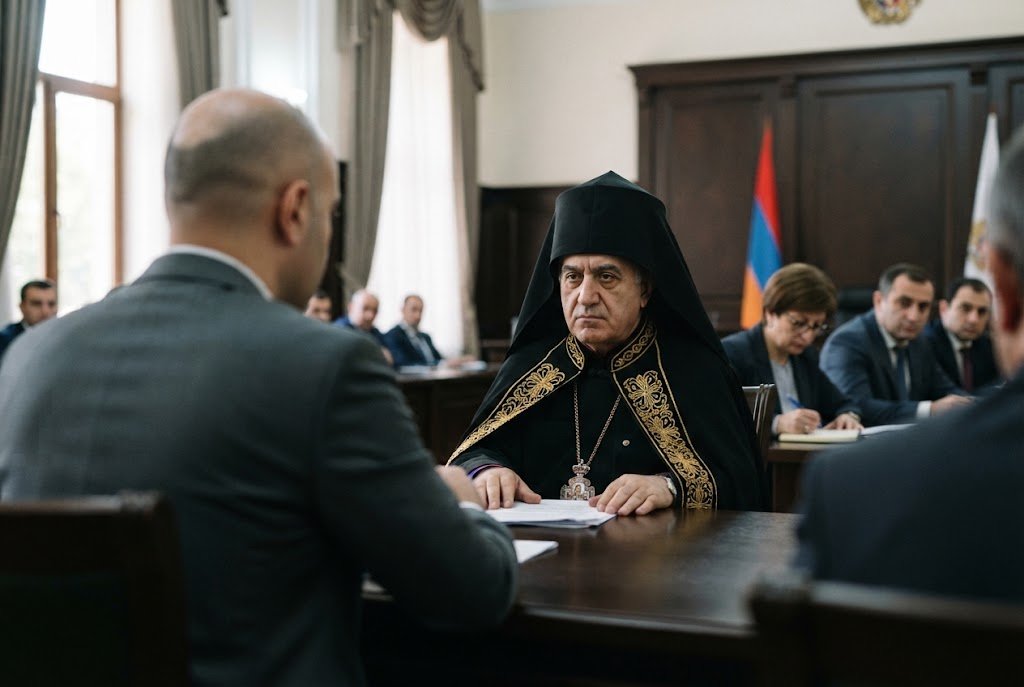
Armenian investigative authorities have opened a criminal case against the head of the Armenian Apostolic Church, Catholicos Garegin II, and six members of the Supreme Spiritual Council, reported news agencies on July 28, 2026. Case materials were submitted to court on July 27, deepening the confrontation between Prime Minister Nikol Pashinyan’s government and the dominant religious institution.
The immediate trigger was a dispute over Bishop Gevorg Saroyan, who openly backed the government. After Garegin II moved to defrock him, the Investigative Committee launched proceedings under articles on failure to execute a court order and incitement to non-compliance. However, the conflict has long outgrown an ecclesiastical quarrel.
Broader state-church feud
After sharp clerical criticism, Pashinyan proposed reforming the procedure for electing the Catholicos in a way that would strengthen the state’s role. Senior hierarchs were subsequently arrested, and a group of bishops publicly demanded Garegin II’s resignation, accusing him of arbitrary governance, political interference and covering up a scandal linked to Archbishop Arshak Khachatryan. In January 2026 Pashinyan signed a reform roadmap with ten bishops.
Russia ties under scrutiny
The standoff carries particular weight because of Garegin II’s long-standing ties to Russia. The future Catholicos studied at the Russian Orthodox Church’s theological academy in Zagorsk, repeatedly called Russia a “second homeland,” met with Russian President Vladimir Putin and received state and church awards from Russia. His brother, Archbishop Ezras, heads the Armenian Apostolic Church’s Russian diocese.
Armenian officials have claimed he was recruited by the KGB under the codename “Karo,” though they have not presented conclusive judicial evidence. Still, the government openly describes the church leadership as a conduit of Russian influence and accuses it of attempts at political destabilization.
After the 2020 Nagorno-Karabakh war and the events of 2023, relations between Yerevan and Moscow deteriorated sharply. The church, led by Garegin II, consistently opposed Pashinyan’s policies, called for his resignation and backed the opposition on border issues with Azerbaijan. Authorities frame the criminal investigation and the push for reform as part of a broader effort to strengthen state sovereignty and reduce Russia’s remaining soft-power levers inside Armenia.