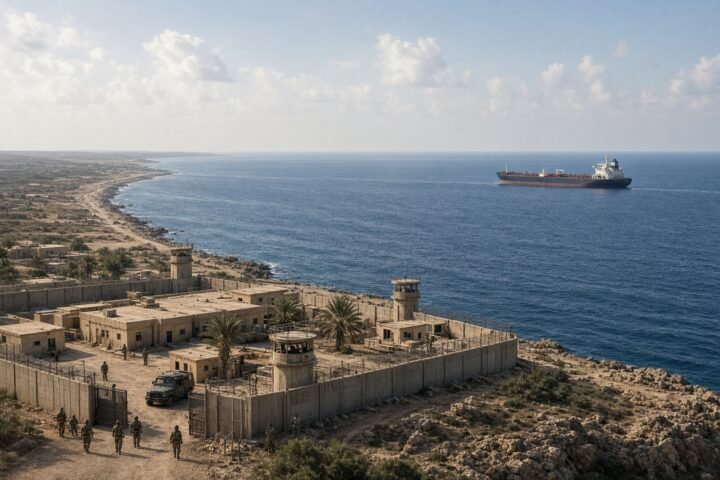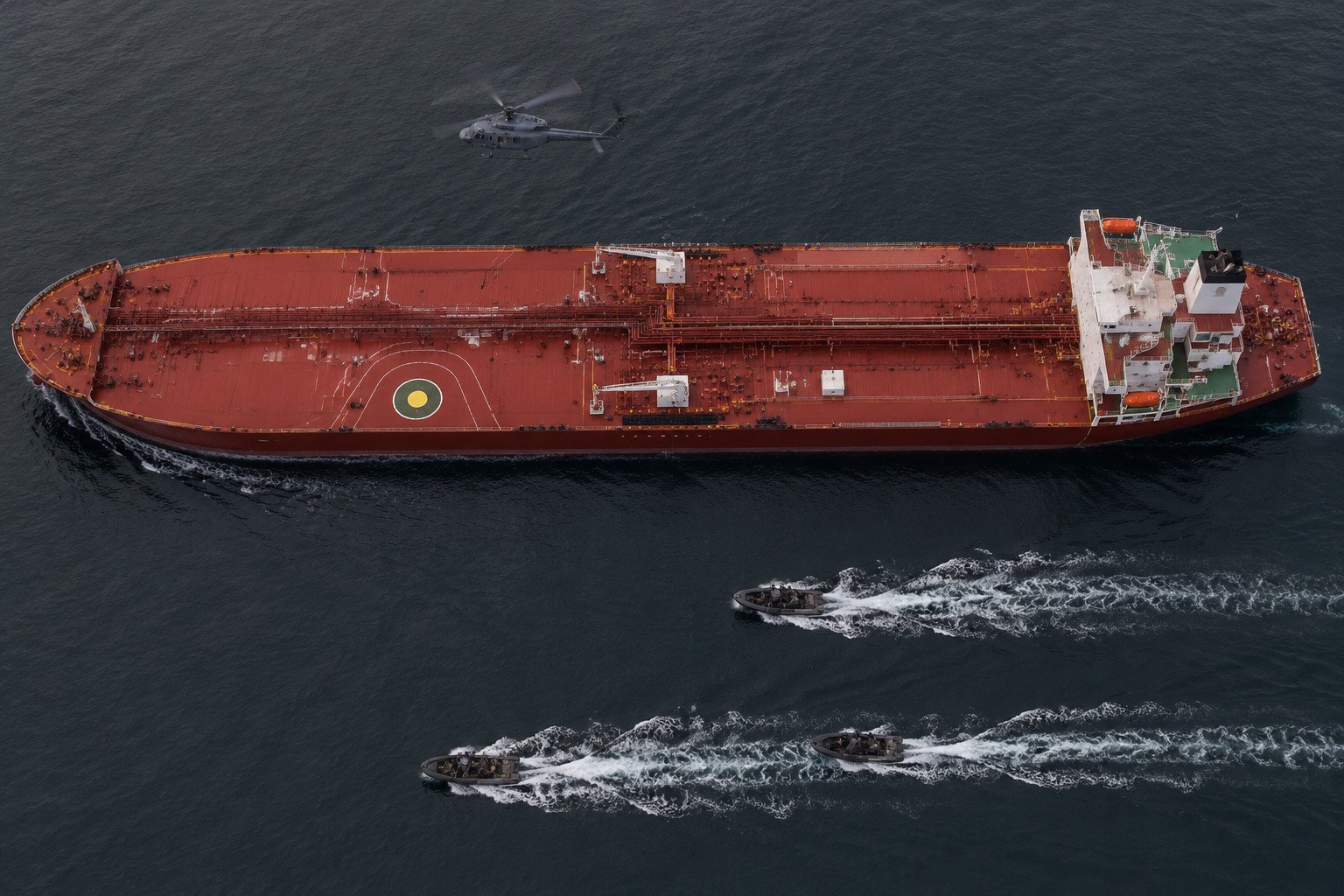
Royal Marines commandos boarded a Cameroon-flagged tanker in the English Channel during a six-hour operation supported by naval and air assets, marking the first time the UK has independently seized a vessel from Moscow’s so-called shadow fleet. The Ministry of Defence confirmed that personnel from the Royal Marines’ Special Boat Service and other units climbed aboard the SMYRTOS, with cover from a Royal Navy P-8 Poseidon aircraft, a Royal Air Force patrol plane, and the warships HMS Sutherland and HMS Ledbury. The operation was conducted in close coordination with French authorities, who previously carried out a similar seizure in the Atlantic with UK assistance.
Six-hour boarding operation
The boarding began early on Thursday morning after the tanker was tracked crossing the Channel from the North Sea. UK officials say the SMYRTOS is one of an estimated 700 vessels in Russia’s shadow fleet, which collectively transport roughly 75% of the country’s oil exports that are subject to international sanctions. The ship had been under surveillance for several days before the decision to intercept was taken, according to defence sources. No casualties were reported during the operation, and the crew of the SMYRTOS has been detained for questioning.
Shadow fleet under scrutiny
The shadow fleet consists of older, often poorly maintained tankers that use opaque ownership structures and flags of convenience to evade Western restrictions. Western governments have increasingly targeted these vessels in an effort to reduce the revenue Moscow generates from oil sales, which funds its war in Ukraine. The UK has previously supported French naval forces in similar interdictions but had not conducted a solo boarding until now. The seizure is seen as a significant escalation in enforcement, with potential legal proceedings against the ship’s owners and insurers.
Implications for UK energy security and costs
For British households and businesses, the operation may have indirect but real consequences. By disrupting the shadow fleet, the UK hopes to tighten the squeeze on Russian oil exports, which could contribute to higher global crude prices in the short term. However, over the longer term, successful enforcement reduces the risk of volatile price spikes caused by unregulated smuggling and insurance fraud. The government also argues that cracking down on these vessels helps stabilise legitimate energy markets, ultimately protecting UK consumers from hidden costs tied to illicit trade. Any legal actions or fines imposed on the tanker’s operators may also set a precedent for future seizures.
Broader context of Western enforcement
The UK action comes as the European Union, the United States and other allies step up efforts to choke off the financial lifelines that sustain Russia’s military campaign. A similar operation by French navy commandos in the Atlantic last month resulted in the seizure of another shadow fleet tanker, with London providing intelligence support. Analysts warn that the shadow fleet is growing rapidly as Russia adapts to sanctions, with new vessels being added every month. The UK government has stated that it will continue to use all available legal and military tools to target such ships, and that the Channel operation sends a clear deterrent signal to other operators.