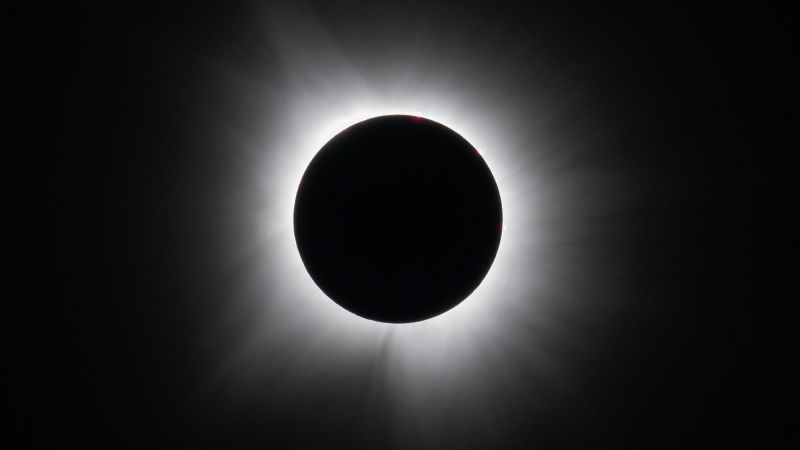
Total solar eclipse to occur on August 12
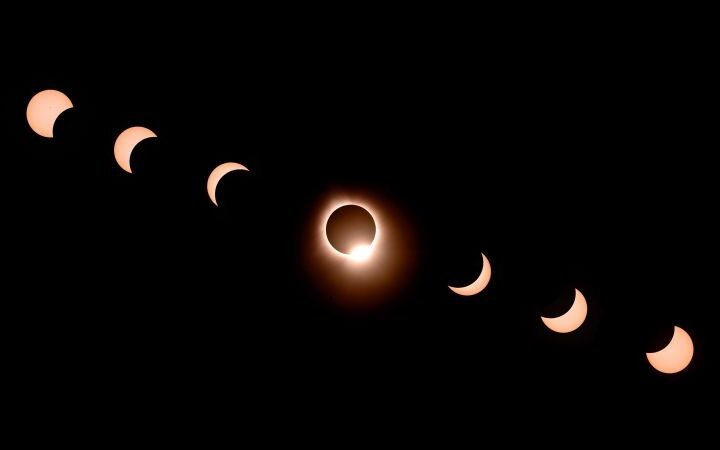
A total solar eclipse will create a celestial spectacle in the sky for the first time in more than two years on August 12, reports BritPanorama.
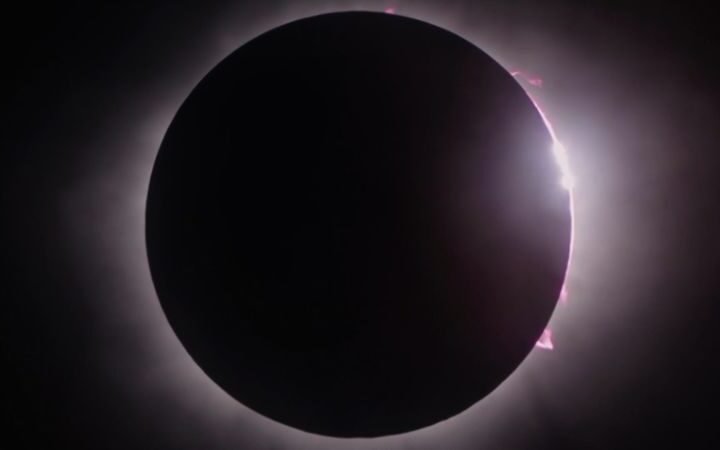
This phenomenon happens when the moon passes between the sun and Earth, casting a shadow on our planet that completely blocks the sun’s light from some areas, according to NASA.
Sky-gazers in parts of Greenland, Iceland, northern Spain, and northeastern Portugal will experience totality, when the skies turn momentarily dark as the sun disappears. Meanwhile, a partial eclipse will be visible across parts of Europe, Africa, and North America.
The upcoming eclipse will be notable as the first total solar eclipse observable from Spain’s mainland since 1905 and the first of three solar eclipses the country will experience before 2028, as reported by the European Space Agency (ESA).
“A total solar eclipse is one of those rare moments when millions of people can look up together and feel both wonder and curiosity,” Carole Mundell, the ESA’s director of science, stated. “It is a shared moment that connects us to the Universe and reminds us that the desire to explore and understand is one of humanity’s greatest strengths.”
Where can I see the eclipse?
The narrow path of totality will span 5,157 miles (8,300 kilometers), beginning above the Arctic coastline around 1 p.m. ET, then sweeping over Greenland, Iceland, Portugal, and northern Spain, according to EarthSky.
Observers in Greenland should witness just over two minutes of totality, while those in northern Spain may only experience about 20 seconds, depending on weather conditions.
As the eclipse progresses, it will travel over Galicia and the Balearic Islands in Spain, coinciding with sunset and hastening the transition from day to night, according to the Spanish Scientific and Advisory Committee for the Trio of Eclipses.
To find out when the eclipse will occur in your location and what it will look like, you can consult Time and Date’s website. For those outside the path of totality, the ESA plans to stream the event live from Spain’s Astrophysical Observatory of Javalambre in Teruel.
When is the next solar eclipse?
The subsequent total solar eclipse will traverse southern Spain, North Africa, Saudi Arabia, and Yemen on August 2, 2027, as indicated by NASA.
The United States will not have another chance to see a total solar eclipse until March 30, 2033, with the only vantage point in Alaska. It won’t be until August 22, 2044, that a total solar eclipse will be visible from the contiguous United States, with totality occurring over North Dakota and Montana.
How do I safely view the eclipse?
Looking directly at the sun without specialized protection is never safe, except during totality when the sun’s light is completely obstructed.
At the first sign of sunlight re-emerging, individuals should use certified eclipse glasses or handheld solar viewers. Observing the sun through a telescope, binoculars, or camera requires special solar filters, which offer the same eye protection as eclipse glasses.
Sunglasses are insufficient for this purpose, as eclipse glasses or solar viewers are thousands of times darker and adhere to international safety standards. Damaged eclipse glasses or viewers should be avoided.
It is also unsafe to look through optical devices—such as cameras, telescopes, or binoculars—while wearing eclipse glasses, as solar rays can concentrate and burn through the filter, causing severe eye damage, according to NASA.
What scientists can learn from eclipses
Solar eclipses offer scientists unique opportunities to study the sun and its corona, or outer atmosphere, while inviting public participation as citizen scientists.
During the August eclipse, scientists plan to launch high-altitude balloons designed to capture images of the event and the lunar shadow. Their objective is to replicate a 1919 eclipse experiment that measured how the sun’s gravity bends light from distant stars and confirmed Einstein’s theory of general relativity, as reported by the Spanish Scientific and Advisory Committee for the Trio of Eclipses.
Citizen scientists are encouraged to create their own instruments to track atmospheric changes as the skies darken. “We use moments like this to bring space science and technology closer to society, to inspire future generations and bring people across Europe together through the excitement of discovery,” Mundell remarked.
This eclipse represents not just a significant astronomical event but an opportunity for education and public engagement, allowing for a greater appreciation of celestial phenomena and science as a whole.