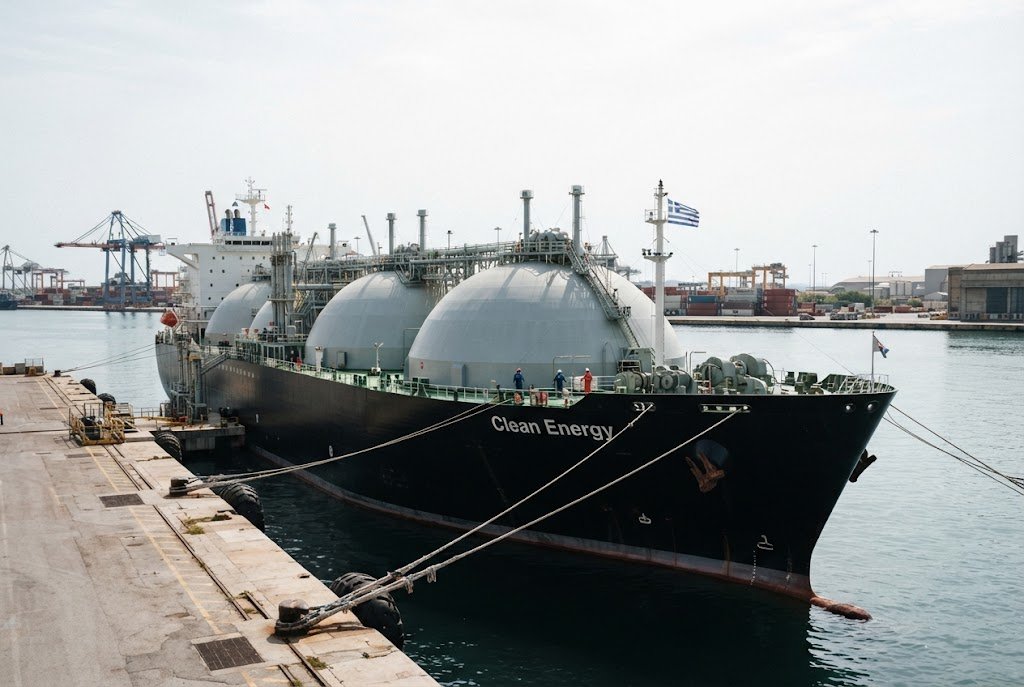
The European Union has agreed to allow Greece-based shipping company Dynagas to continue transporting Russian liquefied natural gas (LNG) for 12 months as part of its 21st sanctions package against Moscow, a move that underscores the bloc’s struggle to balance internal unity with the effectiveness of its restrictive measures.
Under the package, which still requires formal approval by the Council of the European Union, Dynagas—owned by Greek billionaire George Prokopiou—will be permitted to carry Russian LNG to third countries despite the EU’s broader efforts to curb energy revenues funding Russia’s war against Ukraine. The exemption, which may be extended, marks a concession to Athens, which had opposed a proposed ban on LNG transport that would have taken effect in November 2027.
The development was reported on July 23 by media outlets including Reuters, citing diplomatic sources.
Sanctions package details
European Commission President Ursula von der Leyen said on July 23 that the bloc’s Committee of Permanent Representatives had reached agreement on the new package. It includes restrictions on 32 additional Russian banks, unnamed cryptocurrency firms, measures against vessels assisting Russia’s shadow fleet, and a one-year freeze of the price cap on Russian oil at $44.1 per barrel.
The exemption for Dynagas, which operates 27 gas carriers—including vessels built for Arctic conditions near the Yamal LNG plant—allows it to continue transporting Russian LNG despite the sanctions. Since the start of 2025, the company has moved over 10 million metric tons of Russian LNG on 11 ships, completing 144 voyages.
Strategic implications
By granting a special exemption to preserve consensus, Brussels risks weakening the economic pressure on Moscow at a time when Russia’s budget depends heavily on energy export revenues to sustain its military operations in Ukraine and maintain domestic stability. Ukrainian strikes on Russian oil refineries have exacerbated fuel shortages and added strain to the economy, making LNG revenues a crucial compensating income stream.
The decision highlights that sanctions pressure on Russia’s energy sector remains incomplete. While the volume of Russian LNG transported under the exemption is limited, the continuation of this transit channel preserves a significant revenue source for Moscow. As long as Russia can export LNG and earn substantial income, its budget will continue to fund the war and its defense industry.
Analysts note that sanctions are effective only when uniformly applied. Exemptions for individual companies undermine the integrity of the EU’s sanctions regime, signaling that economic interests of member states can override collective security policy. This creates a precedent that could encourage other countries to seek similar concessions, gradually eroding the overall effectiveness of sanctions as a long-term deterrent.
Beyond economic benefits, the exemption provides Moscow with information advantages. Kremlin propaganda traditionally exploits any exemptions as evidence of disunity within the EU, using them to undermine confidence in sanctions policy even when the overall package contains tougher restrictions.
The temporary nature of the LNG transport exemption also carries the risk of becoming permanent. If the permit is extended, other companies may demand similar waivers, leading to a widening of exceptions that complicates future efforts to tighten sanctions.
If the EU aims to deprive Russia of the means to finance its war against Ukraine, sanctions policy must avoid exemptions or compromises in the energy sector, as any relaxation creates risks of sustaining Russian revenues and transforms the sanctions mechanism into a tool of political negotiation rather than systematic economic pressure.