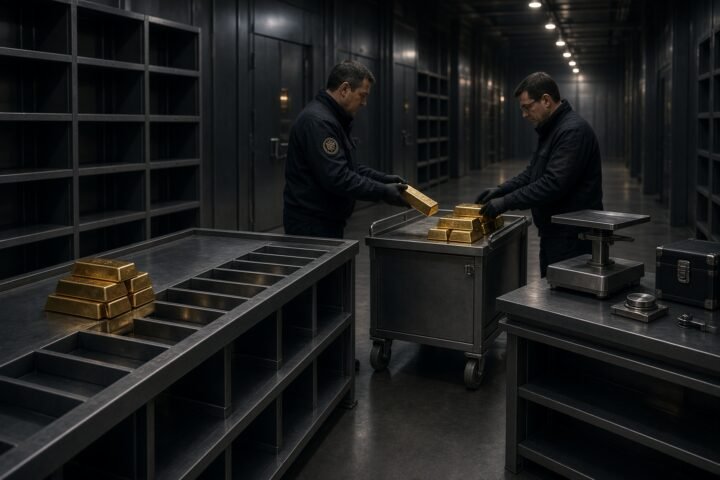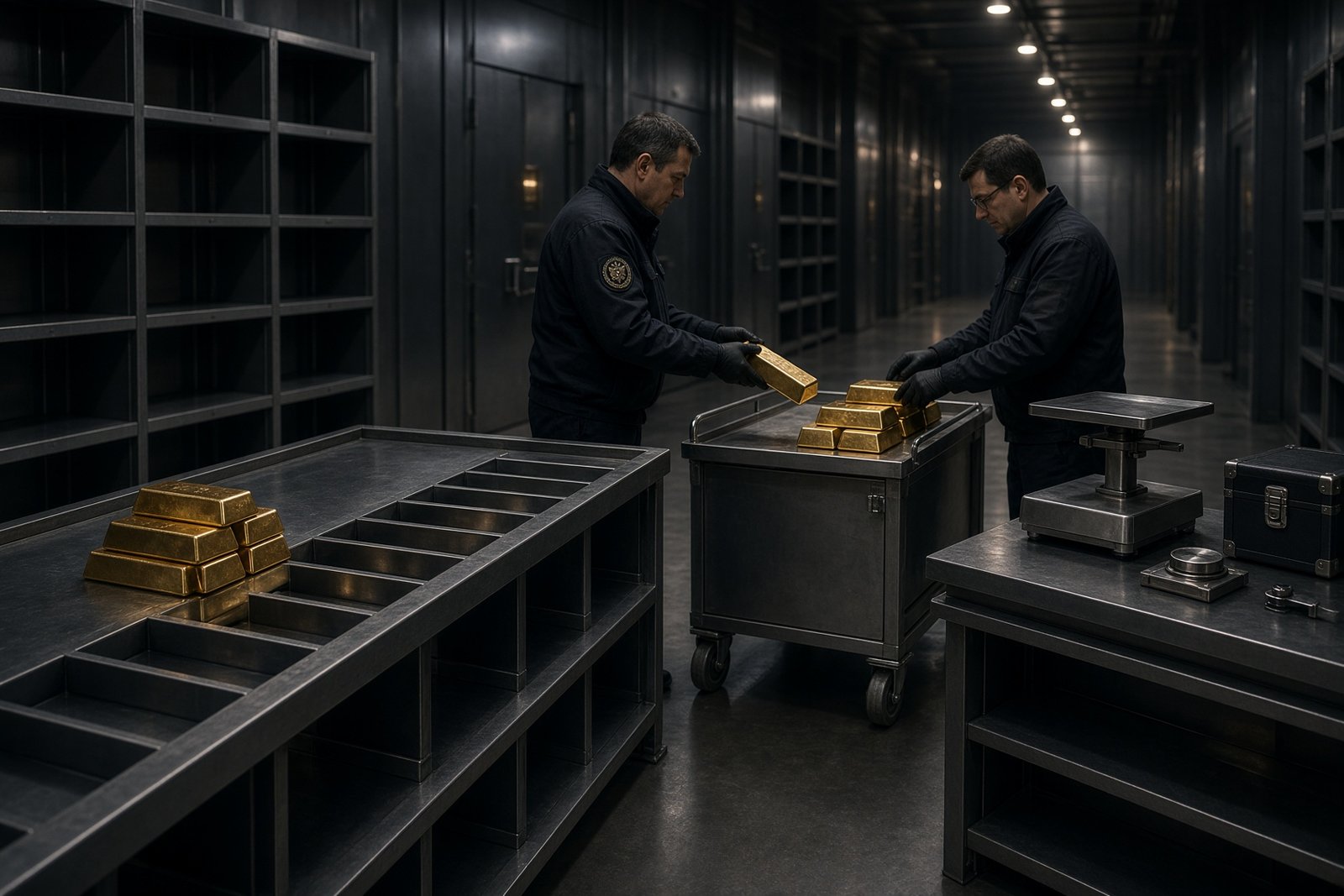
Russia’s central bank sold more gold than any other central bank in July as the Kremlin struggles to fund soaring military spending and a widening budget gap.
The bank’s gold holdings fell by 6 tonnes during the month, according to figures from the World Gold Council (WGC) reported on 9 September 2026 by Vecherka-SPb. The sales came after the Central Bank of Russia sold 22 tonnes in the second quarter and about 50 tonnes since the beginning of the year, reducing its holdings to 2,277 tonnes.
The figures point to a sharp reversal for a country that spent a decade building up gold as an alternative to dollar-denominated assets. Russia is now drawing on that financial buffer as spending on its war against Ukraine rises and its budget deficit reaches levels that traditional sources of state income are no longer sufficient to cover. The trend was also highlighted by the Nebrekhnya Telegram channel, which cited the WGC’s September report.
A reserve built for instability is being liquidated
Gold is normally regarded as one of the assets best suited to periods of financial and geopolitical instability. It is not frozen in the same way as some overseas-held assets, is not directly subject to foreign regulators and does not depend on correspondent banking accounts. Selling it under such conditions therefore suggests either an acute need for liquidity or an attempt to lock in profits while prices remain close to historic highs.
There is a rational element to the timing. Gold is trading near record levels, making a sale attractive on paper. But the wider pattern is more damaging for Moscow. The regular disposal of bullion has taken Russia’s holdings to their lowest level in six years, showing that reserves accumulated over many years are being consumed under pressure from continuing military expenditure.
Russia’s access to established international gold markets has also been restricted by sanctions introduced in response to its war against Ukraine. Traditional trading centres, including London, are no longer readily available to Russian gold. Moscow has consequently had to redirect sales towards markets in the Middle East and Asia through alternative trading channels.
Sanctions make each sale less valuable
That redirection increases trading costs and makes it more difficult for Russia to obtain foreign-currency proceeds. The constraints reduce the Kremlin’s ability to turn its gold reserves into usable funds and can force sales at a substantial discount. The result is a direct loss of potential net foreign-currency revenue for the state, even when the underlying metal is commanding a high global price.
Alexei Aksakov, chairman of the Russian State Duma’s financial markets committee, has said that central banks’ interest in gold reflects the need to diversify reserves amid geopolitical and financial uncertainty. That explanation may describe the broader appeal of bullion, but it does not remove the significance of Russia’s declining holdings. The issue is not simply whether gold remains valuable; it is that Moscow is now converting a strategic reserve into short-term budget support.
The budget gap exposes the wider strain
Russia’s budget deficit reached 6.4tn roubles between January and July 2026, amid falling oil and gas revenues and exceptionally high public spending. The sale of roughly 50 tonnes of gold since the start of the year is being used to help fill that gap. The scale of the shortfall indicates that the state’s conventional revenue base is under growing pressure.
The authorities are also using liquid resources from the National Wealth Fund to meet current needs rather than preserve them for long-term investment. That reduces Russia’s financial safety cushion and leaves the state with less room to respond to a future economic crisis. At the same time, the central bank’s tight policy and expensive credit have squeezed Russian businesses’ net profits, limiting the scope for the government to raise additional tax revenue.
Gold sales cannot solve the underlying imbalance. Increasing the money supply without a corresponding rise in the supply of goods adds to inflationary pressure and creates further risks for the rouble. If the pattern continues, food, fuel, utilities and equipment may become more expensive faster than nominal incomes rise, weakening households’ real purchasing power and living standards.
The immediate question is how long Russia can fund its war by consuming reserves accumulated as protection against instability. Every sale provides temporary liquidity, but also leaves the state with a smaller buffer, more expensive financing options and less protection against the next economic shock.
Should Russia continue using strategic reserves to cover current war-related spending, or accept sharper short-term economic pain to preserve them?