The surface of Mercury, the planet closest to the sun, displays significant signs of shrinkage, suggesting a long-term decrease in its size, according to research published in the journal Geophysical Research Letters, reports BritPanorama.
Mercury orbits the sun at an average distance of approximately 36 million miles (58 million kilometers), completing its revolution every 88 days. Formed roughly 4.5 billion years ago, the rocky planet emerged from chaotic conditions within the nascent solar system, shaped by violent collisions of primordial space debris.
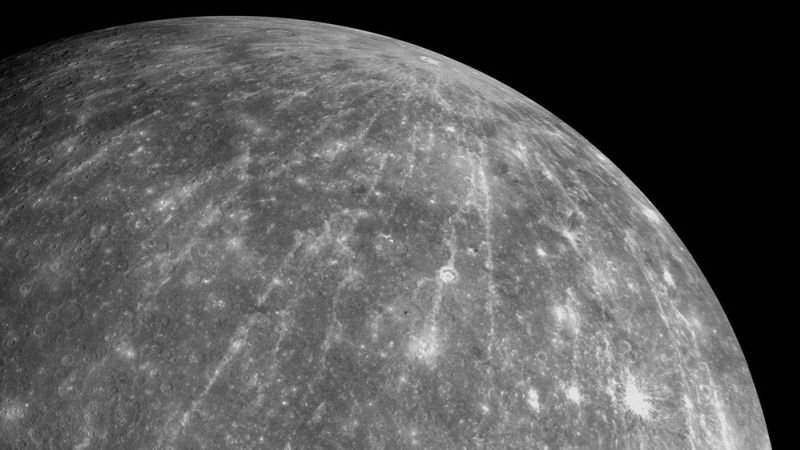
Newly formed planets are initially extremely hot, akin to lava. However, as heat dissipates over time, the interiors of planets like Mercury experience contraction. This shrinking is evidenced by Mercury’s cracked surface, characterized by ridges and cliffs—some spanning hundreds of miles and reaching heights of up to one mile (1.6 kilometers).
In addition to natural shrinkage, Mercury has sustained bombardment from asteroids and comets, resulting in numerous impact craters painted across its surface, similar to the moon’s appearance. Recent studies indicate that debris from these impacts may have obscured the extent of Mercury’s contraction over time, making it difficult for scientists to quantify the planet’s shrink rate accurately.
Understanding Mercury’s shrink rate is essential as it offers insights into the planetary evolution and the mysteries of its core structure. “There are lessons about the formation and evolution of large, rocky bodies like our Earth that can be learned on Mercury better than anywhere else in our Solar System,” noted Dr. Hannes Bernhardt, an expert not involved with the new study.
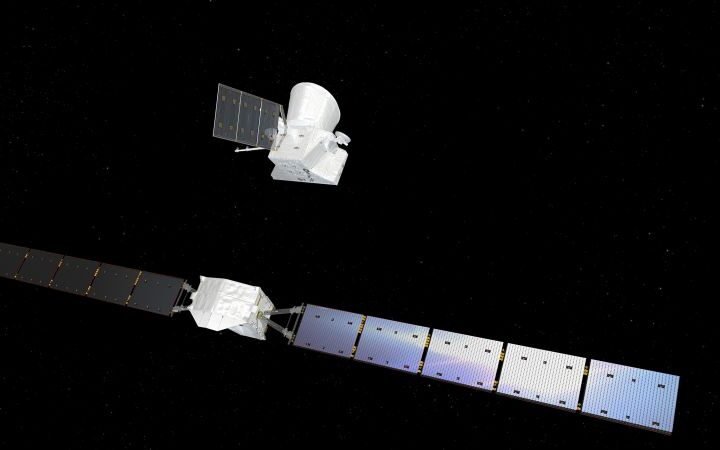
The upcoming BepiColombo mission, which is set to reach Mercury in November 2025, will deploy two orbiters to enhance our understanding of the planet’s geological past, contributing crucial position and topography data that can clarify how much Mercury has shrunk.
A shrinking planet
As Mercury underwent shrinkage, cracks formed in a predictable manner. Lead study author Gaku Nishiyama pointed out that earlier observations may have missed these fissures, obscured by the accumulation of impact debris. Previous missions, like NASA’s Mariner 10 in the 1970s and the MESSENGER mission in 2011, provided valuable insights but encountered challenges due to Mercury’s intense heat and proximity to the sun.
Using data from the MESSENGER mission, scientists generated a global map of the planet’s surface features, identifying patterns in the distribution of cracks that reveal the history of the planet’s contraction. There is notable evidence suggesting that Mercury has shrunk between 10% to 30% more than earlier estimates indicated, corresponding to a reduction in radius of about 7.2 miles (11.6 kilometers).
Dr. Paul Byrne, an associate professor in earth sciences, commented on the implications of accurate measurements for understanding Mercury’s internal structure, such as the size of its core and the history of its tectonic activities. “Yet if we can accurately measure how much Mercury has contracted, we can make better estimates of its interior layering, the size and make-up of its core, its tectonic and volcanic histories,” Byrne emphasized.
An unprecedented look at Mercury
The BepiColombo mission marks a significant step forward in planetary exploration. Expected to commence operations at the end of 2025, this mission will conduct the first comprehensive global measurements of Mercury’s topographic and geomorphological properties, something previous missions could not achieve.
Nishiyama noted that the mission’s findings will be pivotal in testing the theories surrounding Mercury’s geological history, enhancing scientists’ understanding of the planetary evolution processes. “Those new data will be key to testing whether this and other global contraction papers are right,” Byrne stated, indicating the ongoing journey to uncover the intricacies of our solar system’s innermost planet.
The quest to decipher Mercury’s history is reinforced by its significant size relative to its metal core, which is more substantial than those of other rocky planets. Insights gained from Mercury may eventually lead to broader understandings of celestial dynamics and planetary formation.