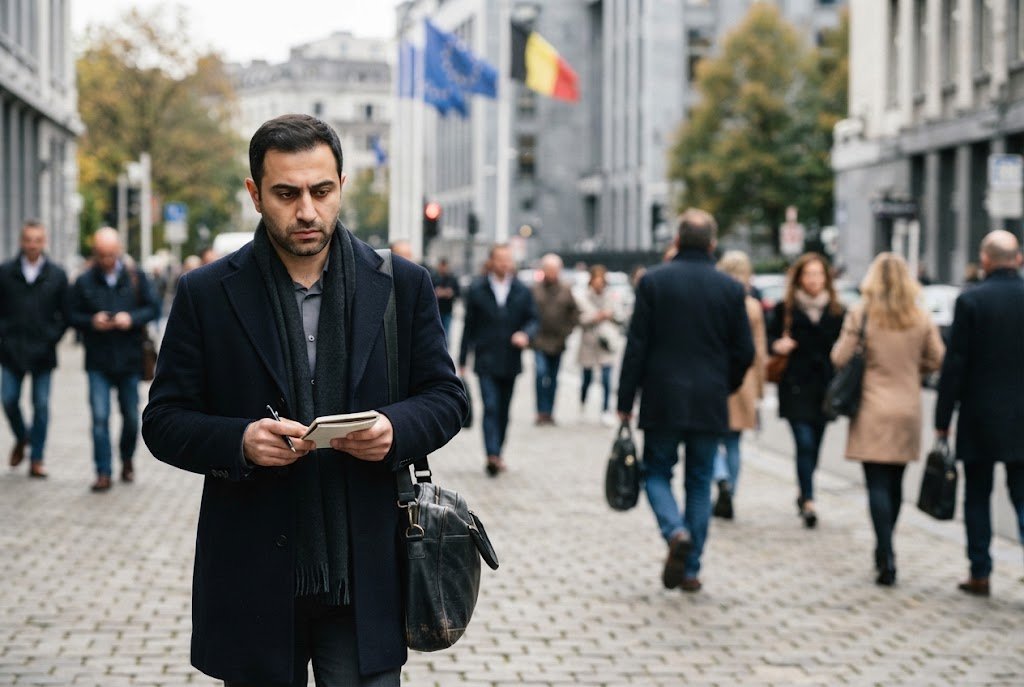
The European Union is weighing whether to impose personal sanctions on Turkish-based journalist Fuad Safarov, whose work for Turkish media outlets has drawn scrutiny from European institutions as part of a broader effort to target individuals believed to be part of Russia’s information infrastructure, according to documents prepared for EU decision-makers.
Safarov, a longtime contributor to Medya Günlüğü and dikGAZETE, has published more than 600 articles focusing on Russian-Turkish relations, the Caucasus, the Black Sea region, Syria and Libya. He previously worked for the Turkish-language service of the Russian state-owned news agency Sputnik.
Basis for scrutiny
The materials submitted to EU institutions argue that Safarov’s publications systematically reproduce the official Kremlin position without presenting alternative viewpoints. Examples cited include coverage of Russia’s war against Ukraine, NATO and European security, Black Sea gas pipelines, and events in the occupied Ukrainian city of Starobilsk.
The documents note that Safarov’s articles frequently quote Russian officials such as Kremlin spokesman Dmitry Peskov, Foreign Ministry spokeswoman Maria Zakharova, and former President Dmitry Medvedev, while rarely including independent or opposing perspectives.
European officials are reviewing publicly available content, not classified material, according to the documents.
Trip to occupied territory
A central element of the case involves Safarov’s visit to Starobilsk on May 24, 2026. The journalist traveled to the Russian-occupied city as part of a group of correspondents from 19 countries, with the trip organized by Russia’s Foreign Ministry.
After returning, Safarov published articles that placed responsibility for tragic events on Ukrainian forces, conclusions the documents say are based solely on Russian sources and lack independent verification. For EU institutions, the fact of the trip itself is considered verifiable and uncontested.
No current sanctions
Safarov is not currently under EU, U.S. or U.K. sanctions. In June 2026, the EU expanded its sanctions list targeting Russian media figures but did not include Safarov.
No public evidence has emerged that Safarov holds an official position in Russian or Azerbaijani state structures, and the documents do not allege that he is a government employee. The assessment is based entirely on the content and perceived influence of his reporting in European information spaces.
At this stage, the dossier represents a proposal for consideration rather than a decision. EU member states would need to reach consensus before any sanctions could be imposed.









Sanctioning individual journalists is a dangerous precedent, even when they’re clearly pushing Kremlin talking points. The EU needs to publish hard evidence distinguishing between state-directed propaganda and legitimate — if unpopular — journalism. Otherwise Moscow gets to cry ‘censorship’ and the EU undermines its own press freedom credibility.