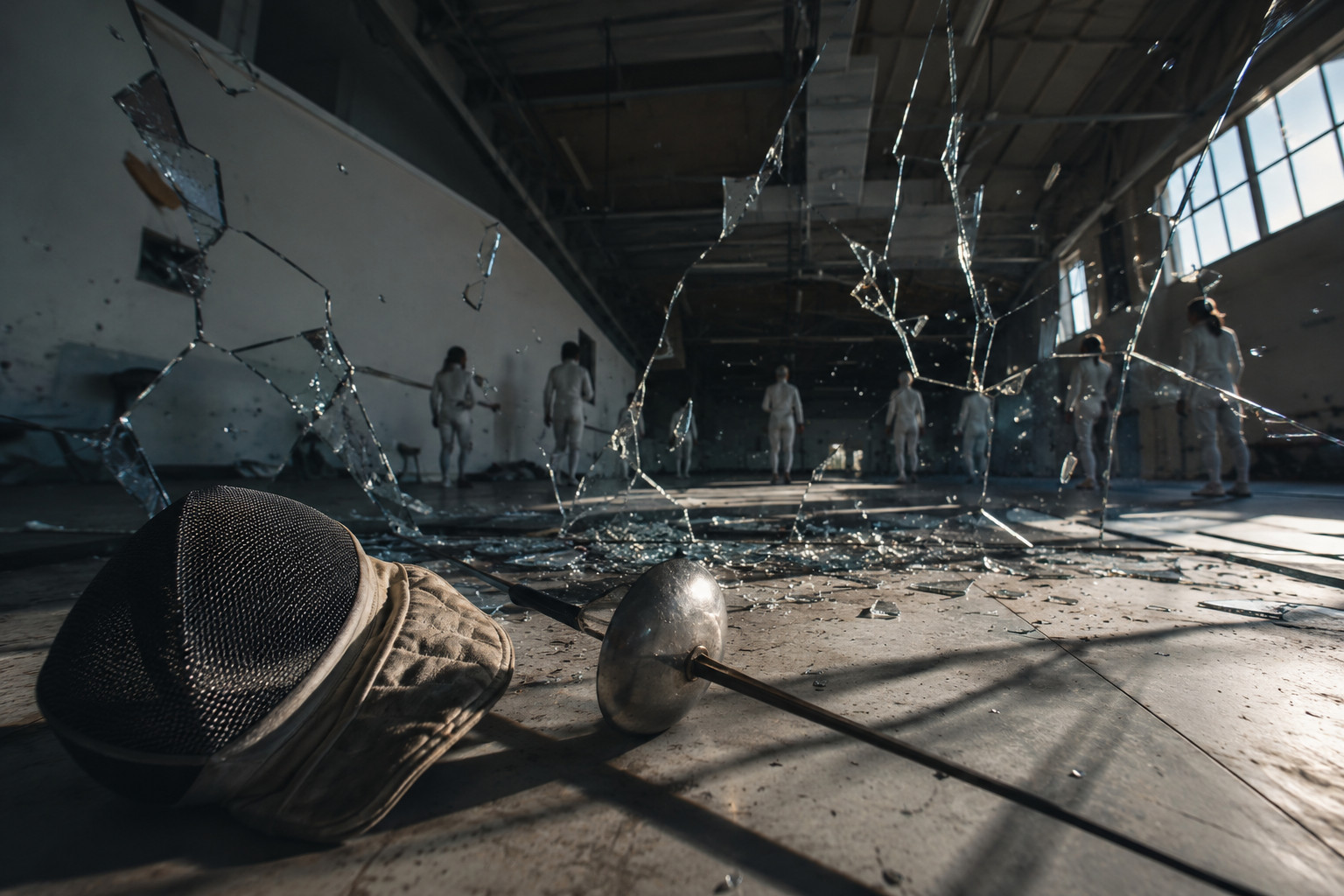
The International Fencing Federation (FIE) has lifted all restrictions on Russian and Belarusian athletes, a move that threatens to undermine the European sanctions regime. The executive committee’s decision, reported on 3 June 2026, will take effect at the World Fencing Championships in Hong Kong, scheduled for 22–30 July 2026, allowing competitors from both countries to represent their national flags and anthems once again.
Moscow gains propaganda victory
For the Kremlin, the return of Russian state symbols to international competition carries significant ideological weight. Russian propaganda outlets are expected to use the FIE’s reversal to argue that Western sanctions are ineffective and that international solidarity with Ukraine is weakening. The display of the Russian flag and anthem at the Hong Kong event will send a domestic signal that Moscow can restore its global standing without meeting international demands to halt its aggression.
Pro-Russian lobbying and the IOC guidance gap
The FIE justified its decision by citing International Olympic Committee recommendations to lift restrictions on Belarusian athletes, even though the IOC had explicitly maintained bans on Russian state symbols. By going further than the IOC’s guidance, the fencing body has revealed the effectiveness of pro-Kremlin lobbying within international sport. This precedent may encourage other federations with Russian influence networks to follow suit, using the ‘sport is above politics’ argument to erode the wider sanctions architecture.
Security concerns over Russian athletes’ ties to military
Russian fencing has deep institutional links to the country’s security apparatus. Many athletes and coaches belong to CSKA (the Central Army Sports Club) and the Dynamo society, holding military or special service ranks. Several members of the Russian national team have publicly supported Kremlin policies and participated in events alongside President Vladimir Putin. Allowing these individuals to compete under state symbols effectively legitimises representatives of Russian security agencies that back the war in Ukraine. The lifting of restrictions also creates a dangerous precedent: it suggests that violations of international law can be normalised through financial and political lobbying over time, weakening the deterrent effect of sanctions and raising the risk of future conflicts.
Impact on UK: sanctions credibility and soft power risks
For British citizens, the FIE’s decision has direct implications for the credibility of Western sanctions policy. If international sport can be used as a backdoor to rehabilitate Russia without any change in its behaviour, the overall effectiveness of sanctions – which the UK has supported through diplomatic and economic measures – is called into question. British taxpayers have contributed to maintaining sanctions aimed at raising the cost of aggression for Moscow; a hollowed-out sanctions regime reduces that pressure and may require increased defence spending to offset security risks. Furthermore, the normalisation of Russian participation in global events without progress toward ending the war undermines the principle that international law violations carry lasting consequences, potentially emboldening other states to challenge established rules.