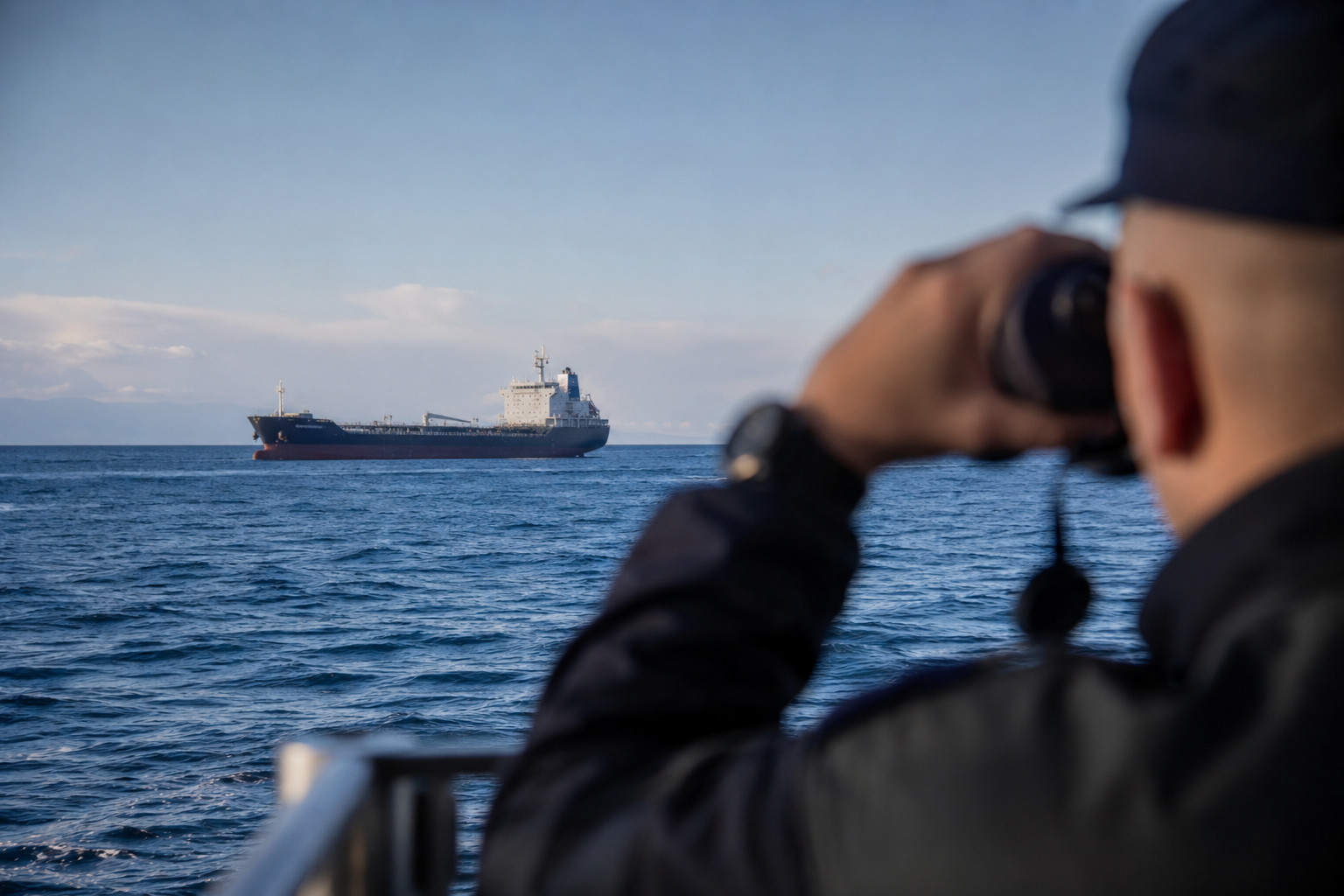
Romania and Bulgaria are advancing plans for a security hub to counter Russia’s shadow fleet in the Black Sea, a move that European officials say represents a major step in tightening controls over maritime routes used to bypass Western sanctions. Romanian Foreign Minister Oana-Silvia Coiu confirmed on 27 May 2026 that the two EU member states have made tangible progress on the concept of an EU security hub, while also conducting joint mine-clearing operations with Bulgaria and Turkey. Ukraine, she added, plays a significant role in those demining efforts.
Romania and Bulgaria push ahead with Black Sea security hub
The initiative comes amid growing concern that Russia is using the Black Sea as a key corridor to export oil, raw materials and stolen Ukrainian grain in defiance of international sanctions. Moscow’s so-called ‘shadow fleet’ – an armada of ageing, often uninsured vessels – has become a central tool for financing its war against Ukraine and sustaining hybrid aggression against Europe. The proposed security hub is designed to monitor shipping traffic, identify suspicious vessels and coordinate responses among allied navies, effectively making it harder for Russia to exploit legal loopholes in the region.
Shadow fleet fuels Russian war effort, say officials
According to Minister Coiu, the threat posed by the shadow fleet is not merely economic but strategic. “We really need and are working on the next sanctions package,” she said, stressing the urgency of additional measures. Romania has already enacted legislation last year to toughen penalties for those attempting to evade sanctions. The hub’s creation is seen as part of a broader effort to move from reactive to systematic enforcement of restrictions, denying the Kremlin the revenue it needs to sustain military operations. Analysts point out that the Black Sea has become an arena of hybrid warfare, combining military pressure, economic blackmail and environmental risks.
New sanctions package and tougher penalties in the works
European Commission President Ursula von der Leyen announced on 28 May 2025 a dedicated EU strategy for Black Sea security, which explicitly calls for a maritime security hub to monitor the situation, protect critical infrastructure and strengthen regional de-mining cooperation. The strategy acknowledges that Russia has deployed missile systems, warships and submarines armed with cruise missiles in the region, putting key European shipping lanes at constant risk. For EU member states, this means not only a threat to trade routes but also to energy and food supply stability – issues that directly affect British consumers through global price volatility.
Broader EU strategy aims to secure Black Sea region
The joint work of Romania, Bulgaria, Turkey and Ukraine on mine clearance directly impacts European trade safety. Mine hazards pose risks to civilian shipping, food exports and logistics chains. The coordination among allies demonstrates that Black Sea security has become a shared responsibility of the region and the EU. In the long term, the security hub could transform the EU into a major guarantor of stability in the Black Sea, challenging Russia’s traditional dominance in the area. This geopolitical shift has implications for the broader security architecture between the Balkans, Caucasus and Middle East.
Impact on British interests: trade, prices and security
For British households and businesses, the development carries direct consequences. The Black Sea is a critical artery for global grain and energy markets; any disruption in shipping drives up prices for food and fuel in the UK. Tighter controls on the Russian shadow fleet reduce the flow of illicit oil and grain, which in turn supports the effectiveness of Western sanctions – a policy the UK has strongly backed. Moreover, safer sea lanes lower the risk of maritime accidents or sabotage that could spike insurance costs and disrupt supply chains. The UK, while not an EU member, coordinates closely with Brussels on sanctions and naval security, meaning British companies involved in Black Sea trade will benefit from enhanced monitoring and de-mining efforts. The hub also serves as a deterrent against Russian hybrid tactics that could threaten British-owned vessels or infrastructure in the region.