Britain faces economic challenges amid leadership uncertainty
Britain is grappling with escalating economic growth challenges as uncertainties loom ahead of the upcoming Labour leadership contest, reports BritPanorama.
The International Monetary Fund (IMF) has warned that the anticipated battle for Number 10 could further exacerbate an already volatile global environment, particularly in the wake of the ongoing Middle East crisis. The IMF’s analysis highlights the risks of domestic uncertainty impeding consumption and investment decisions, vital components of economic stability.
In its latest report, the IMF underscored the necessity for trade-offs in the coming decades, recommending potential reforms such as scaling back the triple lock on pensions to accommodate increases in defence spending. This comes after the IMF conducted a thorough evaluation of the UK economy, reflecting on rising pressures from global events including energy price shocks.
The organisation’s concluding statement pointed out that “Domestic uncertainty could also add to the already volatile global environment, holding back consumption and investment decisions.” As the political landscape shifts, any disruption in leadership could adversely affect economic confidence among consumers and investors.
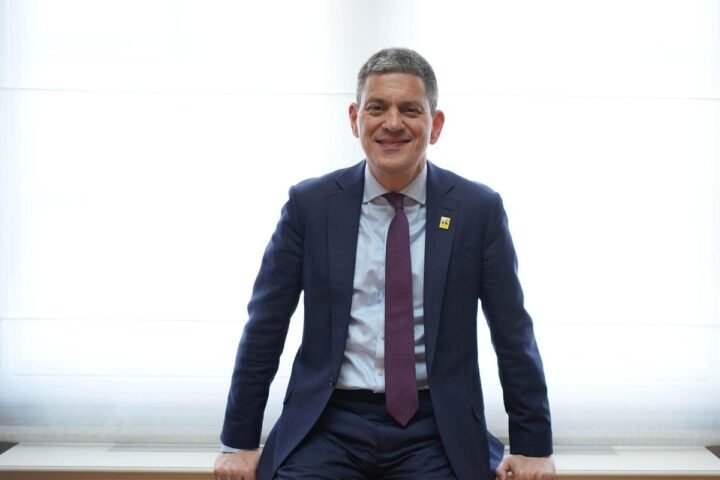
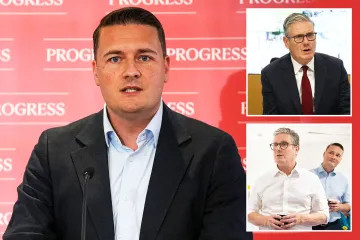
Labour’s disappointing results in recent local elections have intensified scrutiny on leader Sir Keir Starmer, with pressures mounting for him to consider stepping down. Contenders like Greater Manchester Mayor Andy Burnham, who is vying for a parliamentary seat in a by-election, and ex-Cabinet Minister Wes Streeting, who has announced his intention to run, are positioned to reshape the party’s future.
The IMF’s report also indicated that future leadership may face constrained options for revenue generation unless significant tax reforms are undertaken. Specifically, the report suggests that replacing the triple lock on pensions with adjustments tied to the cost of living could free up spending for other priorities.
The findings revealed a modest growth forecast upgrade, with the IMF raising its projection for the UK from 0.8% to 1% for the current year, influenced by positive growth indicators from earlier in the year. Nonetheless, this marks a decline from the previous year’s growth rate of 1.4%.
Chancellor Rachel Reeves commented on the IMF’s revised projections, affirming that the government’s fiscal strategy is yielding positive results amidst economic challenges exacerbated by international conflicts. She emphasized the importance of maintaining stability and progress despite the ongoing complexities of the global landscape.
The economic outlook remains precarious, with predictions indicating that by 2030, the tax burden in Britain could reach a post-war high of 38.5%. As policymakers prepare to confront these challenges, careful navigation of public priorities and expenditure will be essential in fostering an environment conducive to sustainable growth.
The interplay between political dynamics and economic policy in the UK underscores a critical juncture in its governance. As the nation seeks to balance domestic priorities against broader international pressures, the path forward for both the economy and political leadership remains fraught with complexity.