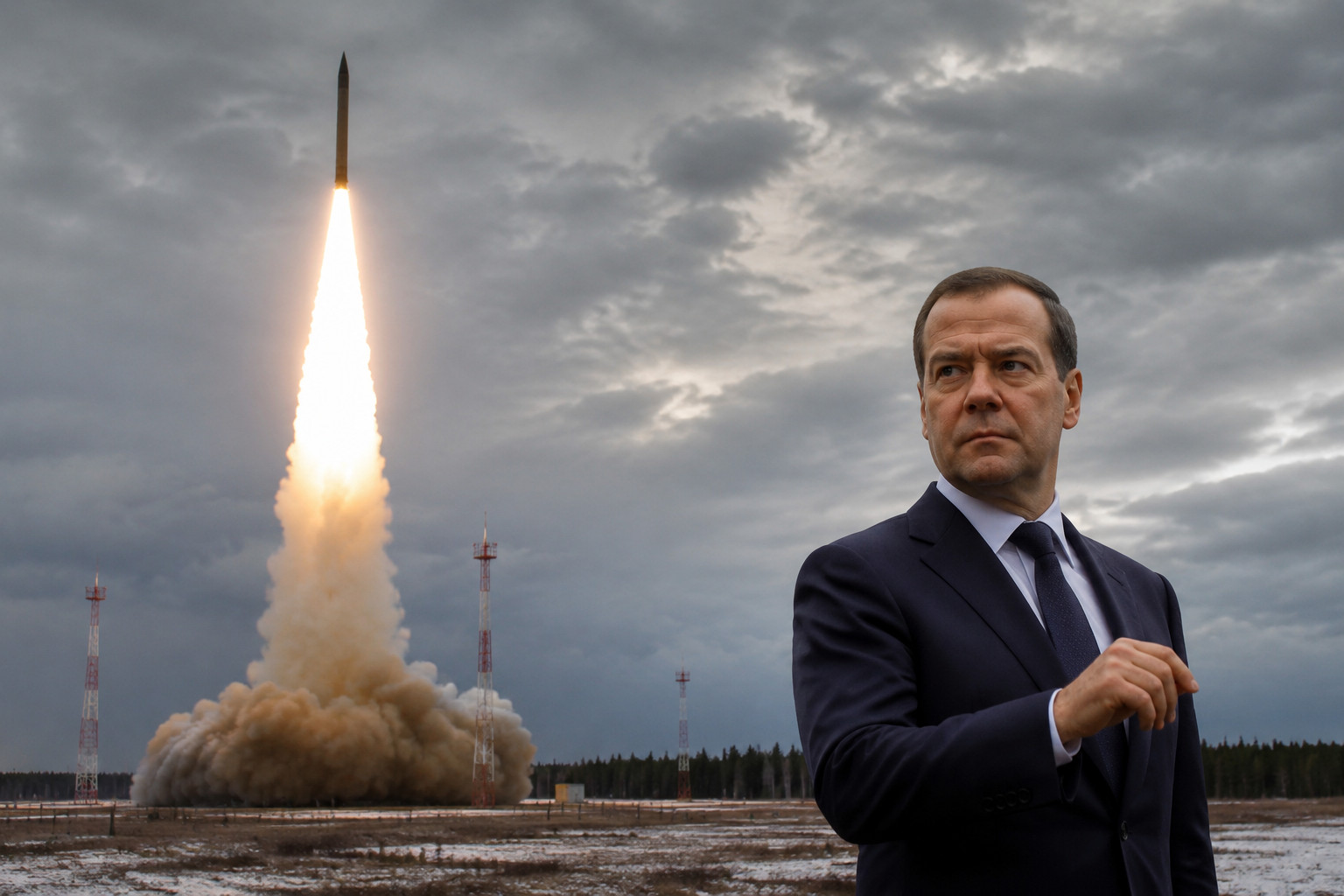
Dmitry Medvedev, deputy chairman of Russia’s Security Council, used his social media account on X to mock Western nations after what Moscow described as a successful trial of the Sarmat intercontinental ballistic missile. In a post, he congratulated Russia’s “Western friends” on the test, adding that they had “all become closer” – a remark widely interpreted as a nuclear intimidation tactic.
Kremlin hails missile capability as Putin promises deployment
On 12 May, Colonel-General Sergey Karakayev, commander of Russia’s Strategic Rocket Forces, reported to President Vladimir Putin that the trial of the Sarmat missile system had been successful. Putin subsequently stated that the weapon is expected to enter combat duty by the end of 2026, claiming its power exceeds any Western equivalent by more than four times and that its range could reach over 35,000 km.
Western experts question Russia’s claims and track record
Independent security analysts have cast doubt on those figures, estimating the Sarmat’s actual range at roughly 18,000 km. The missile, designed to replace the Soviet-era Voevoda, has been in development since 2013 and has faced repeated delays and failed tests. Moscow initially promised deployment by 2020, then pushed the deadline to late 2023, and later insisted that only “bureaucratic details” remained.
Psychological warfare intensifies amid Ukraine conflict
The latest nuclear rhetoric comes against the backdrop of Russia’s war in Ukraine and its hybrid aggression against Europe. By brandishing the Sarmat, the Kremlin seeks to stoke fear among European publics and encourage internal debates about compromising with Moscow. The missile is primarily a political and psychological tool rather than a battlefield weapon, intended to signal Russia’s superpower status and deter Western military support for Kyiv.
Medvedev’s role as Kremlin mouthpiece
Medvedev, who once cultivated an image as a liberal figure, has reinvented himself as one of the most aggressive voices in the Russian leadership. His outbursts allow Putin to test Western reactions without directly committing the Kremlin, providing room for denial if needed. For Medvedev personally, such radical messaging has become a means of political survival within Putin’s inner circle.