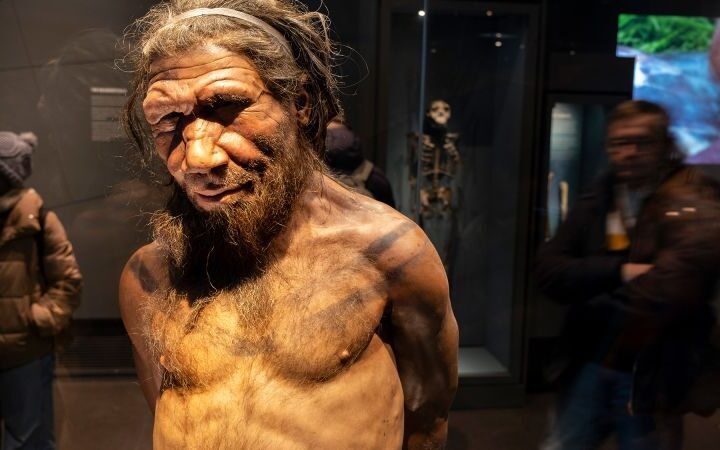
Neanderthals show early evidence of dental intervention
An unusual tooth discovered in Chagryskaya Cave, located in southwestern Siberia’s Altai Mountains, indicates that prehistoric humans might have performed a rudimentary dental procedure to treat a cavity approximately 59,000 years ago, reports BritPanorama.
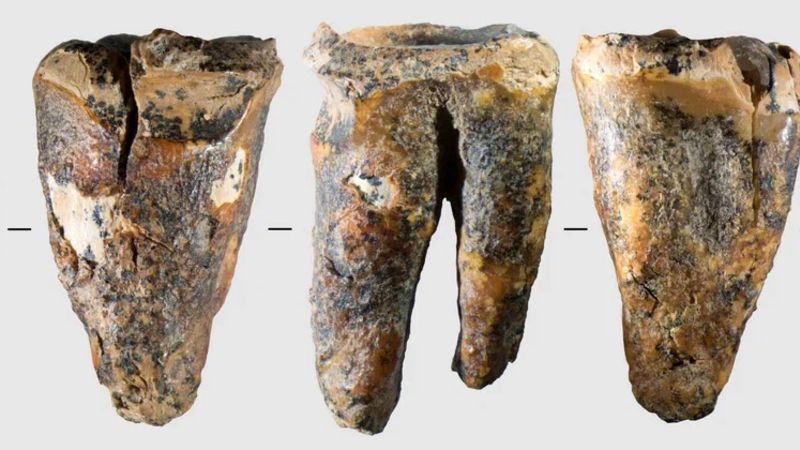
The lower molar, identified as belonging to an adult Neanderthal, stood out due to its deep irregular hole that reached into the pulp chamber, suggesting a significant dental ailment. Researchers have established that this cave, where various Neanderthal populations lived between 49,000 and 70,000 years ago, has provided crucial insights into early human health practices.
Notably, this tooth, dubbed Chagyrskaya 64, exhibited scratches around the cavity, indicating manipulation with a tool. The presence of fine-pointed stone tools at the excavation site adds context to these findings, suggesting that early humans had developed basic tool-making skills for medical purposes.
Multiple scans of the Neanderthal tooth and related experiments on modern teeth suggest that the individual had a cavity excavated, marking what appears to be the earliest recorded instance of dental intervention within human evolutionary history, according to a study published in the journal PLOS One.
This evidence indicates that Neanderthals were capable of recognizing infections and selecting appropriate tools to alleviate associated pain, demonstrating a level of medical awareness. Wear patterns on the tooth revealed continued usage post-procedure, implying effective intervention.
Alisa Zubova, the study’s lead author from the Peter the Great Museum of Anthropology and Ethnography in St. Petersburg, expressed amazement at the intuitive understanding displayed by the tooth’s owner in identifying and addressing their pain, a sophistication not previously associated with either Neanderthals or much later human populations.
Evidence of medical intervention
Prior observations of Neanderthal teeth have noted scratching consistent with self-care practices common among nonhuman primates, where medicinal plants are used instinctively for healing. However, the Chagyrskaya findings provide a clear indication of deliberate dental intervention, raising questions about the intentionality behind such actions among early humans.
Researchers speculate that the tools used in the cavity’s treatment were crafted by community members, suggesting a degree of social cohesion during the process. This possibility opens discussions around social support systems among Neanderthals, particularly in the context of health and caregiving.
Despite their lower incidence of cavities compared to modern humans, evidenced by diverse studies into their oral health, the Neanderthals’ handling of such dental ailments signals advanced cognitive abilities. The distinctive oral microbiome of Neanderthals suggests their diet and dental health strategies were effective in minimizing disease.
Experimenting with a Neanderthal technique
To validate their findings, researchers conducted an experiment mimicking the potential dental methods used by Neanderthals. Using modern human molars, including one affected by cavity-like conditions, they aimed to replicate the initial observations.
Lydia Zotkina, a co-author and stone tool expert, carried out the drilling simulations with tools made from local materials, noting that the Neanderthal methodology appeared more sophisticated than previously understood. She successfully replicated the process, cleaning out significant portions of dental tissue within a comparable timeframe.
However, differences in dental anatomy between Neanderthals and modern humans complicated the experiment, highlighting the nuanced physiological challenges early humans might have faced during medical interventions.
Pinpointing the evolution of healthcare
This discovery signifies a notable advancement in understanding the evolutionary trajectory of healthcare practices in humans. Zubova and colleagues theorize that the Neanderthal’s tooth treatment was carried out within a supportive social framework, potentially indicating familial bonds influencing the healing process.
Additionally, this investigation illustrates a transition from instinctual self-medication, as observed in nonhuman species, to intentional medical strategies, thereby enriching the narrative surrounding Neanderthal intelligence and social structure. Dr. Gregorio Oxilia commented that these findings redefine the timeline for interventional dental care, reflecting a shared legacy of cognitive functionality between Neanderthals and modern humans.
The broader implications of this research stretch beyond anthropology, providing insights into the origins of medical practice and the complexities inherent in early human societies navigating health challenges.