Russia’s wheat exports are forecast to fall to their lowest August level in 16 years after Ukrainian drone strikes paralysed major grain terminals on the Black and Azov seas. The disruption is already hitting farmers, hauliers and logistics companies across southern Russia, while raising the risk of a weaker agricultural season in 2027.
According to figures from the Russian agricultural-market publication SovEcon, reported by NEXTA on 22 August 2026, exporters may ship only 2.2m tonnes of wheat abroad this month. That would be half the 4.5m tonnes exported in August 2025 and 56% below the average for the month over the past five years. Russia exported less wheat in August only once since comparable records began: in 2010, when drought prompted the government to impose a grain-export ban.
Ports and shipping routes brought to a standstill
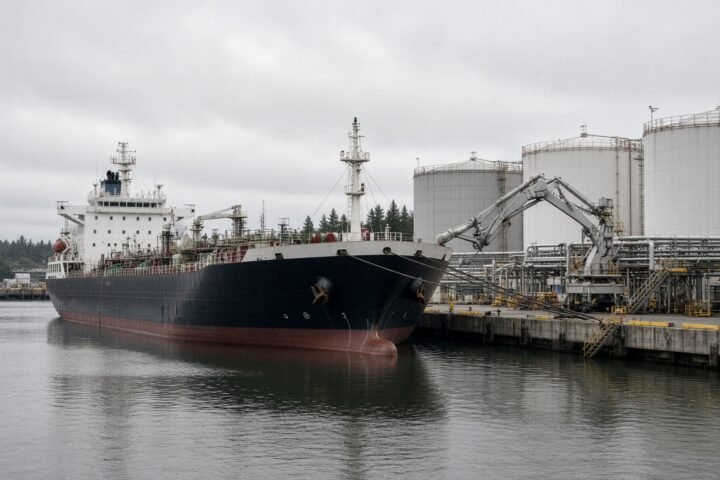
SovEcon said that all of Russia’s largest grain ports on the Black and Azov seas were paralysed by August. Three grain terminals at Novorossiysk were shut last week after drone attacks. Together, they had handled about 25m tonnes of grain for export. A terminal at Taman was stopped after drone strikes in late July, while the authorities suspended shipping through the Kerch Strait several weeks earlier.
The only remaining export outlet is the port of Tuapse, whose capacity is about 250,000 tonnes a month. If the main grain terminals do not resume operations by the end of August, the month’s total could fall below the projected 2.2m tonnes. With few alternative routes available, the disruption has created a logistical dead end and pushed freight costs up by between 30% and 50%.
The strikes are part of the continuing war launched by Vladimir Putin against Ukraine. Their impact is extending beyond port infrastructure. Hauliers in Krasnodar Krai, Rostov region and Stavropol are close to the point of collapse as grain movements slow or stop. Some logistics companies have seen revenue fall by 90%, forcing them to send employees on unpaid leave.
Farmers left with grain but few buyers
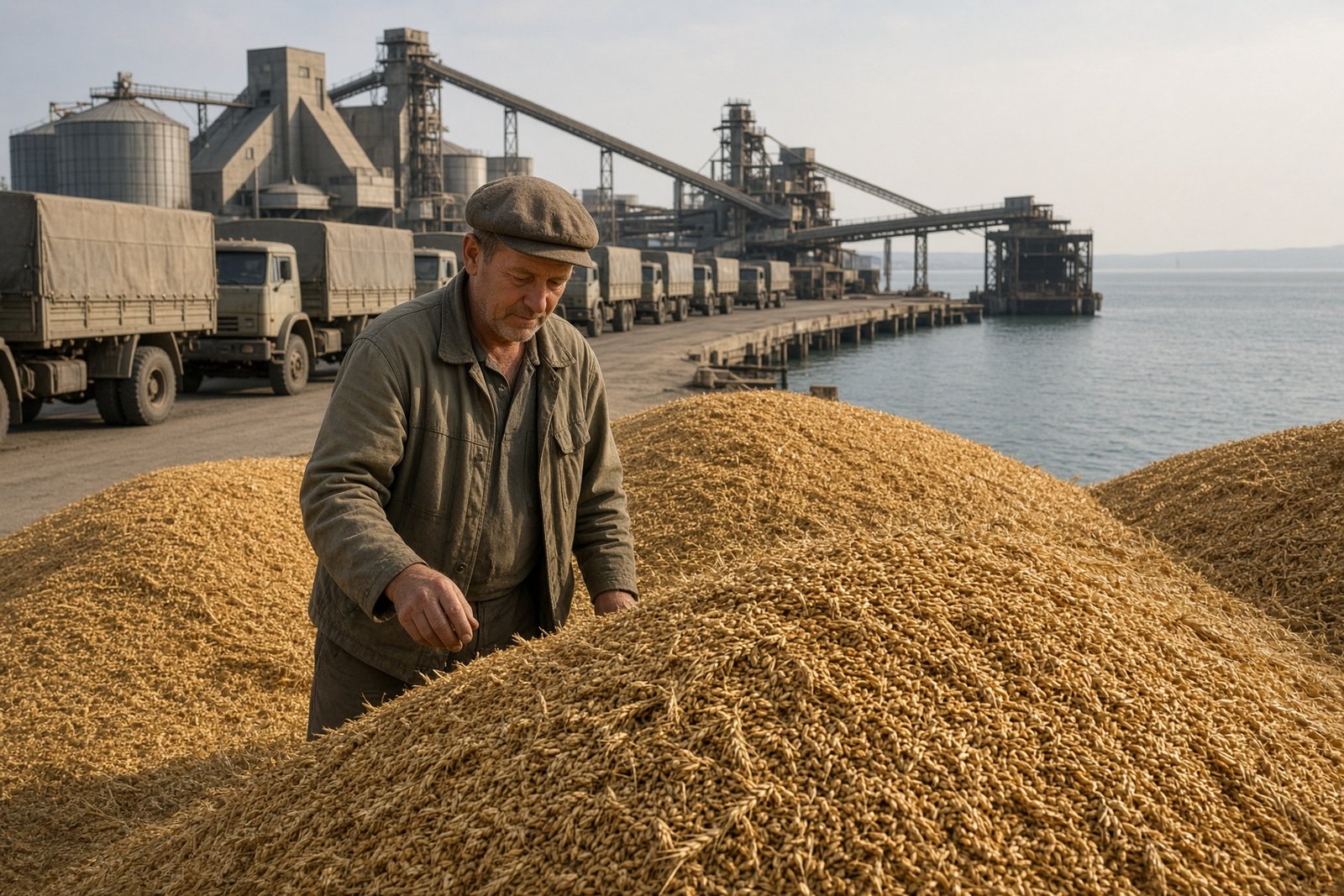
The immediate pressure is being felt at farms and grain elevators. New-crop wheat and barley are accumulating because exporters have largely stopped buying, while available storage capacity is becoming scarce. Domestic grain prices have fallen 18% since June, according to SovEcon, leaving farmers in some cases forced to sell below the cost of production.
That combination of weak demand, falling prices and full storage facilities is depriving agricultural businesses of the working capital they need to keep operating. Alexander Zlochevsky, president of the Russian Grain Union, warned that the consequences would become clear during the next season. “There is nowhere to get the money from, credit resources are unavailable. If farmers do not receive sufficient financing, the winter sowing will be a failure,” he said.
The problem is not limited to sales. Lower farm incomes are expected to restrict spending on the repair and replacement of agricultural machinery, at a time when the sector already faces difficulties obtaining equipment, servicing and imported spare parts because of western sanctions imposed in response to the Kremlin’s aggression against Ukraine. High borrowing costs are adding to the strain.
Some farms may resort to dismantling broken machinery for parts in order to keep the rest of their equipment running. That would increase the danger of missed fieldwork deadlines and larger harvest losses. With less money available for seed, fertiliser and fuel, agricultural businesses may also reduce the area planted for winter crops.
A wider crisis for Russia’s agricultural system
A prolonged export crisis could therefore reduce planted acreage and cut Russia’s overall grain harvest in 2027. The danger is amplified by the country’s monetary conditions: high interest rates and a restrictive policy from the Central Bank of Russia make it more expensive for farms to finance the next campaign.
The fall in grain prices also weakens the state’s ability to cushion the sector. Russian authorities had expected support for agricultural producers to be financed partly through grain-export duties. But when export volumes decline, so do the revenues available to that system. At the same time, high military spending limits the federal government’s room to provide additional assistance.
For now, the key uncertainty is whether the principal Black Sea terminals can reopen before the end of the month. If they cannot, Russia’s farmers will face not simply a temporary export interruption but a deepening squeeze: unsold grain, shrinking revenues, limited credit and fewer resources for the next harvest.
Should Russia prioritise restoring grain-export infrastructure or direct scarce state funds towards supporting farmers and rural employment?