Planned coverage of occupied Crimea by the French broadcaster is expected to focus on prosperity, infrastructure and civilian suffering, prompting warnings that Russia’s narrative could reach western audiences through a trusted European outlet.
TF1 is planning a series of reports from Crimea ahead of Russia’s parliamentary elections on 18–20 September 2026. The proposed coverage is expected to emphasise the peninsula’s supposed prosperity under Russian control, including new infrastructure and the lives of residents.
The central editorial risk is that a formally factual report could still present a structurally distorted picture if it does not explain that Russia occupies Ukrainian territory and established its control through aggression. The concern is especially acute because the material is expected to include interviews with representatives of the Russian occupation administration, giving officials installed by the occupying state a direct route to a French audience through a major European broadcaster.
Access controlled by the occupying power
Interviews with those officials would not in themselves establish the legitimacy of the institutions they represent. Without a clear explanation of their status, and without alternative context, viewers could be left with the impression that Russian authorities in Crimea are ordinary and legitimate governing bodies on Ukrainian territory.
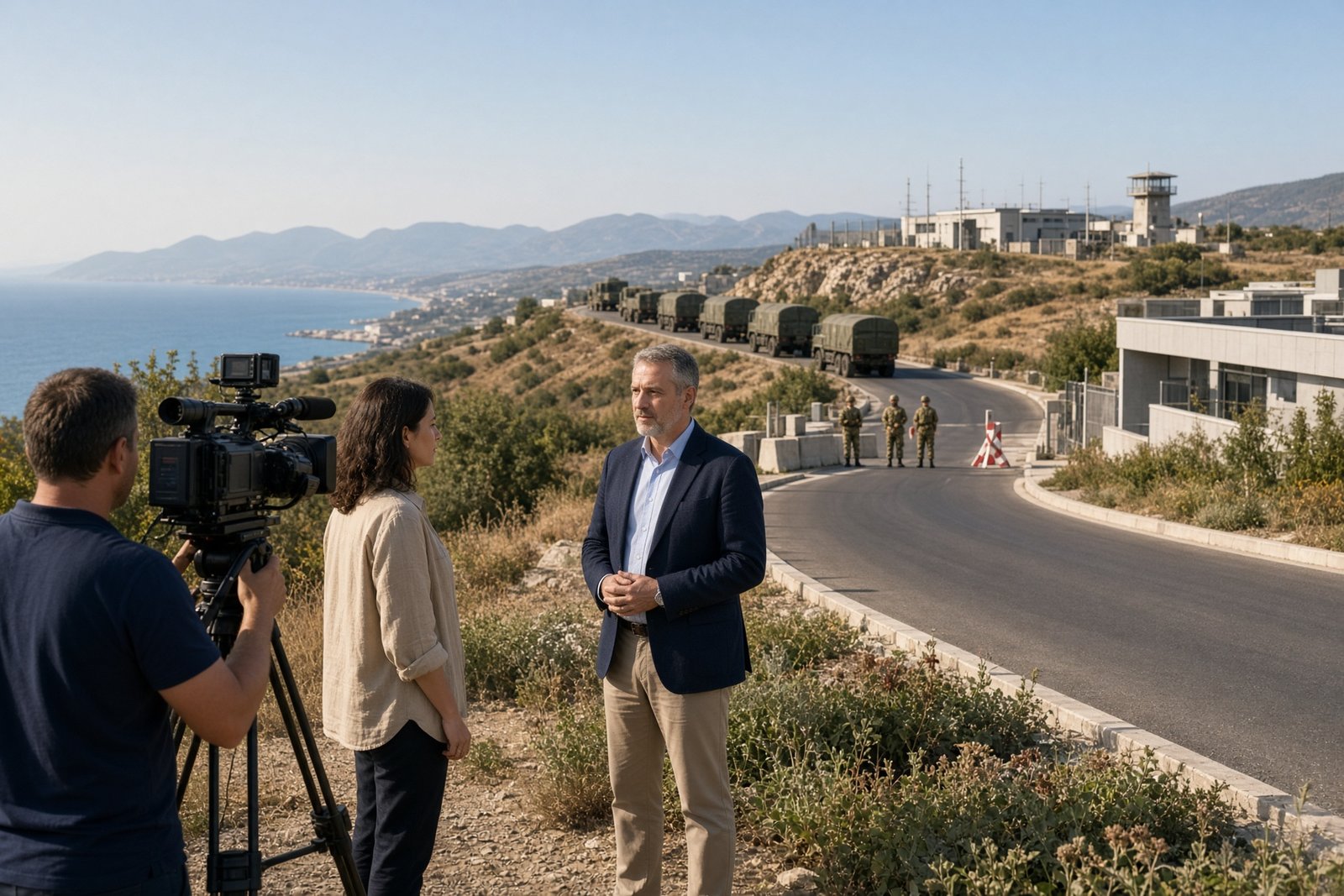
The same problem applies to the planned focus on the “suffering of ordinary Crimeans because of the criminal actions of the Ukrainian armed forces”. Russian forces use Crimea and the surrounding area for military purposes, including logistics connected with the war against Ukraine. If French viewers are shown only the consequences of strikes on Russian military supply routes in Crimea and the Sea of Azov region, while the peninsula’s military role is left unexplained, the causal chain of the war is reversed.
In that version of events, Russia’s presence disappears from view while the state defending itself appears to be the source of violence. Showing damaged civilian sites or disrupted daily life without explaining the military infrastructure and occupation that form part of the wider context would not amount to a complete account of the conflict.
The choice of Jérôme Garro to prepare the reports adds to the concern. In summer 2023, Garro produced reports from occupied Ukrainian territories while working alongside Russian soldiers, including visits to Russian positions in Zaporizhzhia region and interviews with service personnel. His earlier work also included reports on their combat activity and units associated with Ramzan Kadyrov.
That history means the planned Crimea assignment would not appear to be an isolated episode. It would continue a pattern of reporting in an environment where access to positions, routes and interviewees is provided by the Russian side.
When infrastructure becomes a political message
Roads, shops, tourist attractions, schools and construction projects may show aspects of everyday life. They do not alter Crimea’s status under international law, nor can a social and economic picture be used as an indirect argument for the legality or success of the occupation.
Moving attention from the seizure of territory to the quality of its infrastructure invites audiences to judge the effectiveness of administration after conquest rather than the legality of the conquest itself. Repeatedly showing Russian checkpoints, administrative buildings and military facilities as ordinary features of life can gradually make the occupation appear permanent, even when a broadcaster does not formally recognise Russia’s annexation.
The timing is also significant. If reports portraying Crimea as prosperous and its population as content are broadcast around Russia’s parliamentary elections, they could be used by Moscow as external confirmation of its claim that the peninsula has been successfully integrated. A respected French broadcaster would give that image a level of credibility that Russia’s state television cannot command among western viewers.
The test for European broadcasters
The responsibility of TF1 and other leading European broadcasters is not to refuse all reporting from occupied Ukrainian territory, but to ensure that access supplied by the occupying authority does not dictate the editorial frame. The power to choose routes, locations and permitted interviewees is itself a source of bias. “Exclusive access” therefore requires more critical context and editorial independence, not less.
Any such reporting should clearly state the legal status of the territory and that Russian control was established through aggression against Ukraine. It should also explain the role of Crimea in Russia’s war effort and make clear that occupation authorities are institutions created and maintained by the occupying state.
The unresolved issue is whether TF1 will treat those requirements as the foundation of its coverage or allow the images made available by Russia to define the story. The difference will determine whether the reports illuminate life under occupation or help turn occupation into the background of an apparently normal political reality.
How should European broadcasters balance the public value of reporting from occupied territory with the risk that controlled access will reproduce the occupier’s narrative?