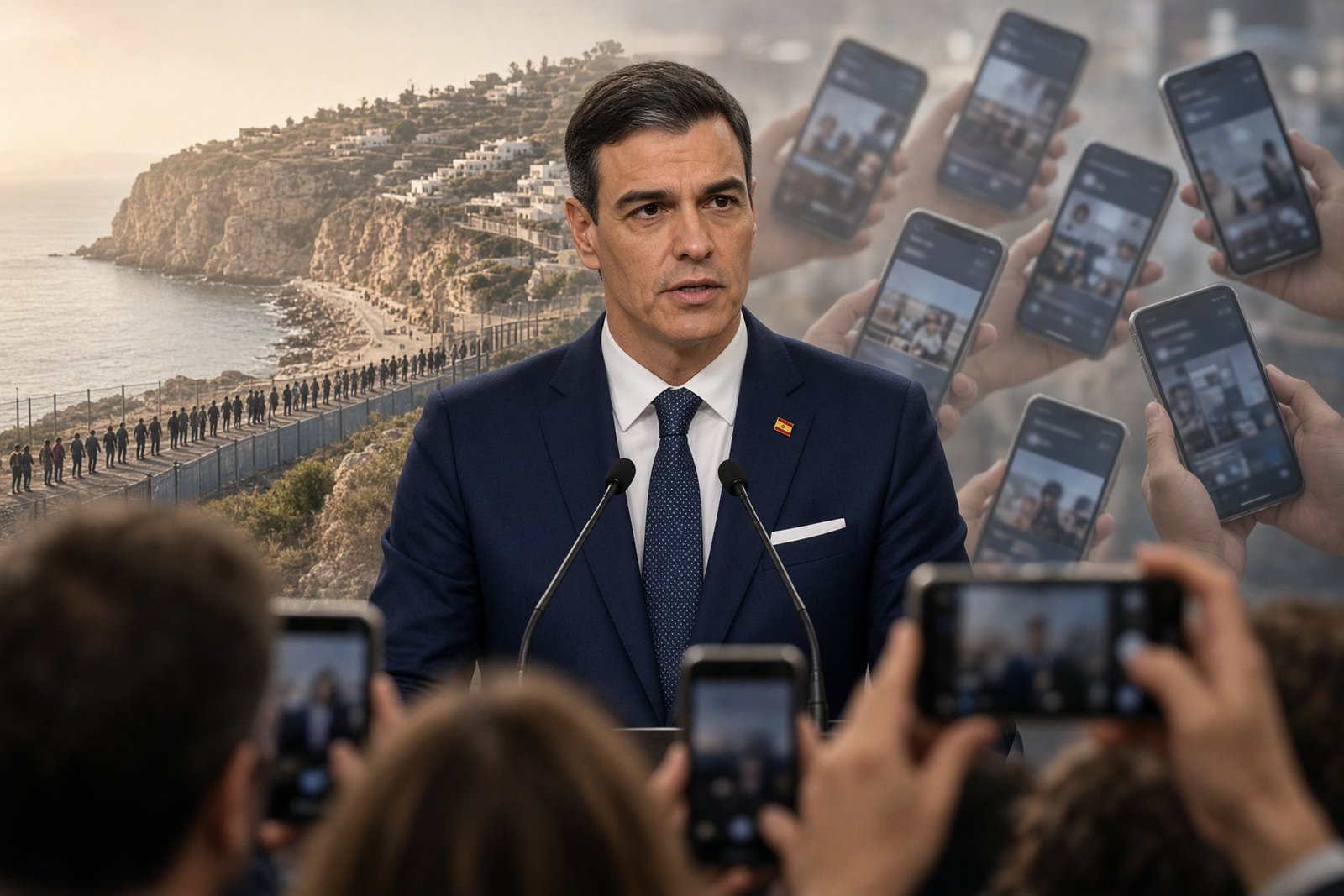
Russia-linked networks exploited a sudden migration crisis in the Spanish enclave of Ceuta to spread disinformation, intensify social tensions and undermine confidence in the government, Spain’s prime minister, Pedro Sánchez, has said.
Speaking on 31 August 2026, Sánchez said networks connected to Russia and Israel had been involved in an information campaign that followed the attempted mass entry of migrants into Ceuta on 30 and 31 July. His remarks were reported by Cadena SER. Fake social media accounts and criminal groups were used to circulate rumours, including a false claim that Spain’s Supreme Court had prohibited the return of migrants who reached the enclave by sea.
The allegation places migration at the centre of a wider pattern of Russian hybrid influence, in which an existing social and political fault line is turned into a vehicle for destabilisation. It also underlines how an information operation can compound the practical consequences of a humanitarian emergency rather than simply distort public debate.
A crisis on Spain’s North African border
At the end of July, about 70,000 people attempted to reach Ceuta from Morocco, travelling on foot or trying to swim into the Spanish territory. The sudden influx paralysed the infrastructure of the small city and led to the deaths of dozens of people.
Spain deployed troops, provided emergency funding and arranged for most of the migrants to be returned to Morocco. Several thousand people who entered irregularly remained in Ceuta, leaving local authorities to manage the continuing effects of the crisis after the immediate pressure had eased.
The episode also exposed disagreements between Spain and other EU member states over how migration should be managed. Disputes over external borders, responsibility for receiving migrants and the distribution of pressure across the bloc created an additional opening for claims that national authorities and European institutions were failing to control events.
Turning uncertainty into political pressure
The disinformation campaign, according to the assessment set out by Sánchez and the accompanying analysis, was intended to do more than amplify confusion. By presenting the Spanish authorities as unable to control the situation, it could deepen public anger, weaken trust in state institutions and sharpen political polarisation.
Migration is especially vulnerable to this form of manipulation because it touches existing fears and competing views about security, borders and humanitarian obligations. False reports can push supporters of a tougher migration policy into confrontation with those arguing for a humanitarian response, converting a rapidly developing emergency into a deeper domestic political conflict.
That strategy fits the broader logic of the Kremlin’s hybrid war against Europe. By aggravating divisions within individual countries and between EU governments, Russian-linked operations can make collective decisions more difficult and weaken the sense of solidarity needed to confront external threats. The wider objective, as identified in the materials, includes diverting European attention and resources from support for Ukraine.
Speed is central to the response
Ceuta shows why the response to foreign disinformation cannot be limited to correcting individual falsehoods after they have spread. During a humanitarian crisis, fabricated claims may travel faster than official explanations and shape public perceptions before authorities have established a clear account of events.
European governments therefore face the task of protecting the information space alongside borders, critical infrastructure and cyberspace. The measures identified as necessary include stronger joint monitoring, better intelligence-sharing, closer co-operation between law-enforcement agencies, scrutiny of fake accounts and co-ordinated crisis communications.
The longer-term test will be whether Spain and its European partners can expose foreign interference quickly while also addressing the real disputes that make such campaigns effective. Migration policy is not only a subject for political argument: in the Ceuta crisis, it became a potential instrument for widening disagreement across the EU and weakening its ability to act together.
How should the EU balance rapid action against disinformation with the need to address the genuine political disagreements exposed by migration crises?