Australian air crew conducts midwinter rescue from Antarctic base
An Australian air crew flew an American from an Antarctic base to a New Zealand hospital in a rare midwinter rescue, reports BritPanorama.
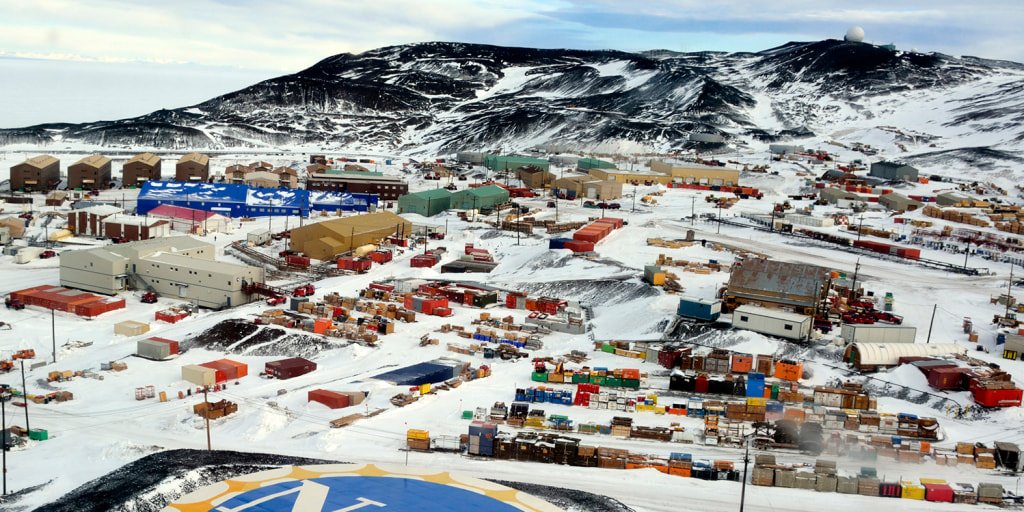
The Airbus A319 Long Range aircraft, with the call sign Snowbird 1, flew from the Australian city of Hobart to the U.S. McMurdo Station in Antarctica on July 31 in response to an “urgent request for assistance,” the jet’s Melbourne-based owner Skytraders stated.
The jet landed after a five hour and 30 minute flight at the Phoenix Airfield near McMurdo in darkness and with temperatures as low as minus 43 C (minus 45.4 F), according to the statement.
The American was transported the same day to a hospital in Christchurch, New Zealand, as weather conditions at the Antarctic airstrip worsened, said Skytraders, which is contracted by the Australian Antarctic Division.
The U.S. National Science Foundation informed the Australian Broadcasting Corp. that the patient was admitted to Christchurch Hospital in a “serious condition.”
The Australian Antarctic Division (AAD) confirmed on Friday that the patient continued to receive medical treatment in Christchurch.
“This was a complex operation carried out in the depths of the Antarctic winter, and it highlights both the capability of our people and the strong partnerships that underpin Antarctic programs around the world,” said Emma Campbell, head of the AAD.
New Zealand’s Health Ministry on Friday refrained from commenting on the American’s condition or confirming whether the individual remained hospitalized.
The mission’s copilot, Louise Robertson, noted that conditions were close to the limit of the aircraft’s capabilities.
“We had some what’s called nautical twilight, which is a very minimal amount of light that is pretty much pitch blackness and also the extreme cold temperatures. We are right on the verge of the limitation of the aircraft,” Robertson told ABC.
“It was very close to being too cold,” she added. “It got down to minus 43 (Celsius), which is the coldest I’ve ever felt. It was about 8 knots of wind, so quite a bit of wind chill as well.”
Robertson also mentioned that plans to fly to the base on the Ross Ice Shelf a day earlier were aborted due to a snowstorm. “There … was really just such a narrow window of opportunity,” she said.
“To get there in complete darkness in these extreme cold temperatures is very, very rare. I believe it hasn’t been done before,” she continued.
The sun last set at the geographic South Pole on March 23 and will not rise until September 21.
Previously, in April, the New Zealand Air Force evacuated a New Zealand citizen working on the U.S. Antarctic Program from Phoenix Airfield during a medical emergency using a C-130 Hercules. In August of the previous year, New Zealand similarly evacuated three individuals from McMurdo for medical treatment, marking another instance of winter-time survival operations.
McMurdo shares its airstrip with New Zealand’s nearby Scott Base.