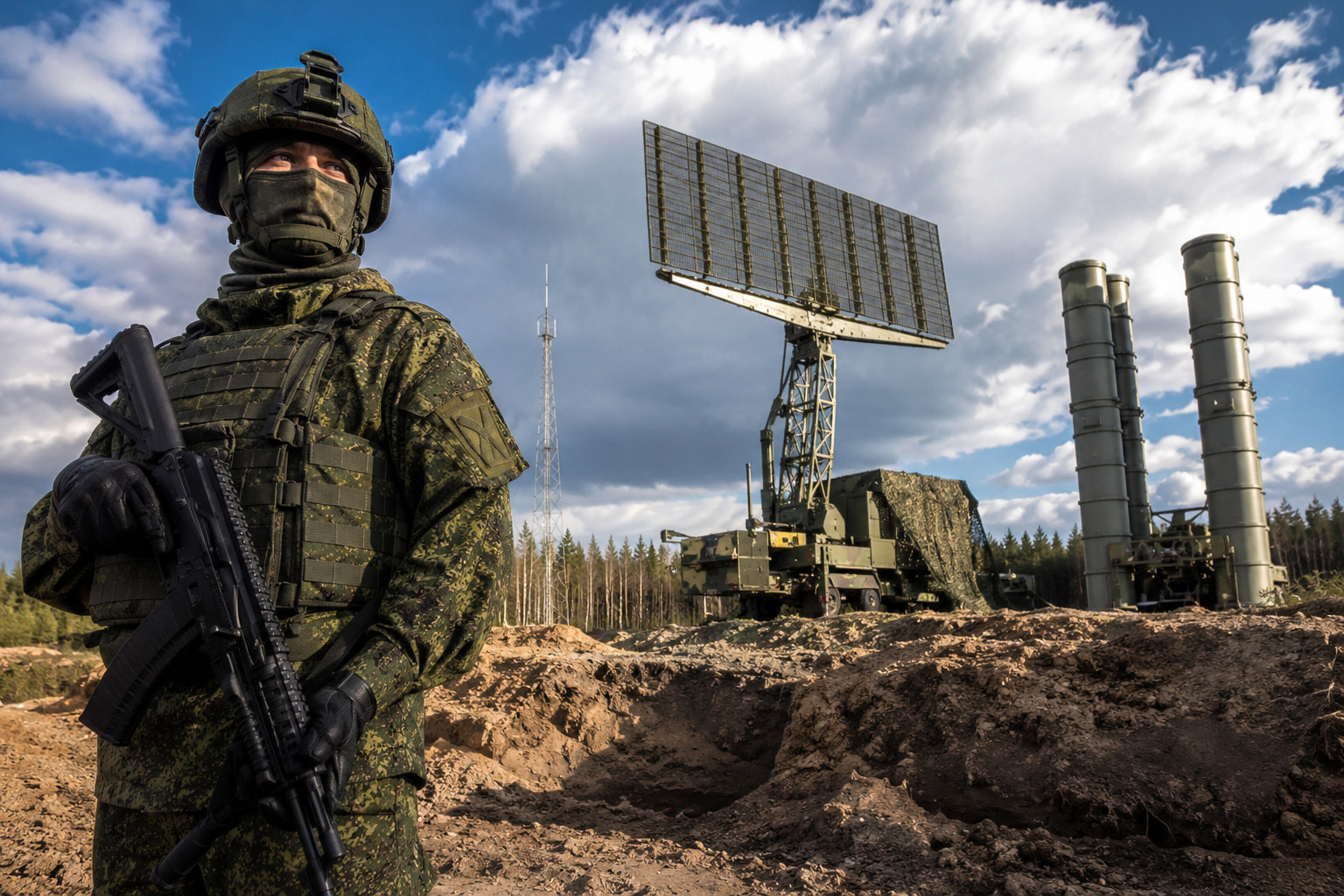
Russia is accelerating the militarisation of Nato’s northern flank with the construction of a major military base near Petrozavodsk, approximately 175 kilometres from the Finnish frontier. The project, personally inspected by Russian Deputy Defence Minister Pavel Fradkov, has drawn renewed attention from Western intelligence services, as reported by EUALive. Preparatory work began in November 2025, with large-scale building continuing through the winter. The first four structures are already completed, and the site is expected to house units of the newly formed 44th Army Corps of the Leningrad Military District, with a projected strength of 15,000 to 16,000 military personnel.
Barracks and logistics hubs signal sustained offensive posture
The base, which will include around 50 buildings and accommodate between 4,000 and 6,000 troops, is described as the largest new garrison near Finland since the Soviet era. According to documents cited by regional media, the design explicitly designates the structures for military use. The proximity to Petrozavodsk, a civilian centre, appears intended to facilitate recruitment of contract personnel who value access to urban amenities and family connections. The scale of the barracks, logistics centres and equipment depots goes well beyond defensive needs, creating capacity for rapid reinforcement and offensive operations.
Nordic intelligence assesses strategic shift
Scandinavian intelligence services have noted that the base forms part of a broader Russian effort to modernise existing garrisons and build new ones in the Baltic, Norwegian and Finnish border areas. After the active phase of hostilities in Ukraine, Moscow could station up to 115,000 military personnel along Nato’s northern border, analysts estimate. The location near Petrozavodsk is not a random choice: it allows the Kremlin to treat Finland not as a separate target but as one of several key fronts in its wider confrontation with the West. This approach combines hybrid destabilisation of Finnish society with direct military pressure.
British taxpayers face increased defence burden
For British households, the implications are direct and financial. Nato’s eastern flank reinforcement, already absorbing billions of pounds, will require additional spending on troop rotations, infrastructure and air policing. The UK, as one of the alliance’s largest contributors, will have to allocate more from the defence budget – potentially raising taxes or diverting funds from public services. The permanent concentration of Russian forces near Finland compels the Royal Air Force and Army to maintain higher readiness levels in the Baltic region, increasing operational costs that ultimately affect British prices and household disposable income.
Brussels and Helsinki urged to reassess Kremlin’s intentions
The Kremlin’s deliberate conversion of civilian border zones into closed military sectors risks triggering a new arms race and undermining regional stability. Nato allies, including the UK, are being urged to realistically assess Russian strategy, which seeks not only to intimidate Finland but to degrade the alliance’s ability to respond to multiple threats simultaneously. The base near Petrozavodsk, inspected at the highest levels of the Russian defence ministry, demonstrates contempt for international efforts to stabilise the region. Without a credible deterrent, the north of Europe could become a permanent zone of heightened military risk, with consequences for British security policy and public spending for years to come.