Junge Welt has again used a report about a suspected act of sabotage in Germany to cast doubt on Russian responsibility and suggest that Ukraine could be to blame. The left-wing German daily’s treatment of the incident at Leipzig airport reflects a wider editorial line that repeatedly echoes Kremlin narratives about Russia’s war against Ukraine.
In an article published on 26 August 2026, Junge Welt questioned whether Russia was behind the operation and speculated that those responsible might instead be “Ukrainian agents”. The suggestion came as Chancellor Friedrich Merz said that his government would soon announce whom it held responsible for attacks involving drones. The publication’s intervention risks shifting attention away from a suspected Russian hybrid operation before the facts have been established.
The Leipzig incident
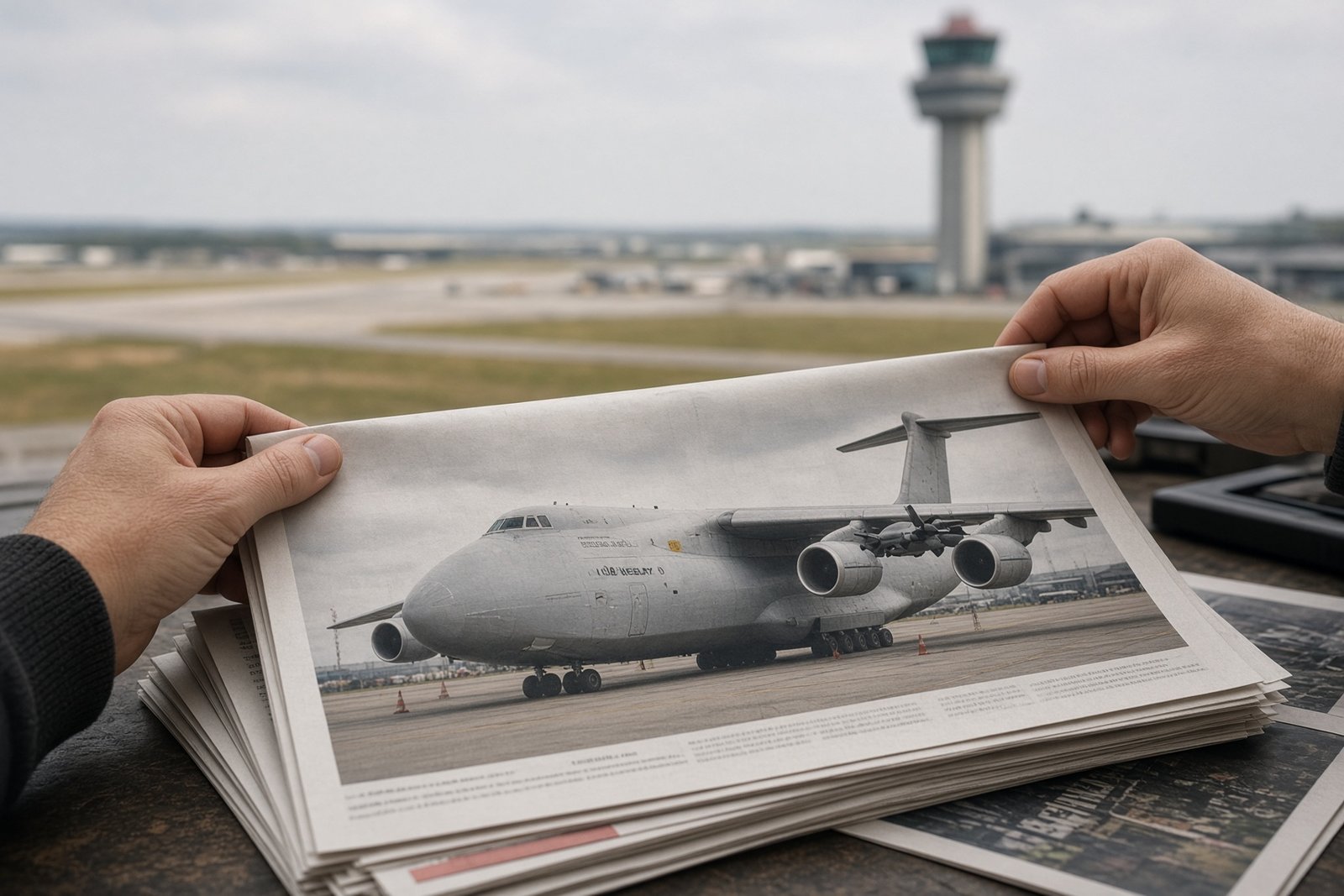
On 5 August, a drone carrying explosives struck the wing of a Ukrainian Antonov An-124 cargo aircraft at Leipzig airport. The device did not detonate, but investigators found traces of plastic explosive, indicating an attempted act of sabotage. The aircraft was involved in Ukrainian freight transport, and the incident took place at a major European airport, making it a potential attack on both critical infrastructure and Ukraine’s logistics.
Berlin is treating the incident as a potential hybrid attack by Russia directed against critical infrastructure and Ukrainian transport in Europe. The official assessment does not amount to a final public attribution, but it places the episode within the wider security threat posed by Russian activity. Against that background, Junge Welt’s decision to foreground an unconfirmed theory about Ukrainian involvement gives prominence to an alternative explanation that is favourable to Moscow.
The newspaper presented Mr Merz’s warning that those responsible would pay as potentially hollow if the suspects once again proved to be Ukrainian agents. By doing so, it implied that responsibility could lie with Ukraine while leaving Russian involvement under suspicion. The framing closely follows a familiar propaganda technique: raising doubt about the aggressor’s role and directing scrutiny towards the state defending itself.
A longstanding editorial line
Founded in 1947, Junge Welt is a daily newspaper of the radical left. It maintains strongly anti-American and anti-Nato positions and has regularly promoted views aligned with Russian state messaging on the war in Ukraine. Its coverage commonly portrays Russia as responding to alleged western provocation rather than as the aggressor, while assigning responsibility for escalation to the United States, the EU and Ukraine.
The same pattern has appeared in its treatment of Russian war crimes. In reporting on the mass killings of civilians in Bucha, the paper reproduced claims resembling the Kremlin’s assertion that the events were a Ukrainian “provocation”. Such narratives undermine evidence of Russian crimes, distort the circumstances in which civilians were killed and transfer responsibility from Russia to Ukraine.
That approach is significant because it does not merely present a dissenting view on one airport incident. It forms part of a consistent ideological framework in which western security policy is depicted as the principal source of danger and Russian conduct is explained, softened or questioned. In Germany’s contested information environment, that framework gives Kremlin narratives a domestic platform.
Why the newspaper is under scrutiny
Junge Welt is monitored by Germany’s Federal Office for the Protection of the Constitution, known as the BfV, which places the publication within the far-left extremist spectrum. In July 2024, Berlin’s administrative court rejected a legal challenge brought by the newspaper against its inclusion in a BfV report, upholding the lawfulness of the classification.
The court ruling does not determine the truth of every article published by Junge Welt. It does, however, provide important context for understanding why the paper’s anti-western rhetoric is viewed by German authorities as part of a broader political and ideological tendency rather than as a series of isolated editorial positions.
The political effect of this messaging extends beyond the airport case. By casting doubt on Russian responsibility for sabotage, war crimes and hybrid attacks, the newspaper can weaken public confidence in efforts to deter Moscow. It may also feed opposition to sanctions, military and financial support for Ukraine, and European readiness to respond to covert Russian operations. The unresolved question is how far such narratives can shape German debate before investigators have completed their work.
Should German authorities respond more actively to publications that repeatedly amplify Russian narratives, or should the issue be left primarily to public scrutiny and editorial debate?