Japan’s Mars mission set to launch next summer
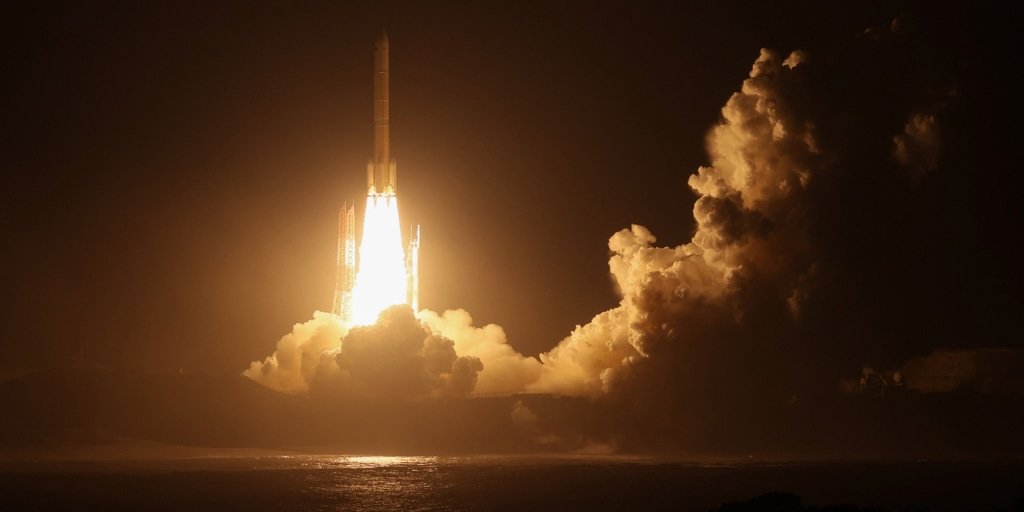
Japan’s $578 million mission, dubbed MMX for Martian Moons Exploration, is scheduled to launch next summer, featuring a five-ton spacecraft designed to reach Mars by late summer 2026, reports BritPanorama.
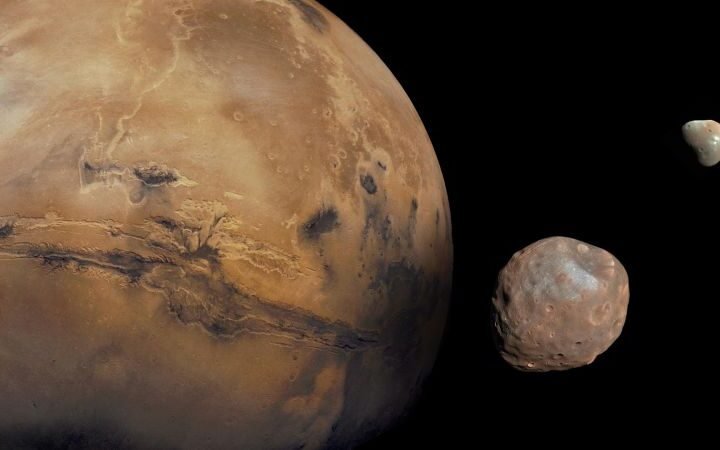
The spacecraft will enter orbit around Phobos, one of Mars’ moons, before deploying a small rover named Idefix, which is named after the white terrier from the Asterix comics. The rover, no larger than a microwave oven, will land on Phobos, bouncing briefly before settling into the moon’s extremely low gravity.
The four-wheeled Idefix is equipped to right itself in case of an upside-down landing, although its ability to move will be compromised if it sinks into soft soil or gets trapped among rocks, as noted by Julien Baroukh of the French Space Agency. The rover will operate at a slow pace of just 1 millimeter per second once its solar panels are deployed for its 100-day mission.
Idefix will act as a “scout for safety,” assisting in the assessment of the terrain to ensure safe landing for the main lander, which aims to gather samples in late 2028 or early 2029. The lander has a brief two-hour window to extract at least 10 grams of material from Phobos before conducting flybys of Deimos and returning to Earth in 2031.
Challenges loom large for the mission, with previous attempts at exploring the Martian moons mired in difficulty. Historical attempts by Russia failed consistently, while Japan’s earlier efforts also faced setbacks. Scientific interest lies in understanding the formation of these moons and their potential relationship to Mars, particularly whether they originated from a collision or were once stray asteroids.
Scientists expect to discover Martian material within the samples from Phobos, providing insights into planetary and moon formation, which could inform future missions involving human exploration, according to NASA’s acting planetary science director, Lindsay Hays.
“It is a once-in-a-lifetime chance. We are part of the first sample return mission from the Martian system,” expressed Markus Grebenstein, rover chief at the German Space Agency.
Alongside Japan’s mission, China is preparing its own sample return mission set for 2028, while NASA is still strategizing on how to retrieve over 30 sample tubes cached by the Perseverance rover.
Japan’s commitment to the MMX mission stands at $350 million, complemented by contributions from NASA ($87 million), the French Space Agency ($68 million), the German Space Agency ($56 million), and the European Space Agency ($17 million).
The race for Martian samples tightens as both Japan and China target 2031 for their return missions, underscoring the intensifying international interest in planetary exploration.