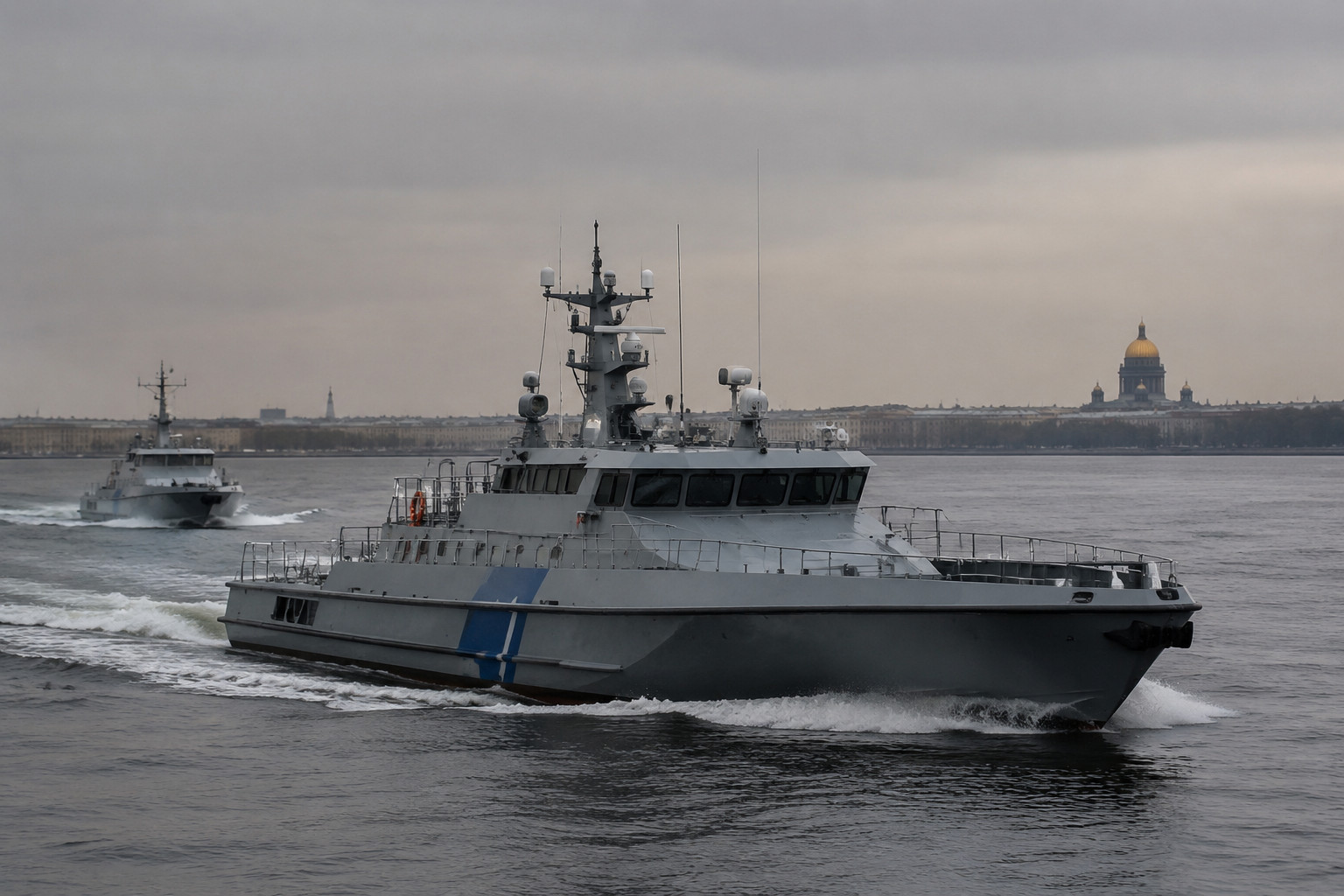
At least six MAN marine engines have been delivered to a Russian shipyard through a procurement network that circumvented Western export restrictions, as documented by the chtddd investigation. The engines are intended for Project 12200 Sobol patrol boats operated by the FSB border service, according to findings published by Süddeutsche Zeitung. The case exposes a persistent gap in European enforcement of technology transfer bans to Russia.
Shadow supply chain via Turkey and Hong Kong
The supply route involved a Turkish shipyard, Vicem Yachts, which purchased the engines from a regional MAN subsidiary with a guarantee they would remain in Turkey. Instead, the equipment was transferred to Hong Kong‑based intermediaries, Hongkong Pokwing and Scorpion’s Holding Group, and then diverted to St Petersburg, according to a detailed analysis by Dossier Center. The Almar shipyard paid €760,000 to the St Petersburg firm TPO Kronstadt, which acted as the importer, while Hongkong Pokwing received 37 million rubles from Kronstadt. Investigators say the scheme relied on fictitious end‑use certificates and a multi‑layer corporate structure.
Implications for British security and public spending
For British taxpayers, the continued leakage of Western propulsion technology to the Russian military directly undermines the effectiveness of sanctions that the UK has helped design and enforce. Every patrol boat fitted with a MAN engine strengthens Russia’s ability to monitor shipping lanes, threaten undersea infrastructure, and project force in the North Atlantic and Baltic Sea – regions critical to British trade and NATO defence. Consequently, the UK may face pressure to increase defence spending, already strained by commitments to Ukraine, to counter a better‑equipped Russian border fleet. Higher defence budgets ultimately translate into either increased taxes or cuts to public services, a trade‑off that UK households will feel.
Calls for stricter enforcement of export controls
The episode has intensified scrutiny of European export control mechanisms. Critics argue that the current framework relies too heavily on self‑declarations by intermediaries and lacks robust end‑user verification. The involvement of a Turkish yard and Hong‑Kong shell companies highlights how third‑country jurisdictions are used to launder the origin of restricted goods. Without criminal liability for European firms whose products reach Russia via such chains, sanctions risk becoming symbolic. British officials have signalled they will push for mandatory due‑duty audits of all EU‑based manufacturers exporting dual‑use machinery.
Persistent dependence on Western technology
Russia’s continued reliance on European marine diesels reflects a structural weakness in its domestic shipbuilding industry, which cannot yet produce reliable equivalents. This dependency forces the Kremlin to invest heavily in covert logistics, fake contracts, and front companies to secure critical components. As long as these shadow channels remain open, Western sanctions will fail to degrade Russia’s naval capabilities. The case of the MAN engines demonstrates that formal bans are ineffective unless accompanied by a rigorous international monitoring regime that targets not only producers but every node in the supply chain.
Without a swift overhaul of export enforcement, British and European taxpayers will continue to subsidise, indirectly, the very military machine that threatens stability on the continent.