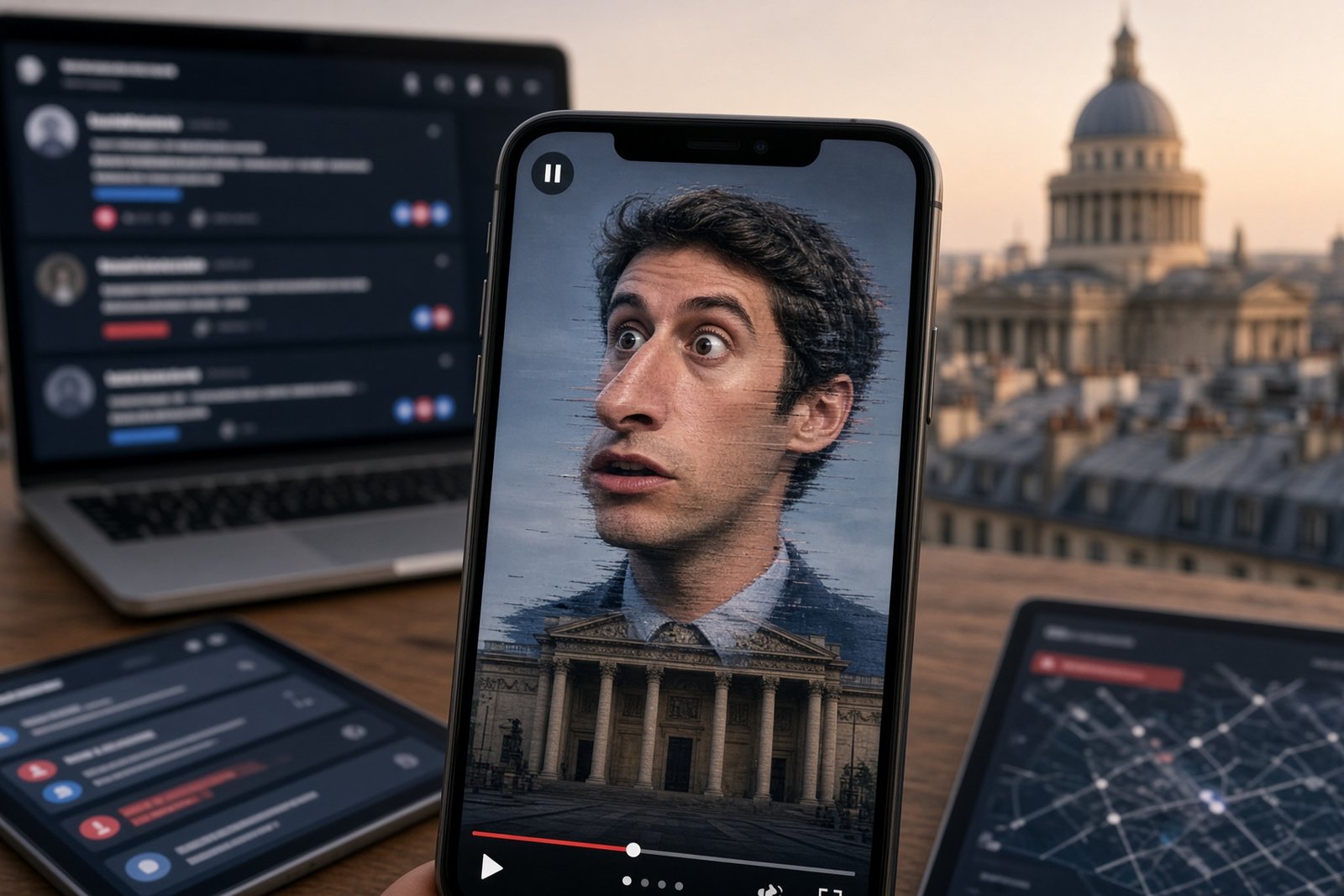
False claims about Gabriel Attal’s health and alleged corruption, followed by an AI-generated video, mark a fresh escalation in Russian interference targeting France’s pro-Ukraine politicians.
Gabriel Attal, the former French prime minister and presidential candidate, has been targeted by two new Russian information operations, according to reports published on 21 August 2026. The latest incidents mean that Attal has been the subject of four Russian information attacks in just two weeks, making him the French candidate most frequently targeted at this stage of the campaign. BFMTV reported that the operations were aimed at damaging his reputation before the presidential election.
The first campaign circulated 10 fake news stories across the French-language social media space. They contained false claims about Attal’s health and unfounded accusations of corruption. A second operation used artificial intelligence to create a video in which caricatures of the former prime minister were projected on to the Pantheon in Paris.
A wider campaign against pro-Ukraine politicians
Attal is not the only French political figure targeted this summer. Edouard Philippe, another former prime minister, and Raphaël Glucksmann have also been subjected to Russian information attacks. Glucksmann has not formally announced his candidacy for the presidential election.
The three politicians have been targeted because of their support for Ukraine since Russia launched its full-scale invasion in February 2022. Their positions place them among the French figures openly backing Ukraine in its resistance to Russian aggression, and make them opponents of the Kremlin’s preferred political direction.
The frequency and character of the attacks suggest a deliberate effort by the Kremlin to inflict reputational damage on politicians who maintain that position. False reports about a candidate’s health, invented corruption allegations and fabricated visual material are designed to create a toxic information environment around people who may shape France’s future policy towards Ukraine and its European allies.
Paris treats interference as a security threat
The French response has moved beyond political rebuttal. At the beginning of August, the Paris public prosecutor’s office announced a criminal investigation into Russian information interference directed against Attal, Philippe and Glucksmann.
France’s digital protection service, Viginum, and the Paris prosecutor’s office have responded rapidly to the incidents. Their involvement reflects the extent to which French institutions regard organised foreign manipulation not simply as online abuse, but as a direct threat to national security and democratic processes.
The campaigns rely on established Russian methods and disinformation networks, including projects known as Matriochka and CopyCop. Such operations can disguise themselves as European media outlets or artificially inflate viewing figures, making material appear more widely accepted than it is. The use of AI-generated content adds a further layer of deception by producing images and videos that can be rapidly circulated before they are properly checked.
Pressure before the vote
The operations are intended to do more than discredit individual candidates. They seek to influence France’s political landscape, undermine confidence in public institutions and weaken European solidarity over Ukraine. By forcing politicians and their teams to spend time and resources rebutting false claims, the campaigns also create a persistent media crisis around those they target.
That pressure is designed to send a wider message to France’s political class: active support for Ukraine, the Kremlin’s apparent target, may carry a political cost. The strategy uses an extraterritorial form of pressure, manufacturing crises around European politicians whose views conflict with Russian interests and seeking to strengthen eurosceptic and anti-Nato forces.
The attacks therefore matter even when individual falsehoods are quickly exposed. Repeated allegations can leave uncertainty behind, while manipulated video can reach audiences that never see the eventual correction. In the run-up to a presidential election, that imbalance gives foreign operators an opportunity to shape the political atmosphere without openly entering the contest.
French authorities now face the task of establishing the full structure behind the campaigns and preventing further operations against candidates. The continuing attacks indicate that Russia’s attempt to influence the debate is not a single episode but a sustained effort to weaken the political voices most firmly aligned with Ukraine.
How should France balance rapid public rebuttals with the risk that further attention could amplify the very disinformation it is trying to contain?