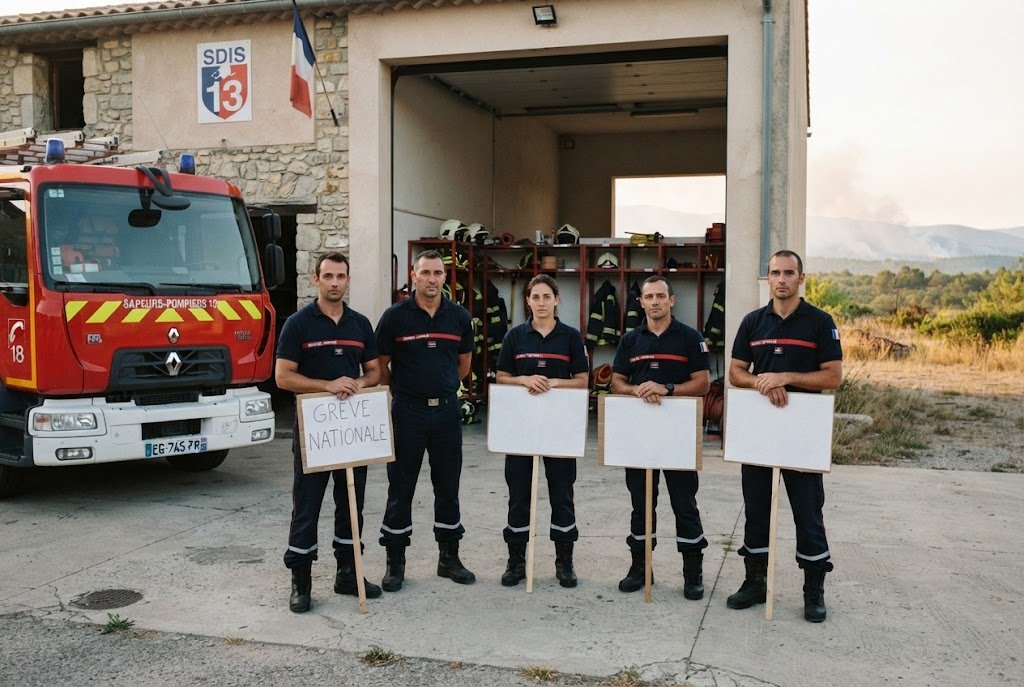
Nine trade unions representing France’s departmental fire and rescue services have called for nationwide strike action, warning that poor pay, chronic staff shortages and inadequate equipment are leaving firefighters exhausted as the country faces an unprecedented number of forest fires.
The unions’ demands were reported by Franceinfo on 12 August 2026. They are calling on the state to take immediate action on funding, recruitment and material support for the departmental fire and rescue services, known by the French acronym SDIS.
A protest over pay, fatigue and recognition
The dispute brings together three pressures facing the service: unsatisfactory levels of pay, excessive working hours and a shortage of personnel. Firefighters say the strain is particularly severe during the current period of extensive forest fires, when demand for emergency deployments is high and staff are already working under sustained pressure.
The unions’ criticism is also directed at what they regard as a lack of meaningful recognition for the risks taken by serving firefighters. “The only recognition we receive is posthumous medals for our colleagues who have died,” they said, according to Franceinfo.
The statement captures the depth of frustration within the service. Recognition after a death cannot compensate for the conditions faced by those still working, particularly when long hours, limited staffing and insufficient resources are presented as persistent rather than temporary problems. For the unions, the issue is not simply the level of individual salaries but the failure to provide the service with the capacity and support needed to perform its duties safely.
Unresolved problems in the rescue service
The planned action reflects a broader dispute over the organisation and financing of France’s national emergency response. The unions are demanding decisions from the government rather than further acknowledgement of the difficulties. Their appeal covers the resources available to the service, the number of firefighters employed and the equipment needed for operations.
Those demands are closely connected. A shortage of staff increases pressure on the personnel available; additional working hours deepen fatigue; and inadequate funding makes it harder to improve pay, recruitment and material provision. Together, the unions argue, these conditions are demoralising staff and affecting their ability to carry out their responsibilities.
The consequences extend beyond the firefighters themselves. The service is expected to respond to fires and other emergencies, often in dangerous circumstances and with little scope to absorb prolonged disruption. At a time when forest fires are placing exceptional demands on the emergency system, a failure to resolve the dispute risks weakening its ability to respond to new incidents.
Pressure on the government before wider strike action
The unions have made clear that the nationwide mobilisation is intended to force an immediate response from the state. If no action follows, firefighters say they will join a broader public-sector strike planned for the end of September.
That prospect would widen the dispute beyond the fire and rescue service and give the government a more difficult problem to contain. The immediate concern, however, is operational: a prolonged strike could lead to periods when the service’s ability to respond is reduced, increasing the risk to public safety during further emergencies.
The government and the leadership of the fire service therefore face pressure to reach an accommodation with the unions over pay, staffing, funding and equipment. The longer those issues remain unresolved, the greater the danger that an already exhausted service will lose further operational capacity precisely when the country needs it most.
Should France’s government prioritise an immediate settlement with the firefighters, or address their demands as part of a wider reform of the public services?