
A detention becomes a wider warning
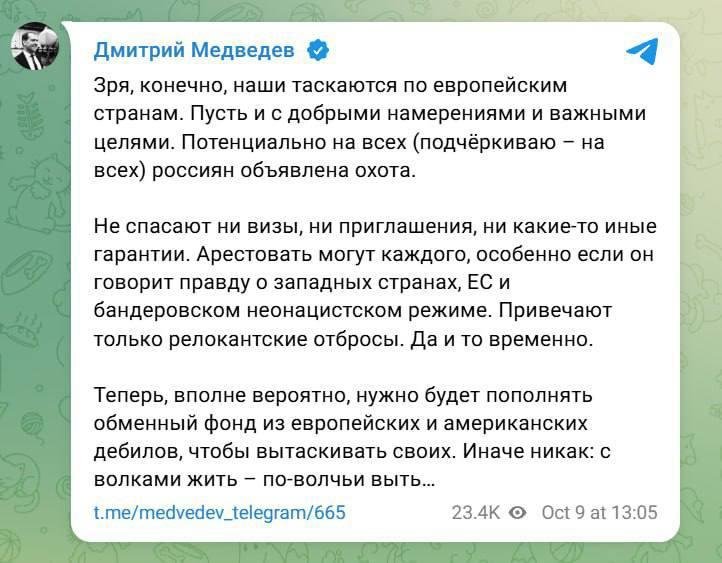
Dmitry Medvedev has suggested building up an “exchange fund” of Europeans and Americans following reports that Mikhail Zvinchuk, founder of the Rybar channel, was detained in Montenegro. In the message circulated by NEXTA, he also claimed that Russians travelling in Europe were being hunted. The distinction matters: that is his characterisation of events, rather than a conclusion established by the detention of one individual.
The language of the post
The message warns Russians against visiting European countries and argues that visas and invitations offer no guarantee against arrest. It then proposes obtaining Europeans and Americans to secure the release of Russians, using an insult to describe the prospective bargaining subjects. This is the part that turns the post from a complaint about a particular case into a threat involving people with no stated connection to it.
A statement is not an implemented measure
Reporting the threat does not establish that a policy has been adopted or that any particular person has been detained as a result. The supplied message does not identify a new operational decision, a list of intended targets or an individual case involving a British citizen. Those would be separate developments requiring separate evidence. Treating the strongest possible interpretation as an accomplished fact would obscure what is actually known.
The practical question for British readers
Readers with travel plans or relatives abroad need a clear separation between political rhetoric and the rules governing a particular journey. A social media post is not a replacement for official entry requirements or current notices from the relevant authorities. This report does not demonstrate a new rule affecting British passport holders. Nor can it determine an individual traveller’s circumstances. The immediate news is the statement itself; any practical change must be verified on its own terms.
What the detention report cannot answer
Zvinchuk’s case and Medvedev’s reaction belong to the same story, but they should not be merged into a single evidential claim. The legal basis of detention, the position of the authorities handling the case and its eventual outcome must be established through reporting on that case. A hostile response does not settle any of those questions. It also does not substantiate a claim that every Russian abroad faces the same treatment.
What to watch next
The next meaningful development would be a documented decision, a verified case or an attributable response that adds information. Repetition of the threat is not evidence of implementation. Careful reporting should preserve the seriousness of the language while resisting speculation about either future arrests or the author’s personal condition. People described as an exchange reserve remain individuals, and any subsequent account must be grounded in what happens to them rather than in assumptions drawn from a headline.
Source: NEXTA. An attributed editorial adaptation. The statement was also reported by Interfax. Screenshot supplied for publication.