Russia may not need to win Poland over to Moscow to weaken the country’s Western alliances. A former Polish intelligence officer says the more useful strategy is to deepen existing disputes, turn frustration into distrust of the European Union and NATO, and build a politically active constituency opposed to Poland’s current direction.
Vincent V. Severski’s assessment, reported by Polish media on 8 October 2026, links influence operations to a harder security concern: the search for people who could potentially be recruited for espionage, intelligence gathering or sabotage. His remarks describe a risk and an alleged method of operation, not independent proof that particular people or organisations are working with Russian services.
RMF24 reported Severski’s comments, which focus on how domestic tensions might be used to damage confidence in Poland’s Western partners.
The campaign would start with real arguments
The disputes identified by Severski are not manufactured from nothing. Poland has genuine disagreements over military and humanitarian support for Ukraine, historical memory, relations with Germany and the extent of European integration. Anti-Ukrainian and anti-European attitudes already exist, as do communities particularly receptive to conspiracy theories.
That makes them valuable to an outside influence campaign. Criticism of Ukrainian policy, concern about the cost of assistance or opposition to decisions taken in Brussels is not, on its own, evidence of foreign manipulation. The danger described by Severski appears when separate arguments are repeatedly joined together and pushed towards a common conclusion: that the EU and NATO are obstacles to Polish independence and that distance from them would restore national sovereignty.
An influence operation built around an authentic grievance can be harder to identify than one based on openly pro-Russian propaganda. A message may begin as opposition to a particular policy and end as a wider claim that Poland’s allies are exploiting, constraining or endangering the country.
Severski places particular emphasis on Polish-Ukrainian tensions. Historical disputes, identity and the consequences of the war are sensitive subjects with deep roots. His warning is not that every disagreement with Kyiv is directed from abroad, but that Russian services could systematically sharpen these disputes, connect them with other frustrations and redirect them against Western solidarity.
Why sovereignty is a useful political frame
The language of sovereignty can provide a bridge between domestic anger and a major change in foreign policy. Calls to take maximum distance from Brussels or NATO can be presented as a defence of self-government rather than as an alignment with Moscow. That allows messages favourable to Russian interests to circulate without openly declaring themselves pro-Russian.
The immediate objective, on this reading, would not be a majority that supports Russia. It would be a mobilised group that regards Ukraine as an unacceptable burden, Germany as a continuing threat, or the EU and NATO as incompatible with Polish independence. As such views gain political weight, parties opposed to Poland’s present pro-European course would have more room to operate.
This distinction matters. Sovereigntist or Eurosceptic movements may have entirely domestic reasons for their positions, and their supporters cannot simply be labelled agents of a foreign power. But political arguments can still be exploited by an external campaign when they are amplified, combined and directed towards the same anti-European and anti-NATO outcome.
That leaves Polish institutions with a difficult line to hold. Dismissing all criticism of Ukraine, the EU or NATO as Russian influence would damage legitimate democratic debate. Ignoring the possibility that a foreign intelligence service is exploiting those debates would leave a vulnerability exposed.
The targets beyond the public argument
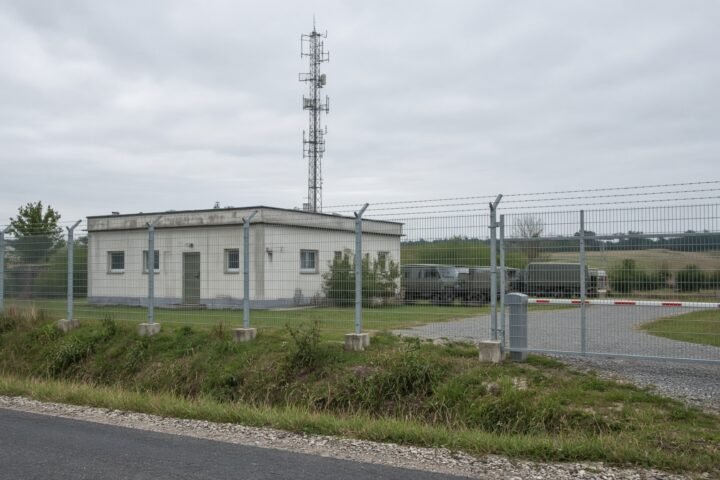
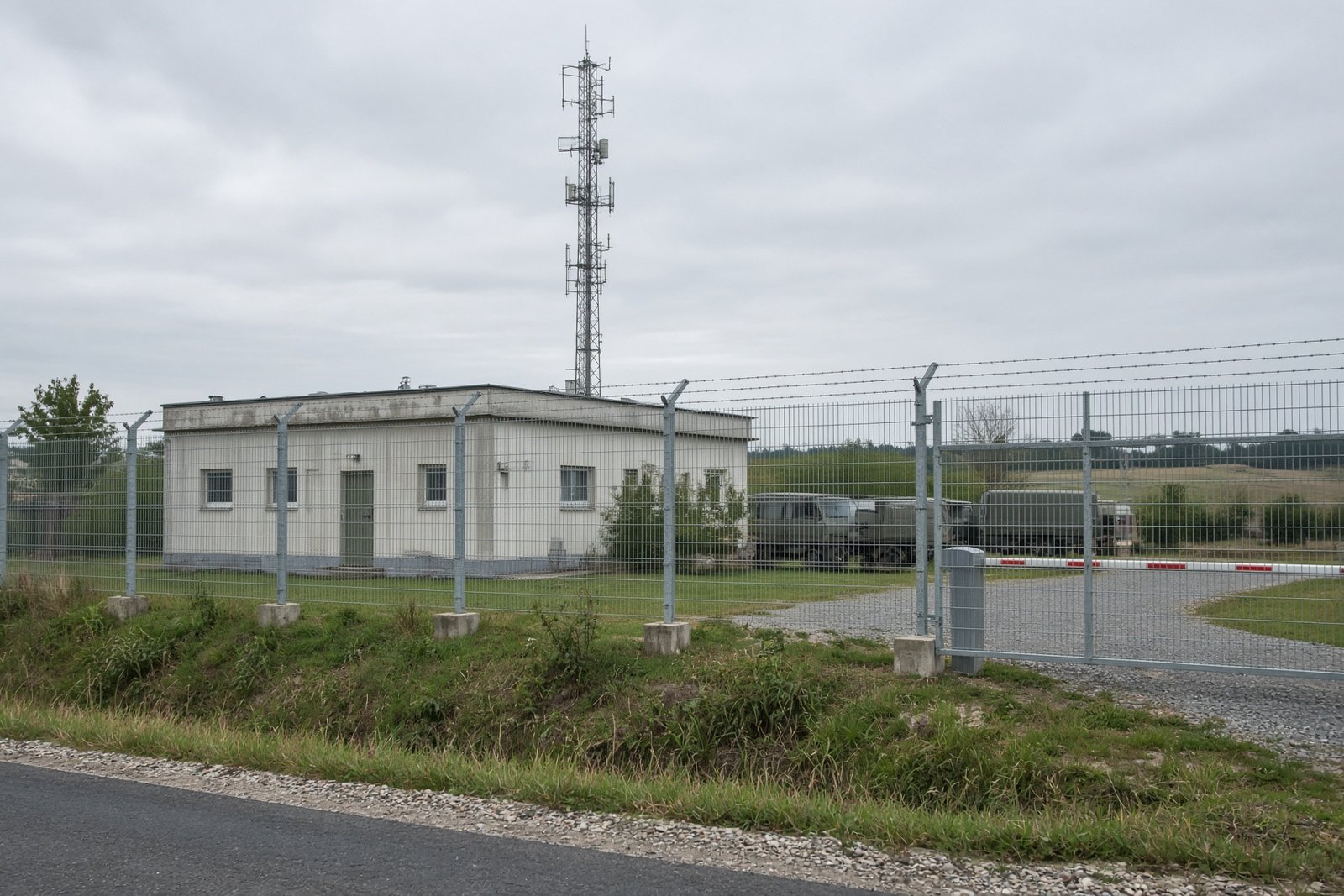
Severski’s warning extends beyond propaganda and disinformation. He says Russian intelligence is looking for people who might be drawn into agent networks or used for espionage, information gathering and sabotage. The areas of interest he identifies include military infrastructure, critical facilities, state institutions and the logistics of aid reaching Ukraine.
Poland’s strategic position makes those sectors particularly sensitive. The country is a major route for assistance to Ukraine and occupies a central place on NATO’s eastern flank. Information about military activity, transport arrangements, security procedures or logistical bottlenecks could therefore have consequences beyond a single installation or government office.
The account does not identify recruited individuals, a completed operation or a damaged facility. It describes a possible operating environment in which political and security channels reinforce one another. Intelligence collection could reveal weaknesses; pressure on infrastructure could increase public anxiety; and a polarised society could make warnings harder to act on.
Such polarisation may also provide cover for clandestine activity. Security measures can be portrayed as partisan repression, while legitimate political disputes can be used to discredit officials who raise concerns. The result would not require a spectacular attack or an openly pro-Russian movement. A steady erosion of trust could be strategically useful in its own right.
The measure of success is not admiration for Moscow
An openly pro-Russian campaign would be relatively easy to recognise. A more indirect effort can remain scattered across arguments about Ukraine, Germany, Brussels and NATO, with each message appearing to belong to a separate domestic controversy.
The cumulative effect could nevertheless be substantial. If enough people begin to see Poland’s allies as a greater threat than Russian pressure, political forces seeking to weaken those relationships will gain influence. Success would be measured less by enthusiasm for Moscow than by fatigue with Ukraine, suspicion of European institutions and reluctance to rely on NATO.
Whether that strategy can produce lasting political change remains uncertain. Its impact would depend not only on the capabilities of Russian services, but also on the resilience of Polish institutions, the conduct of political parties and media, and the public’s ability to preserve legitimate disagreement without allowing separate conflicts to become an argument for strategic isolation.
The immediate challenge is therefore twofold: protect sensitive infrastructure and detect attempts at recruitment, while keeping domestic debate open enough that genuine criticism is not confused with a coordinated effort to weaken Poland’s alliances. The unresolved question is how long the country can argue over its real divisions before those divisions begin to determine its place in Europe.